Last updated November 23, 2026
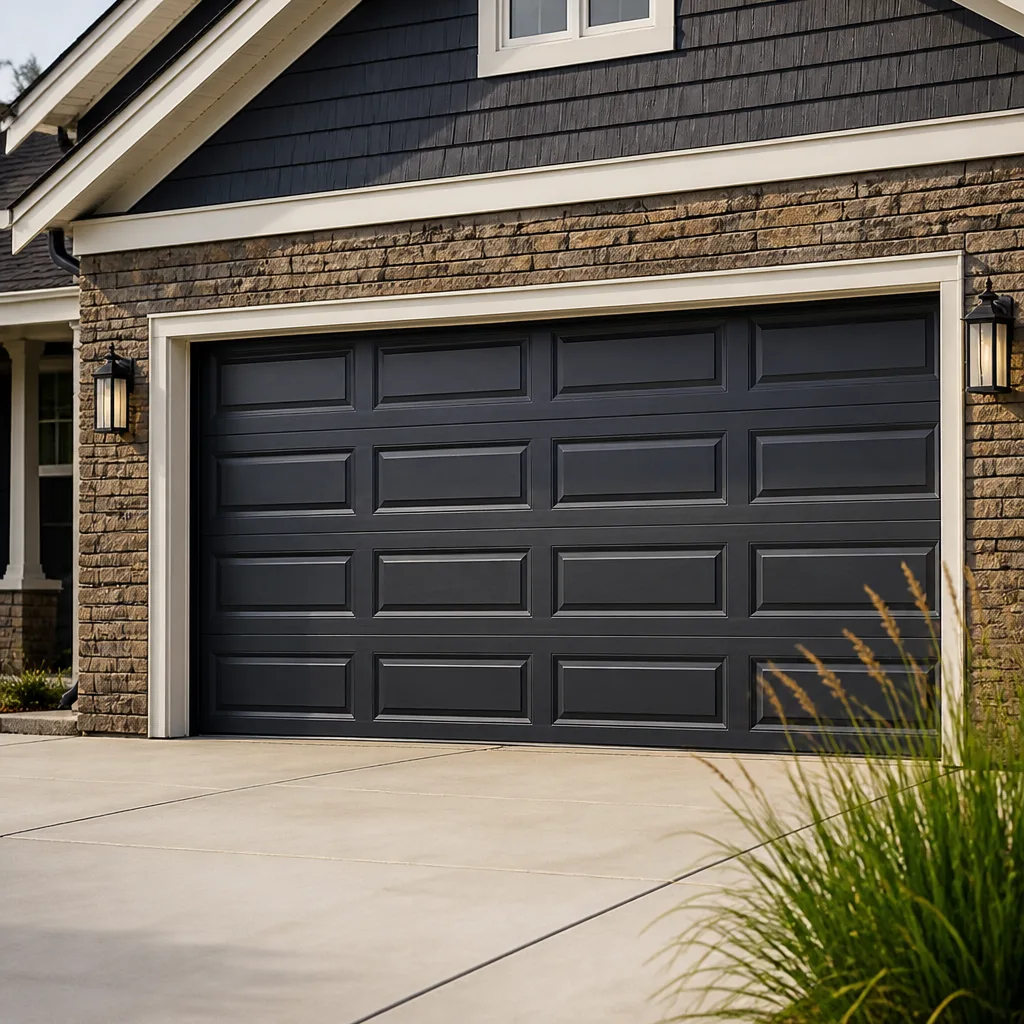 Raised-panel steel
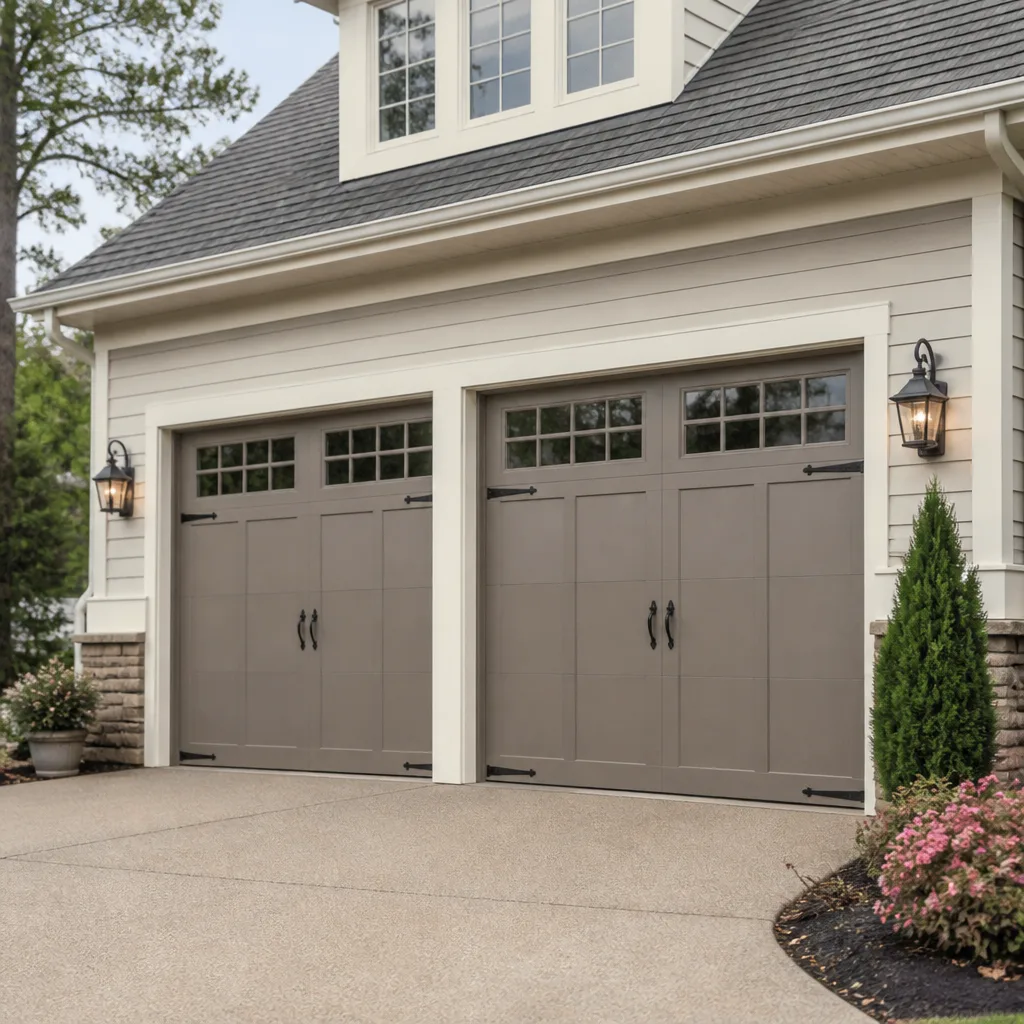
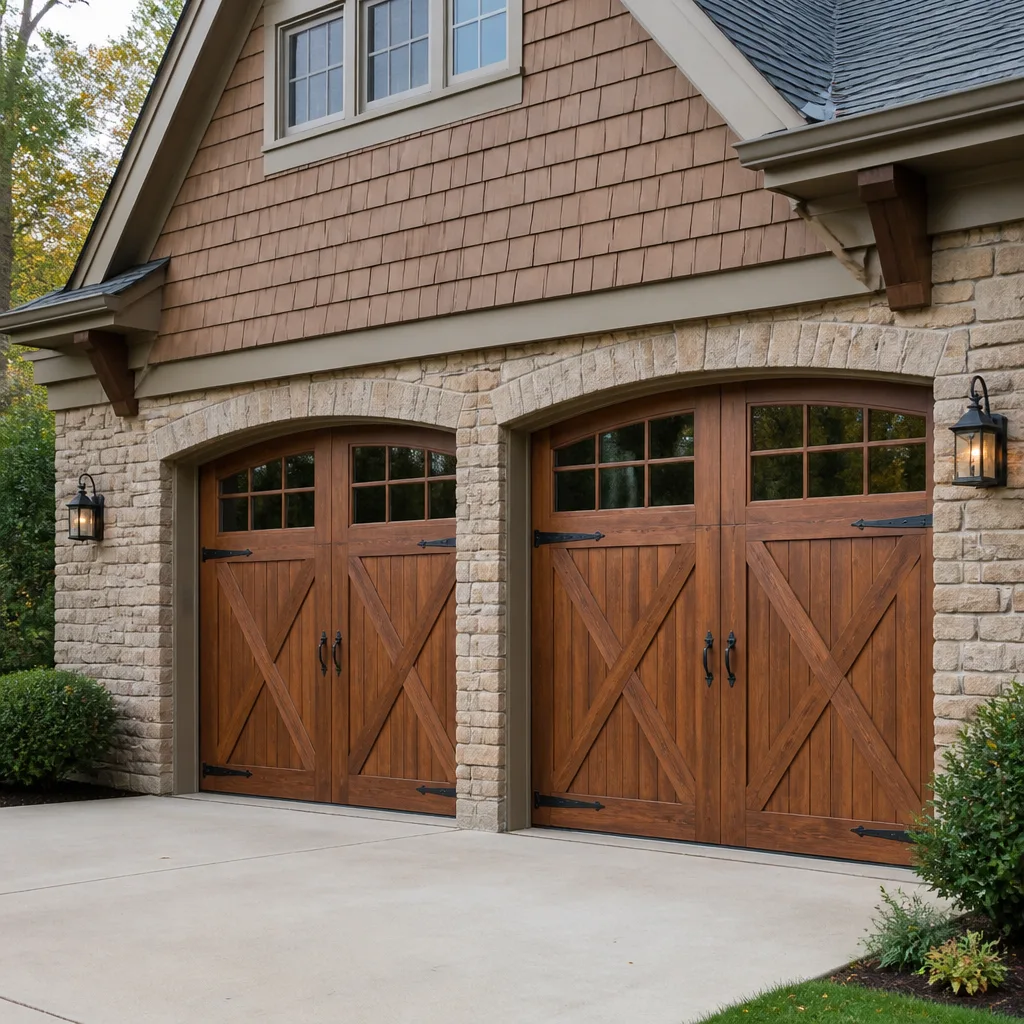 Carriage house
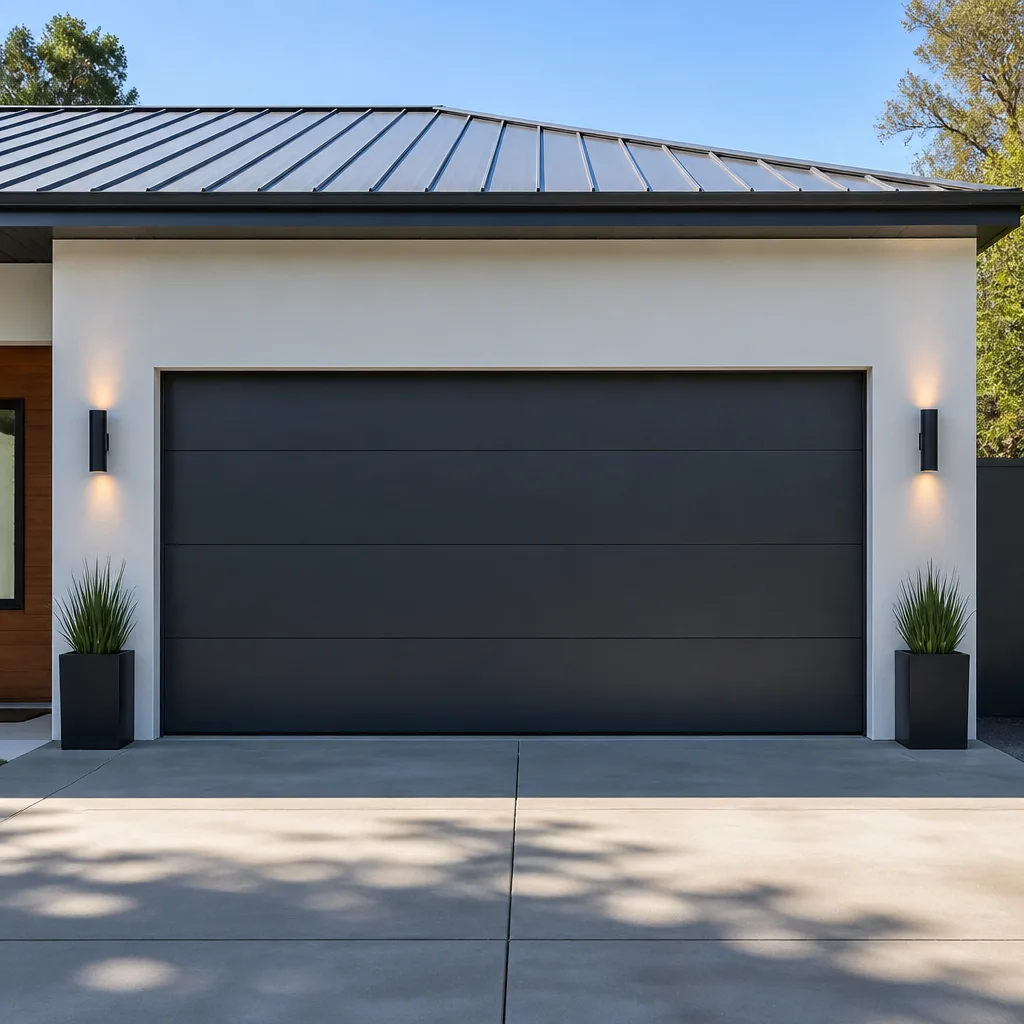 Modern flush
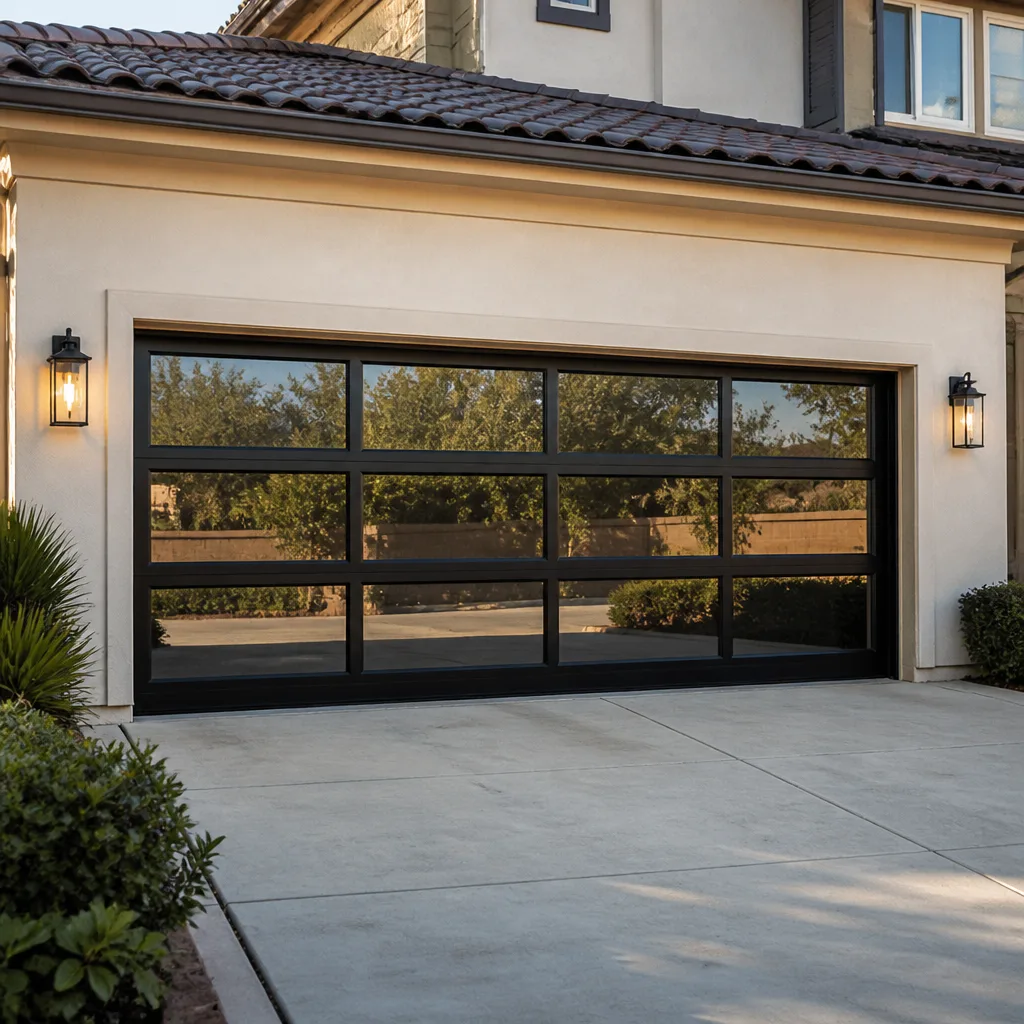 Full-view glass
 LiftMaster openers
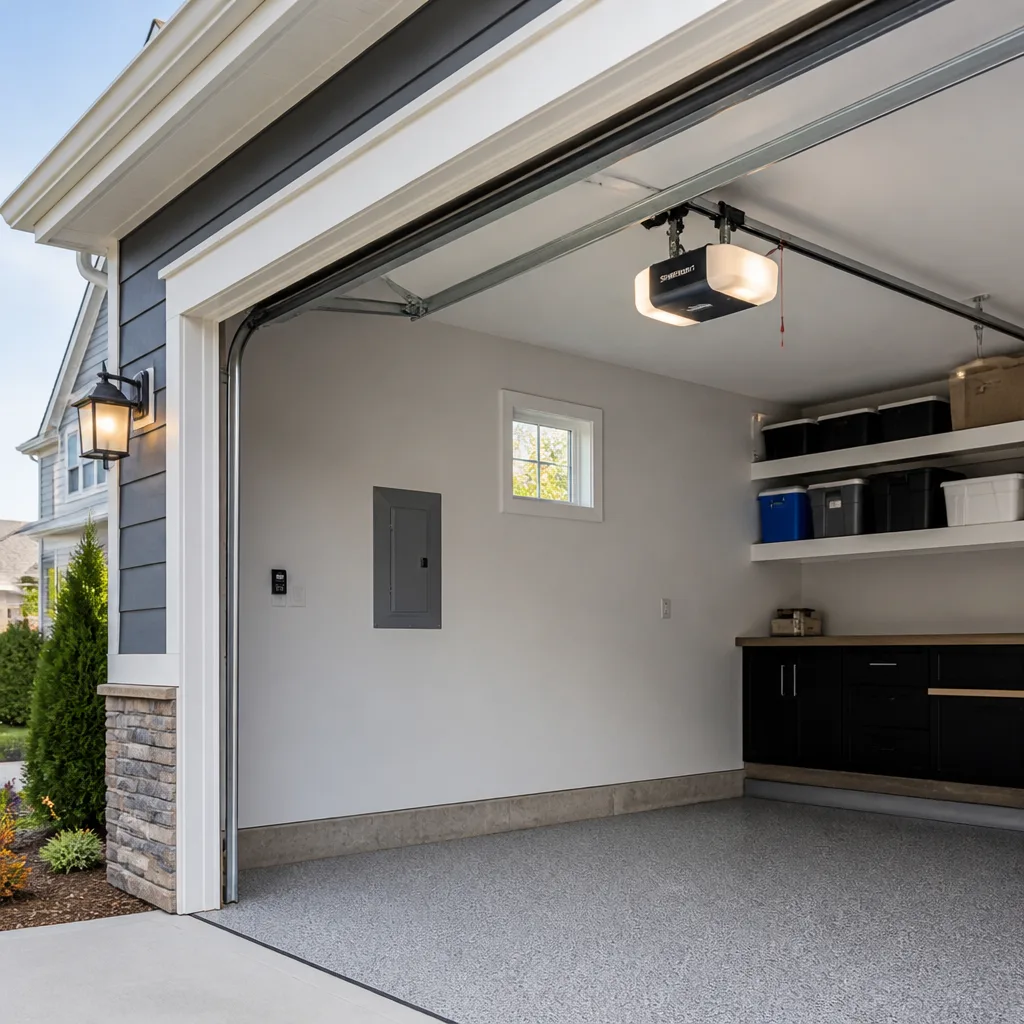 Chamberlain openers
Full 25-point door and opener safety check with every visit - springs, cables, rollers, tracks, and your LiftMaster or Chamberlain opener included
You get a price before we start. It does not change when the pro arrives.
Get your free estimateSeasonal Garage Door Care for North Ward: Year-Round Homeowner’s Guide
Lubricating your garage door springs in October is useful. Doing it in February, when the grease has already thickened and the metal has contracted, means you’re maintaining a door that’s already in distress. That’s the counterintuitive reality of garage door care in a place with real winters and sticky summers: timing matters as much as the task itself. North Ward’s four-season climate creates four distinct failure windows, and the standard advice most homeowners follow was written for milder places where the freeze-thaw cycle is a rumor. This guide walks through what actually fails in each season, why it fails, and the one thing in each season that almost everyone skips. You’ll finish knowing exactly what to check and when.
Quick Answer
Garage door care in North Ward follows the seasons: springs lose tension as temperatures drop below freezing, tracks warp and wood panels swell in summer humidity, and bottom seals crack through fall’s freeze-thaw cycles. The right sequence is pre-winter prep before the first hard freeze in late November, a spring counterbalance check once winter breaks, summer clearance checks as humidity peaks, and seal inspection each fall. Doing the right task at the right time prevents the failures that actually happen here – doing the wrong task at the wrong time doesn’t.
Styles & brands we work with
- Raised-panel steel
- Carriage house
- Modern flush
- Full-view glass
- LiftMaster openers
- Chamberlain openers
Table of Contents
- Why Timing Matters More Than Frequency in North Ward
- Winter: Cold, Springs, and the 32°F Threshold
- Spring: The Counterbalance Check Almost Everyone Skips
- Summer: Heat, Warping, and Wood Panel Swelling
- Fall: Seals, Freeze-Thaw, and Pre-Winter Prep
- Your Year-Round Maintenance Calendar
- The Right Lubricant for the Right Temperature
- Common Mistakes to Avoid
- When to Call a Professional
Why Timing Matters More Than Frequency in North Ward
Most garage door maintenance advice assumes a mild climate where the door operates in a narrow temperature band year-round. North Ward doesn’t work that way. A door here can swing through a wide temperature range across the year, and every component – steel springs, aluminum tracks, rubber seals, wood panels – responds to that swing differently. A torsion spring rated for a given cycle count is stressed more by thermal contraction than by daily use. A track that’s perfectly aligned in April can bind in July when the metal expands. A bottom seal that looks fine in September can split in December once water freezes inside its folds.
The upshot: a door that gets the same routine every month gets the wrong routine most months. The metal doesn’t care that you lubricated it – it cares when you lubricated it. In our experience servicing North Ward homes, the doors that fail earliest aren’t the neglected ones so much as the ones where maintenance happened out of season. Someone greased the rollers in July, which is fine, then skipped the pre-freeze prep in November, which is not.
North Ward’s housing stock makes this more pronounced. The neighborhood has a real mix of older wood-panel doors alongside newer steel and aluminum models, and each material has a different seasonal weak point. Wood swells with summer humidity and shrinks in winter cold. Steel contracts sharply when temperatures drop below freezing. Aluminum tracks warp in summer heat. A guide that treats every door the same misses what’s actually happening to the material in front of you.
The sections that follow break the year into four windows, each with a specific failure mode and a specific task. Treat them as a sequence rather than a checklist, because in North Ward the seasons don’t overlap politely – the hard freeze arrives on its own schedule, and the humidity peaks when it peaks.
Winter: Cold, Springs, and the 32°F Threshold
Torsion and extension springs are the most failure-prone component on any garage door when winter arrives in North Ward. A steel spring stores energy through tension, and cold metal contracts. That contraction increases the stress on the spring at the same time the metal becomes more brittle. The result is that spring failures cluster in the coldest weeks of the year, which is also when a door that’s stuck closed is the most disruptive. A snapped spring is not a repair anyone should attempt at home; that’s covered further below, but the point for now is that winter is when spring tension matters most.
The threshold that matters for lubrication is 32°F. Below that temperature, standard petroleum-based garage door lubricants thicken noticeably. A grease that flows smoothly in October can stiffen enough by January to drag on the rollers and hinges instead of coating them. The door still operates, but it’s working harder, and the motor and springs absorb the extra load. That’s the failure chain most homeowners never see: thickened grease, increased drag, accelerated wear, spring fatigue, and eventually a snap that feels sudden but was building all winter.
The winter tasks that actually prevent this:
- Before the first hard freeze – typically late November in North Ward – apply a cold-rated lubricant to hinges, rollers, and the spring bearing plates. Cold-rated means synthetic or silicone-based, formulated to stay fluid below freezing.
- Test the door’s balance by hand once a month. Disconnect the opener and lift the door halfway. If it doesn’t hold, the springs are losing tension.
- Clear snow and ice from the bottom seal and the threshold after every storm, so meltwater doesn’t refreeze inside the seal and split it.
- Listen to the door on each cycle. A grinding or scraping sound in cold weather often means a roller or hinge has seized, not that the door itself is failing.
What most North Ward homeowners skip entirely in winter: applying cold-rated lubricant before the freeze, not after. Lubricating in February, once the grease has already thickened and the metal has contracted, maintains a door that’s already in distress. The right window is late November, not mid-January.
Spring: The Counterbalance Check Almost Everyone Skips
When winter breaks in North Ward, the door has just spent weeks operating with cold-stiffened components and springs under extra thermal stress. That’s the moment to check whether the spring counterbalance survived the season – and it’s the single task almost every homeowner skips. The door still opens, so nobody thinks to check. But a spring that’s lost tension is a spring that’s closer to snapping than it was in October. The counterbalance check is how you catch it before it fails.
Here’s how a counterbalance check works, in general terms. With the opener disconnected, manually lift the door to roughly halfway. A properly balanced door stays put. A door that sinks toward the floor means the springs are under-tensioned. A door that rises on its own means they’re over-tensioned. Either way, the door needs adjustment before the opener or the springs take the strain. The check itself is safe because you’re not handling the springs – just observing how the door behaves. Do not attempt to adjust torsion springs yourself; that’s a specialist job covered in the safety section below.
Alongside the counterbalance check, spring in North Ward is the right season to:
- Inspect the steel cables that run alongside the springs for fraying or kinks. Cold weather can accelerate cable wear.
- Re-lubricate with a standard (not cold-rated) lubricant now that temperatures have moderated – the grease will flow properly again.
- Check the weatherstripping along the sides and top of the door, which takes a beating through the winter freeze-thaw cycle.
- Test the safety reverse feature by placing a block of wood on the threshold and closing the door. If it doesn’t reverse, the opener’s sensors need attention.
Spring is also the time to shift from “protect against cold” back to “prepare for heat.” The same door that struggled with cold-stiffened grease in February will struggle with track expansion in July. The counterbalance check is the bridge between the two, and skipping it means you enter summer with a door that’s already out of balance.
Summer: Heat, Warping, and Wood Panel Swelling
Summer in North Ward brings its own failure window, and it looks completely different from winter’s. Steel expands in heat. Aluminum tracks – which have a higher expansion rate than steel – can warp or bow when temperatures climb, and a track that’s slightly out of alignment binds the rollers. The door still operates, but it grinds, and the motor works harder on every cycle. That’s the summer equivalent of the cold-grease problem: invisible strain that compounds until something gives.
Wood-panel doors face a separate summer issue: humidity. A wood panel absorbs moisture from the air and swells. When the panels swell, they press against the stiles and rails, and the clearance tolerances that kept the door gliding smoothly in dry weather tighten up. The sign most homeowners notice first is a door that binds or sticks partway through its cycle, followed by a scraping sound as the swollen panels drag against the track. By the time the binding becomes obvious, the door has already been straining the opener for weeks.
The summer checks that catch this early:
- Look down the length of each vertical track. It should be straight. A visible bow or warp means the track needs realignment before it binds.
- Open and close the door slowly and watch the panel-to-track clearance. On a wood door, if the panel is touching the track at any point, the tolerance has closed up.
- Check the hinges and rollers for heat-related stiffness. Synthetic lubricants that work in winter can become too thin in summer heat, so a middle-weight lubricant is the summer choice.
- Inspect the door’s finish on any wood door. A failing finish lets humidity in faster, which accelerates swelling.
The summer task most North Ward homeowners skip: checking track alignment before the humid weeks peak, not after the door starts binding. By the time you hear the grind, the track has already been warped for a while. A thirty-second visual check in June prevents the July service call. If your door is a wood-panel model from a line like Amarr or a similar manufacturer, the swelling question is especially relevant, because the panel construction determines how much clearance you start with.
Fall: Seals, Freeze-Thaw, and Pre-Winter Prep
Fall is the season most people associate with garage door prep, and for good reason – it’s the last window before the hard freeze. But the specific failure that fall addresses in North Ward isn’t the one most guides focus on. It’s the bottom seal, and the mechanism is freeze-thaw. Water collects in the folds of the seal during rain. Overnight, temperatures dip below freezing and the water expands as it turns to ice. The ice stresses the rubber, and repeated freeze-thaw cycles crack it. By the time winter is in full swing, the seal is torn, and cold air and moisture get under the door.
The pre-winter prep sequence for North Ward runs from mid-October through late November, timed so everything is finished before the first hard freeze window – typically late November. Here’s the order that works:
- Inspect and replace the bottom seal. Run a hand along its length, looking for cracks, tears, or sections that have pulled away from the track. A failing seal is cheap to replace and expensive to ignore.
- Clear the door’s travel path. Remove debris, leaves, and anything that’s collected along the threshold, so the door seats cleanly and the seal compresses evenly.
- Lubricate with cold-rated product. This is the switch point – move from summer-weight to cold-rated lubricant on hinges, rollers, and spring bearing plates.
- Test the door’s balance and safety reverse. A door that’s balanced in October is much less likely to snap a spring in January.
- Check the weatherstripping and thresholds. Side and top seals take the brunt of wind-driven rain and snow.
The fall task most North Ward homeowners skip entirely: checking the door’s balance one last time right before the freeze, after all the other prep is done. It’s the final confirmation that the door is ready for winter, and it catches the tension loss that the summer heat and the fall temperature swings have already caused. A door that’s slightly out of balance in November is a door that’s primed to fail when the cold really sets in.
Your Year-Round Maintenance Calendar
Tying the four seasons together gives you a maintenance calendar that’s specific to North Ward’s climate rather than a generic monthly checklist. Here’s the full year at a glance:
- Late November (pre-freeze): Cold-rated lubricant, bottom seal inspection and replacement, balance check, safety reverse test. This is the most important window of the year.
- December – February (deep winter): Monthly balance check, clear snow and ice from the seal after storms, listen for grinding on each cycle.
- March – April (winter break): Spring counterbalance check, cable inspection, weatherstripping check, switch back to standard lubricant.
- May – June (pre-summer): Track alignment check, wood panel clearance check, finish inspection on wood doors, summer-weight lubricant.
- July – August (peak summer): Watch for binding, check track straightness, monitor panel swelling on humid weeks.
- September – October (fall prep): Bottom seal inspection, threshold cleaning, transition to cold-rated lubricant, safety reverse test.
If you do nothing else, do the late-November prep and the March counterbalance check. Those two windows prevent the most common North Ward failures – the winter spring snap and the summer track bind – because they address the door’s state before the season that stresses it arrives. The calendar above is the full version; those two windows are the minimum.
One thing to note: the calendar assumes your door is in reasonable condition to start with. A door that’s already out of balance, already binding, or already showing cracked seals needs those issues fixed before the seasonal routine does anything. If you’re not sure of your door’s baseline, that’s when a professional assessment is worth the call. For door-specific issues that aren’t purely seasonal, Garage Door Repair North Ward covers the same ground on a repair timeline rather than a calendar.
The Right Lubricant for the Right Temperature
This is the point where most garage door advice falls apart in North Ward, because the generic instruction “lubricate your door” assumes one product works year-round. It doesn’t. The lubricant that’s right in July is wrong in January, and the difference matters enough to spell out.
Standard petroleum-based garage door lubricants are designed for moderate temperatures. Below 32°F, they thicken. The thickening isn’t dramatic in a single spot, but it’s happening across every hinge, roller, and bearing plate on the door at once, and the cumulative drag is real. The door still opens, but it’s fighting its own lubricant. Cold-rated alternatives – synthetic or silicone-based products formulated to stay fluid below freezing – are what you want for the winter window.
Summer flips the problem. A cold-rated lubricant that stays fluid in freezing temperatures can become too thin in summer heat, especially on a door that faces direct afternoon sun. It runs off the hinge before it does its job. A middle-weight synthetic is the summer choice, thick enough to coat without becoming stiff in the cold. What you’re after is a lubricant matched to the temperature your door will operate in for the next few months.
The practical rule for North Ward homeowners:
- Late November through March: cold-rated synthetic or silicone-based lubricant.
- April through October: standard or middle-weight synthetic lubricant.
- Transition months (November and March): switch products during the pre-freeze prep and the post-winter check, not in the middle of a cold snap.
What most guides don’t tell you is that the wrong lubricant is worse than none, because it gives you the confidence of “I maintained it” while the door is actually straining harder. The right product changes with the season, and the switch points are the same windows as the rest of the maintenance calendar.
See the difference
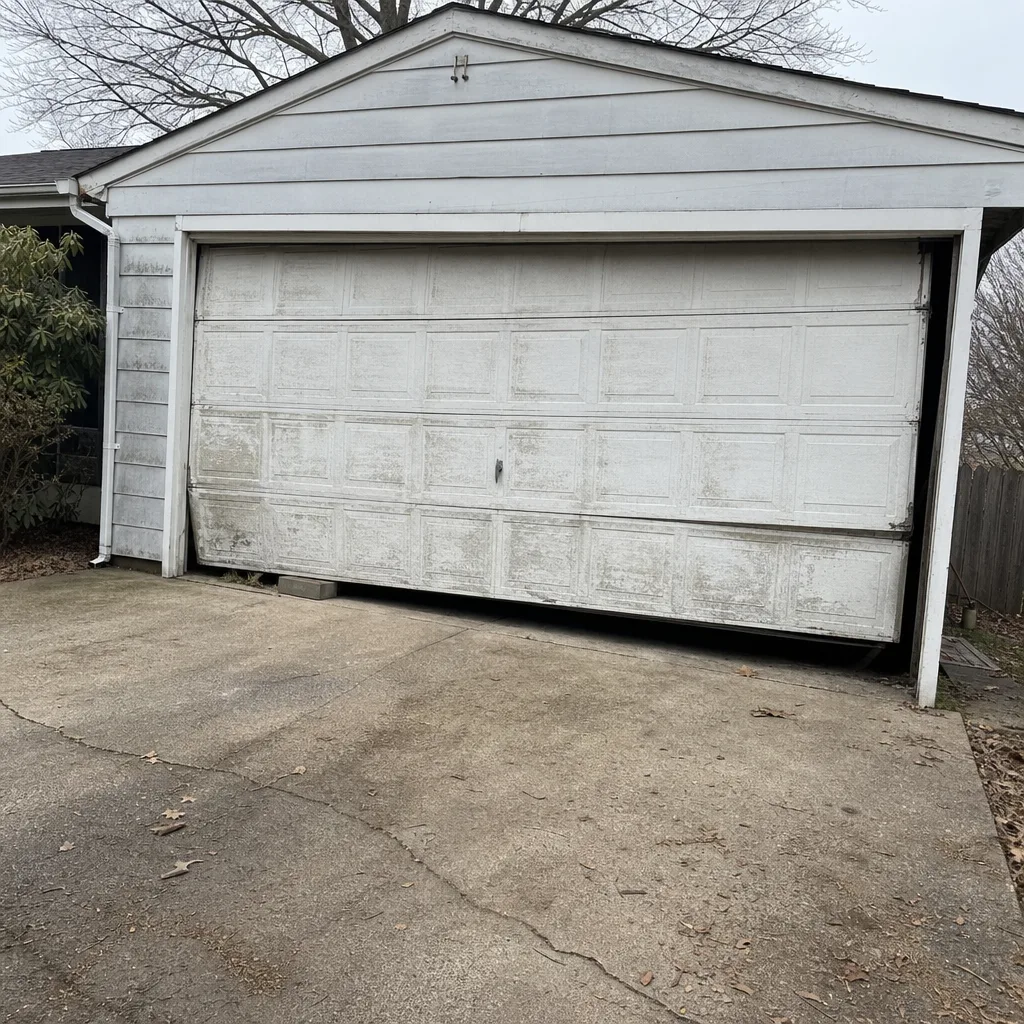 Before
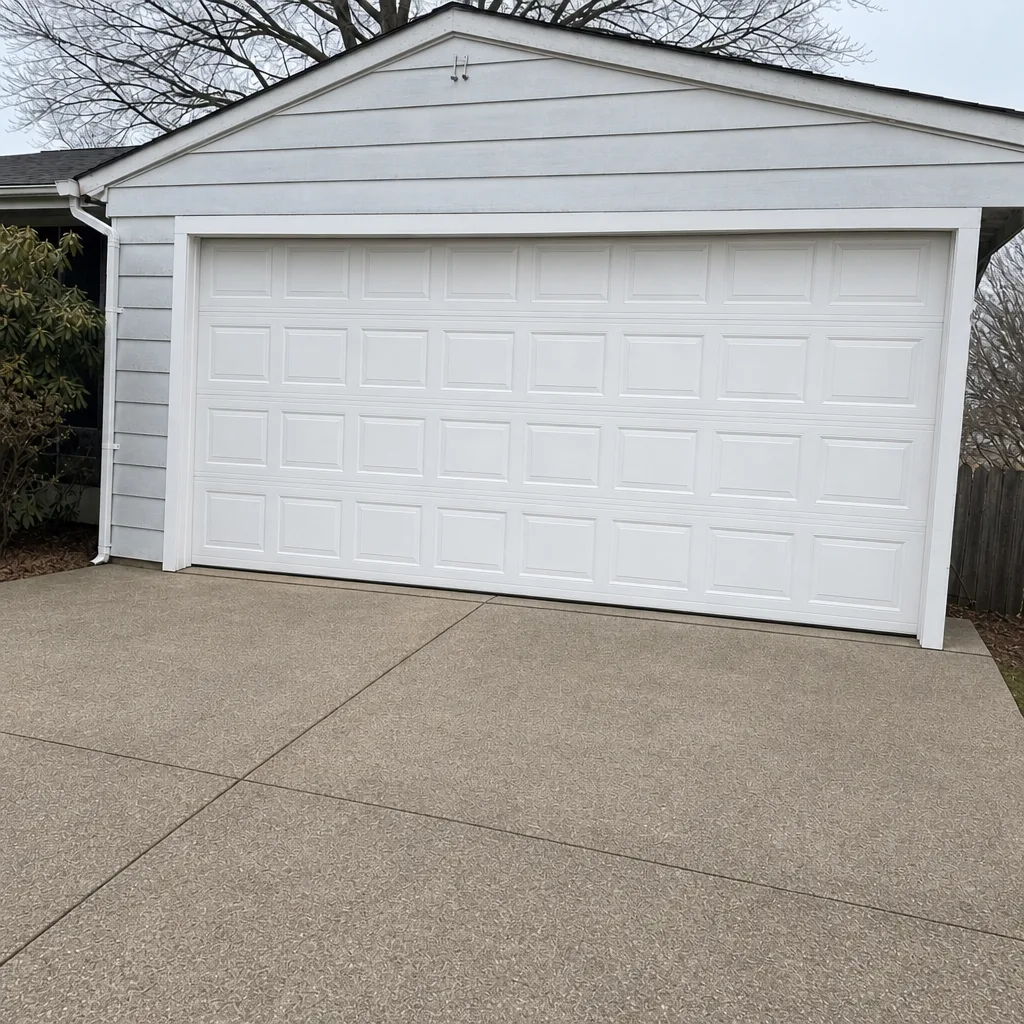 After
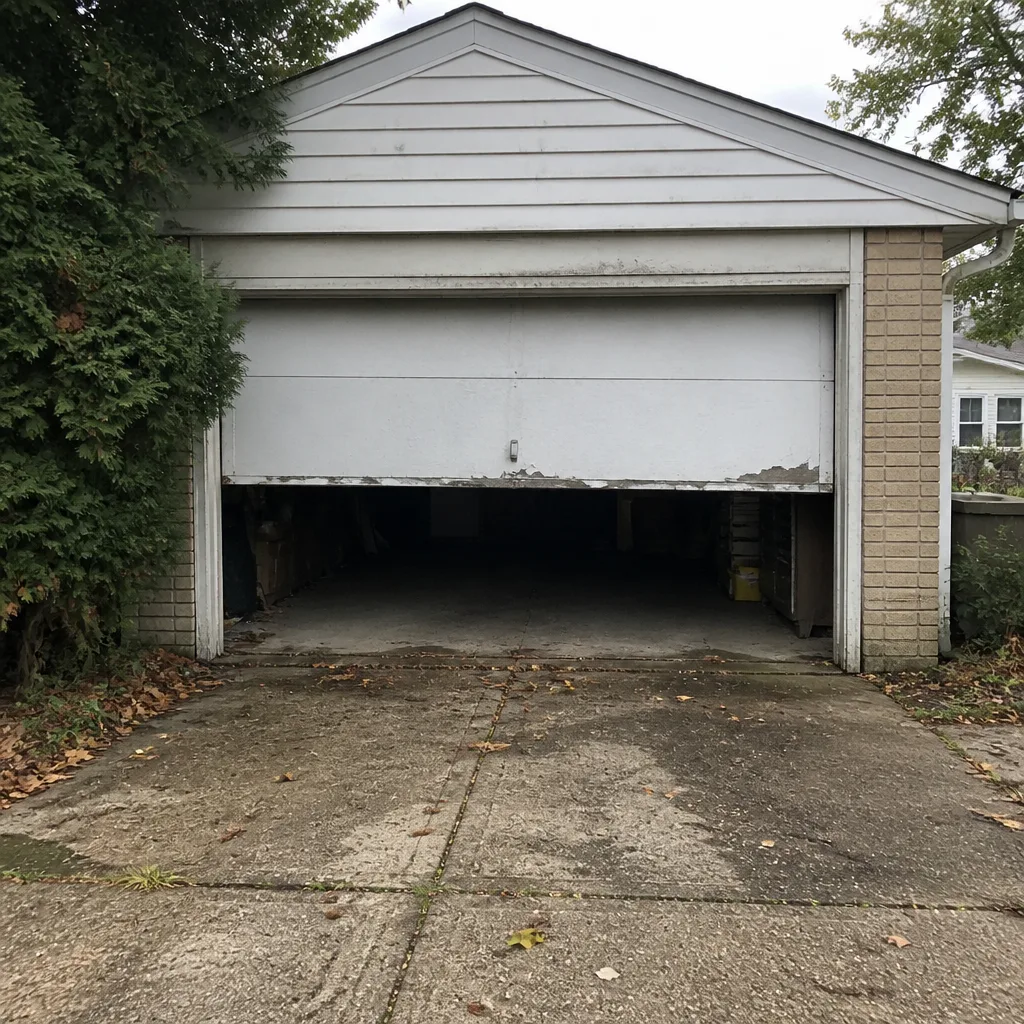 Before
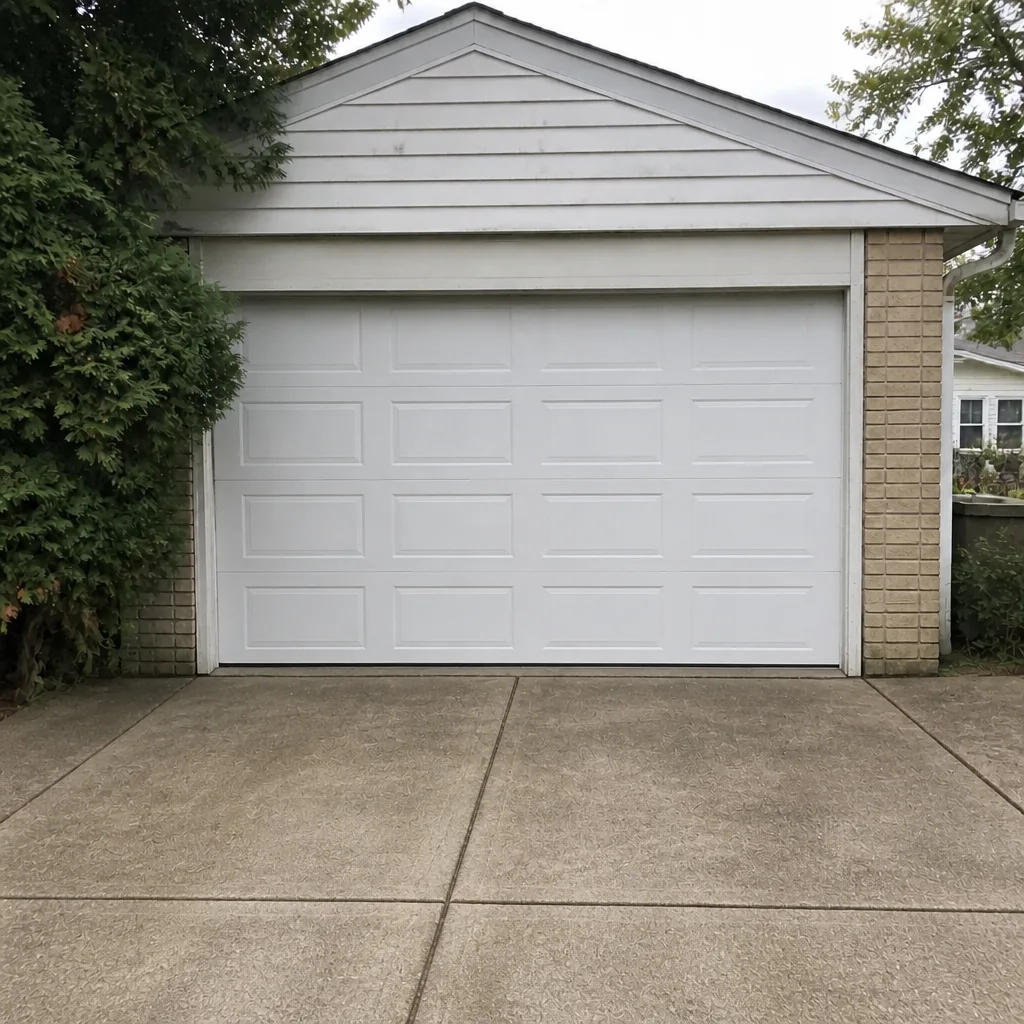 After
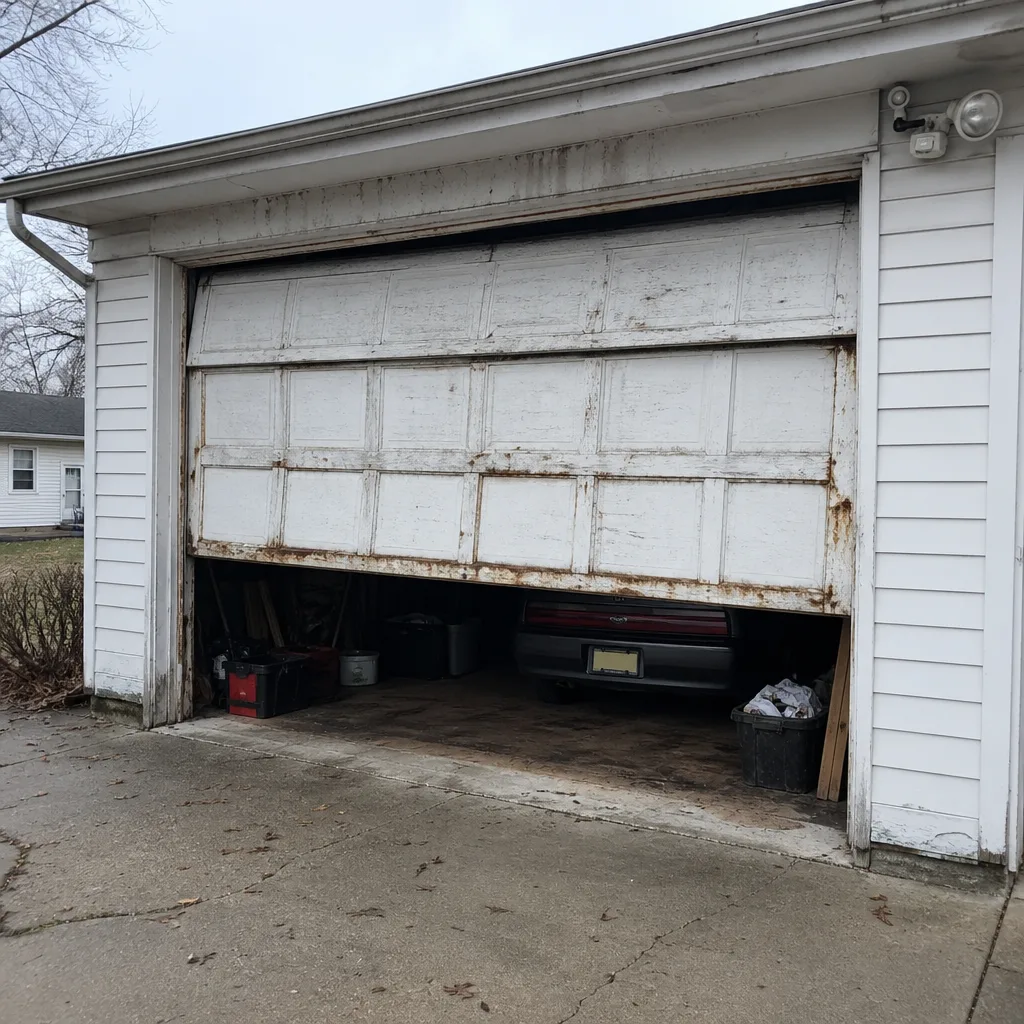 Before
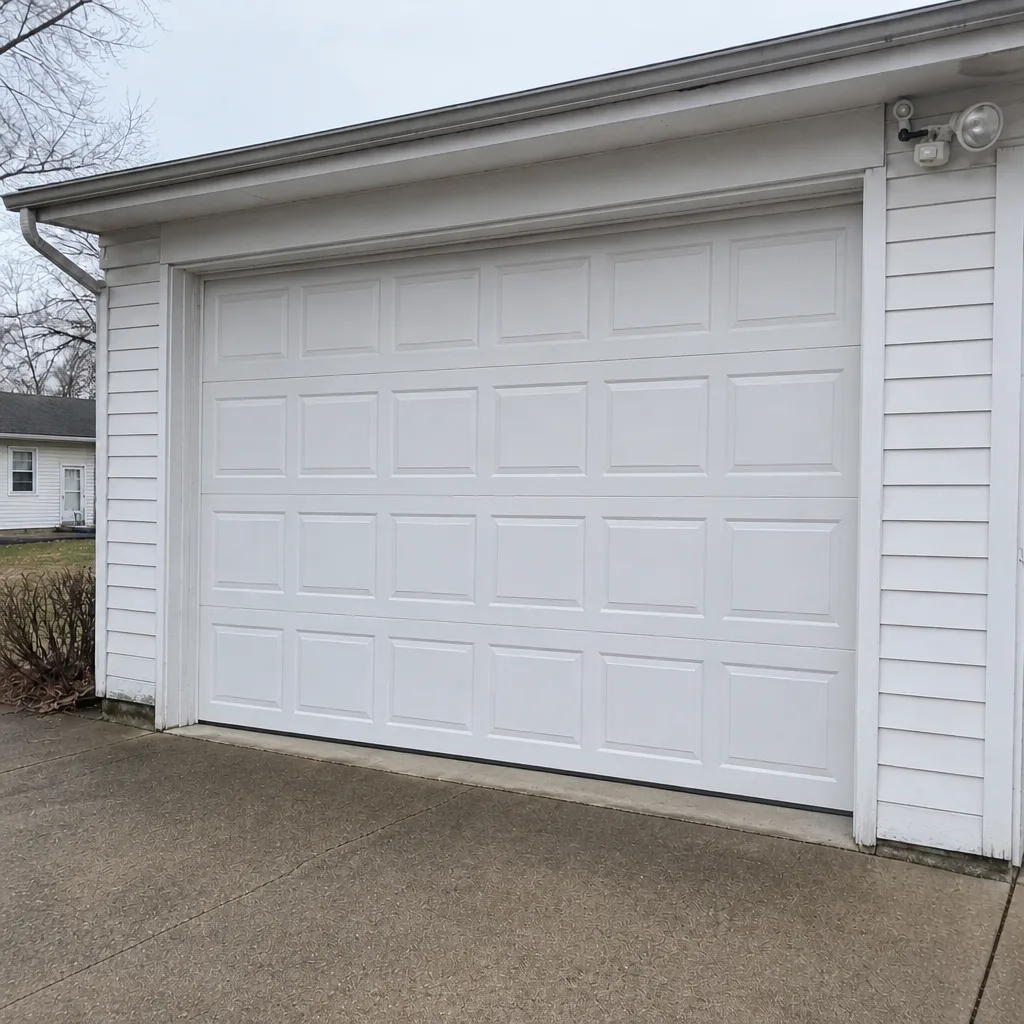 After
Common Mistakes to Avoid
These are the mistakes we see most often in North Ward, and most of them are about timing rather than neglect:
- Lubricating in the wrong season. Applying cold-rated lubricant in July is wasted effort, and applying standard lubricant in January makes the door worse. Match the product to the season, every time.
- Skipping the spring counterbalance check. The door still opens, so nobody checks. But a door that’s lost balance after winter is a door that’s already straining its springs. This is the single most-skipped seasonal task.
- Ignoring winter track frost and ice. During freeze events, ice accumulates on the bottom seal and threshold. If you don’t clear it, the next door cycle forces the ice into the seal and cracks it. Clear the seal after every storm.
- Assuming wood swelling is cosmetic. A swollen wood panel that binds against the track is a mechanical problem, not a finish problem. By the time it drags, the door has been working harder for weeks.
- Lubricating the spring coils themselves. The spring coil is high-tension metal. Lubricating the bearing plates at the ends is useful; coating the coil itself does nothing and encourages homeowners to handle a component they shouldn’t touch.
- Treating track alignment as a one-time job. Tracks move with the seasons. A track that was straight in April can be bowed by July and straight again by October. Check it at each seasonal window.
- Waiting for a failure to call anyone. By the time a North Ward door is visibly broken – snapped spring, off-track door, dead opener – the seasonal maintenance that would have prevented it has already been skipped. The right time to call is before the failure, not after.
When to Call a Professional
Some seasonal care is safe for a homeowner: lubricating hinges and rollers, clearing ice from a seal, checking the safety reverse, inspecting the bottom seal for cracks. Anything involving the springs is not. Torsion and extension springs are high-tension components under serious stored energy, and a spring that’s adjusted incorrectly or handled without the right tools can fail violently. Springs are not a DIY repair, and no amount of seasonal maintenance changes that. If the counterbalance check shows the door isn’t holding, or you hear a snap or see a gap in the spring, stop using the door and call a specialist.
The same applies to a door that’s off its tracks, an opener that’s stopped responding, or a track that’s clearly bent. Those aren’t maintenance tasks; they’re repairs that a trained technician handles with the right equipment. If you’re seeing summer binding or winter grinding that doesn’t resolve after the seasonal tasks, that’s also a professional call, because the cause is usually mechanical rather than seasonal. Garage Door Repair North Ward offers free estimates in North Ward, and we work on the industry’s major door and opener brands, including Amarr, Wayne Dalton, Craftsman, and Raynor lines. Call (844) 905-3092 to book an assessment before the next seasonal window closes.
Frequently Asked Questions
Twice a year, timed to the season rather than the calendar month – once in late November before the hard freeze with a cold-rated lubricant, and once in spring once temperatures have moderated. The twice-a-year schedule is less about frequency and more about matching the product to the temperature. Homeowners who lubricate monthly with the wrong product are worse off than homeowners who lubricate twice with the right one.
The two most common causes are thickened lubricant and spring tension loss. Below 32°F, standard petroleum-based lubricants stiffen and create drag on the rollers and hinges, while steel springs contract and lose some of their stored tension. The door isn’t failing – it’s fighting the cold. A cold-rated lubricant applied before the freeze prevents the first cause; a spring counterbalance check in March catches the second before it becomes a snap. Call (844) 905-3092 if the door is grinding or won’t stay in place when lifted halfway – that points to the springs.
No. Torsion and extension springs are high-tension components that store serious energy, and an incorrectly handled spring can fail violently. Springs are not a DIY repair, and this holds true in every season. If you see a snapped spring, a visible gap in the coil, or a door that won’t hold its balance, keep the door closed and call a professional. Garage Door Repair North Ward treats spring repair as a core specialty, and we can work with your insurer where relevant. Estimates are free – call (844) 905-3092.
Yes, particularly on wood-panel doors. Humidity causes wood to absorb moisture and swell, which tightens the clearance between the panels and the track. The first sign is usually a door that binds partway through its cycle or a scraping sound as the panels drag. A mid-summer clearance check catches the swelling before it causes track binding. If your door is already binding, a technician can check the panel tolerances and track alignment together.
The pre-winter prep sequence in late November, before the first hard freeze. That window covers the cold-rated lubricant, the bottom seal inspection, the balance check, and the safety reverse test – the four tasks that prevent the failures that cluster in January and February. If you do nothing else all year, do this one sequence. And if you’re not sure the door is ready for winter, call (844) 905-3092 for a free assessment.
It can reduce the risk, but it can’t eliminate it. A well-lubricated, balanced door puts less stress on its springs, and the March counterbalance check catches tension loss before it becomes a failure. But springs have a finite cycle life, and North Ward’s cold winters accelerate wear. Maintenance buys time; it doesn’t replace the spring. When a spring does snap, that’s a same-day call – keep the door closed and reach out. For related repair and opener topics, our garage door repair and garage door opener repair pages cover what happens next.
The Bottom Line
Seasonal garage door care in North Ward is a sequence, not a checklist. Cold-rated lubricant before the late-November freeze, a spring counterbalance check when winter breaks, a track and clearance check as summer humidity peaks, and a seal inspection through fall’s freeze-thaw cycles. Each season has one task most homeowners skip, and each skip is what turns a routine season into a repair call. The 32°F threshold is the single number worth remembering – cross it with the right lubricant, and the door handles everything else. Our technicians have up to 13 years of experience, and we work on the industry’s major brands so you don’t need a second call. If a seasonal failure has already happened, garage door installation is also on the table when a door is past repair. For everything else, call (844) 905-3092 for a free estimate, and get your North Ward door back on track this season.
Written by the team at Garage Door Repair North Ward.