Last updated November 23, 2026
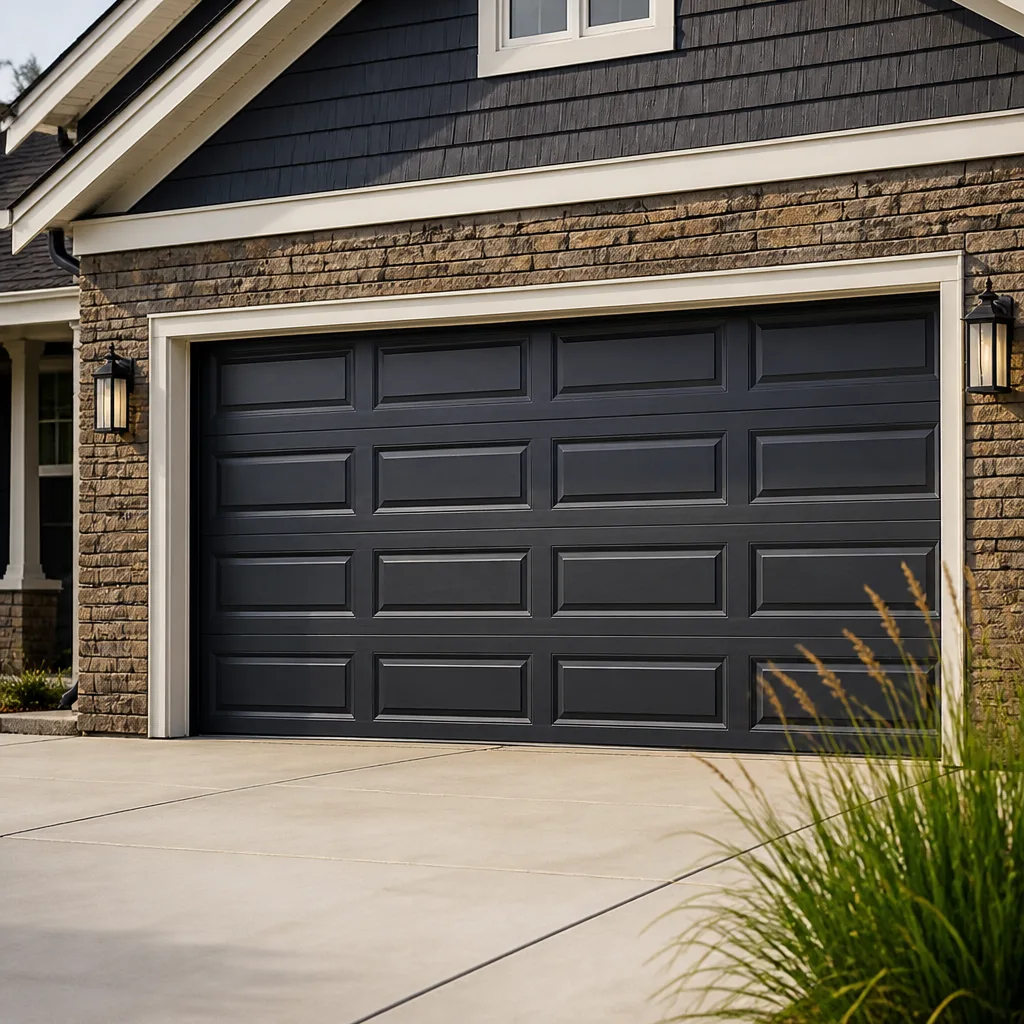 Raised-panel steel
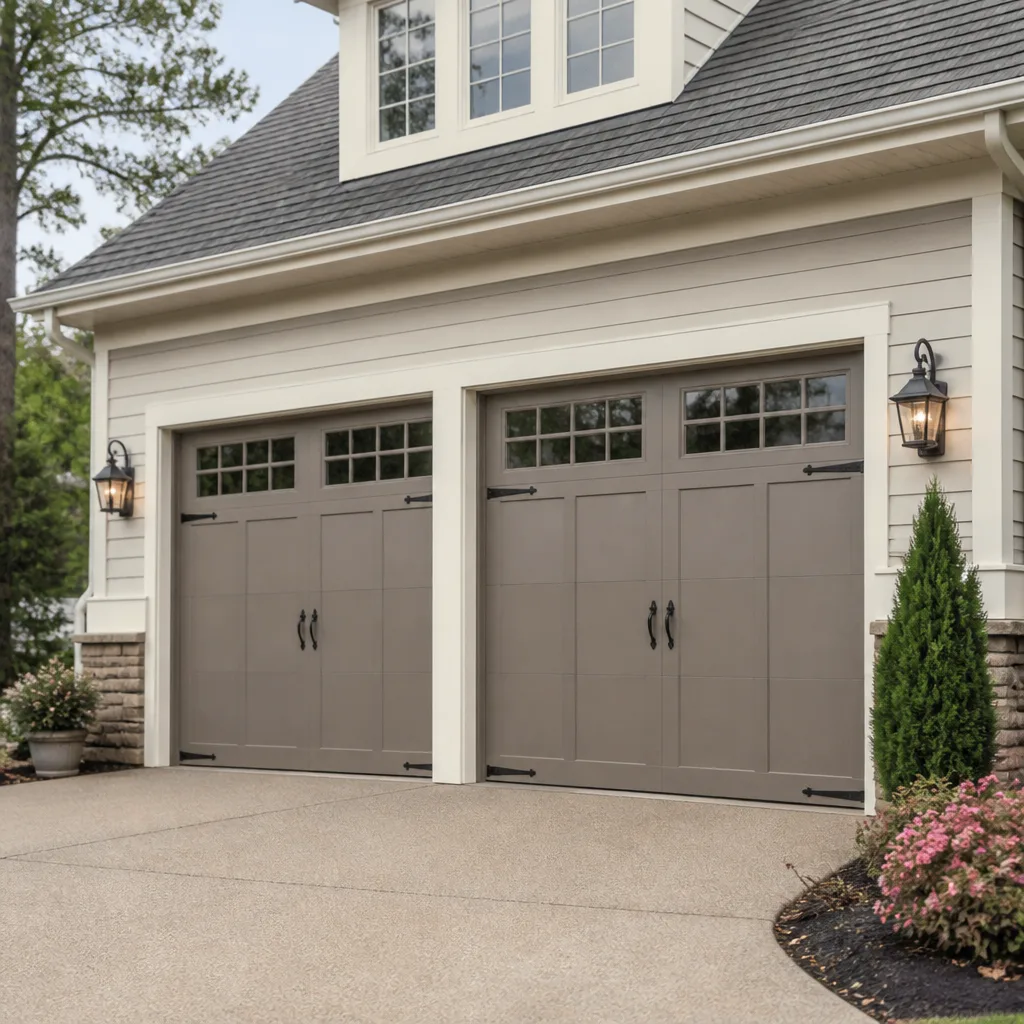
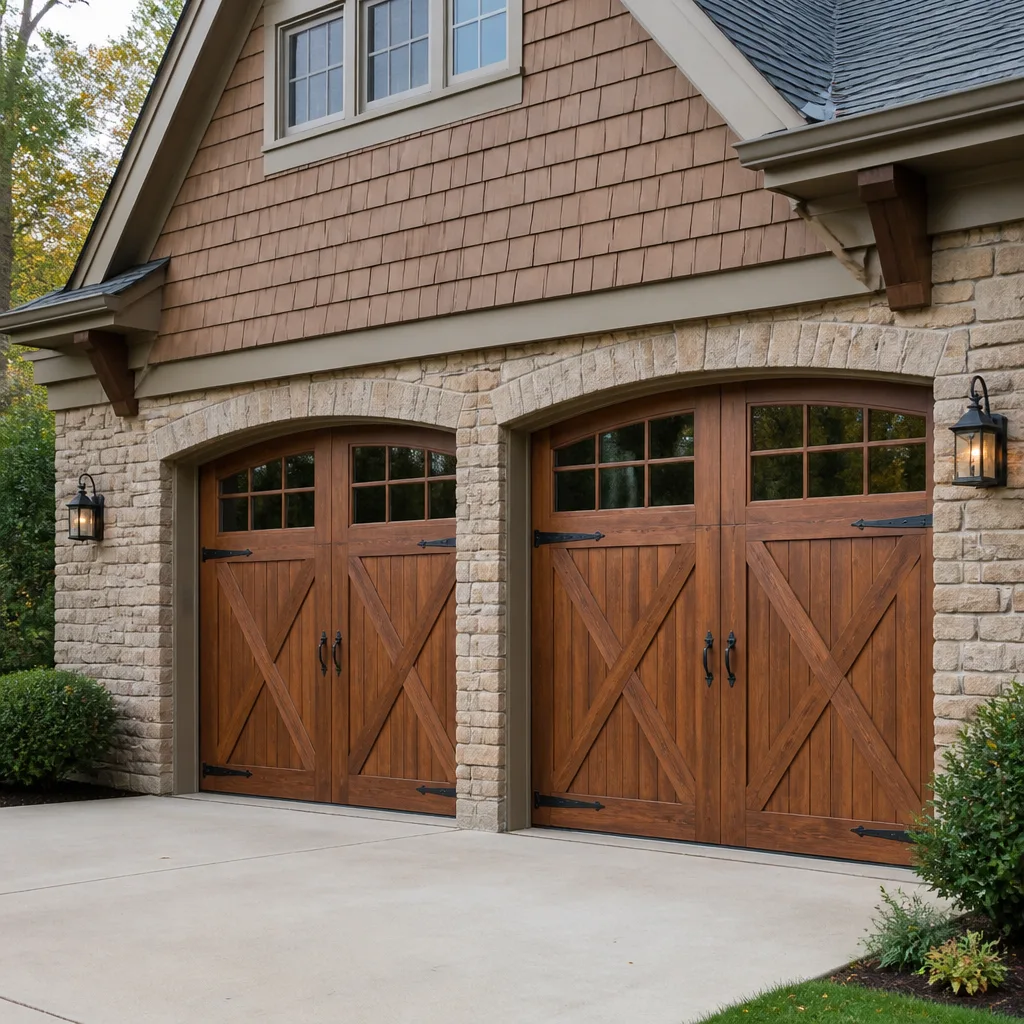 Carriage house
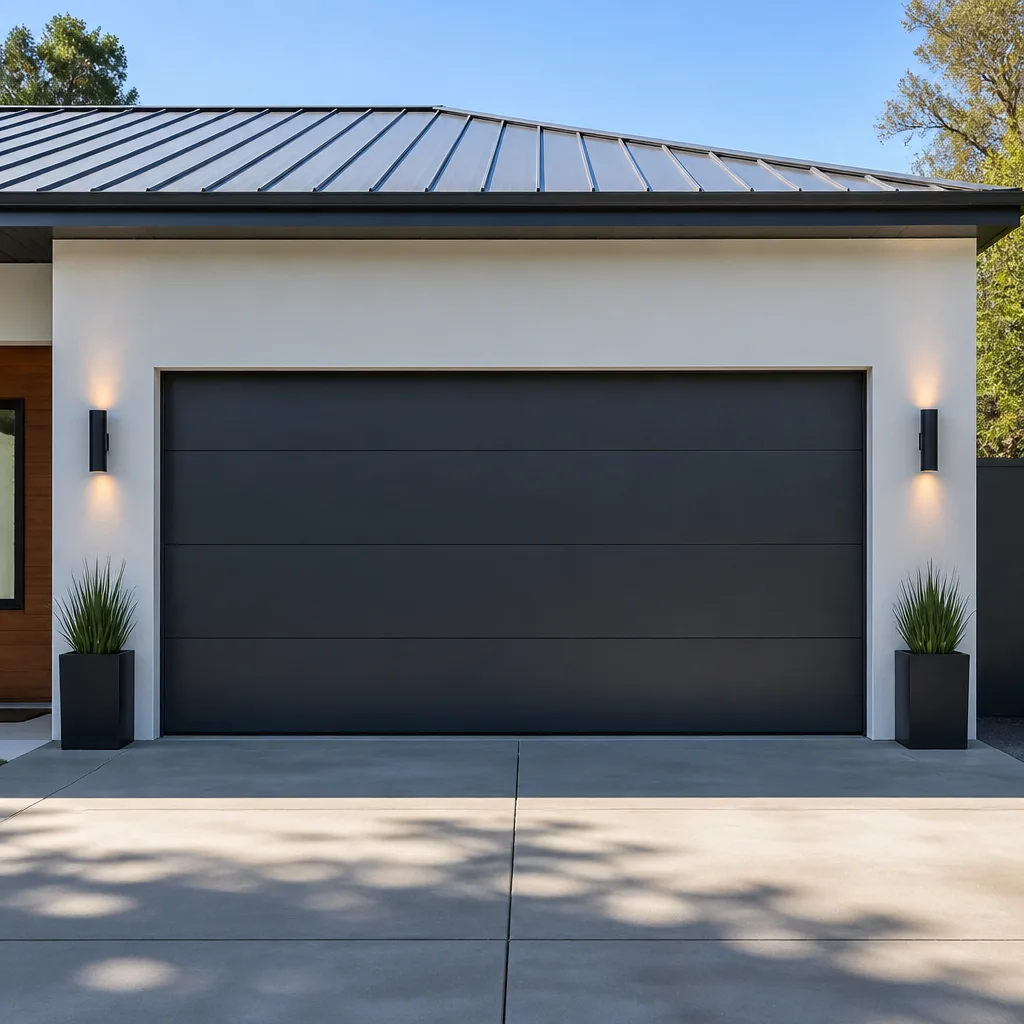 Modern flush
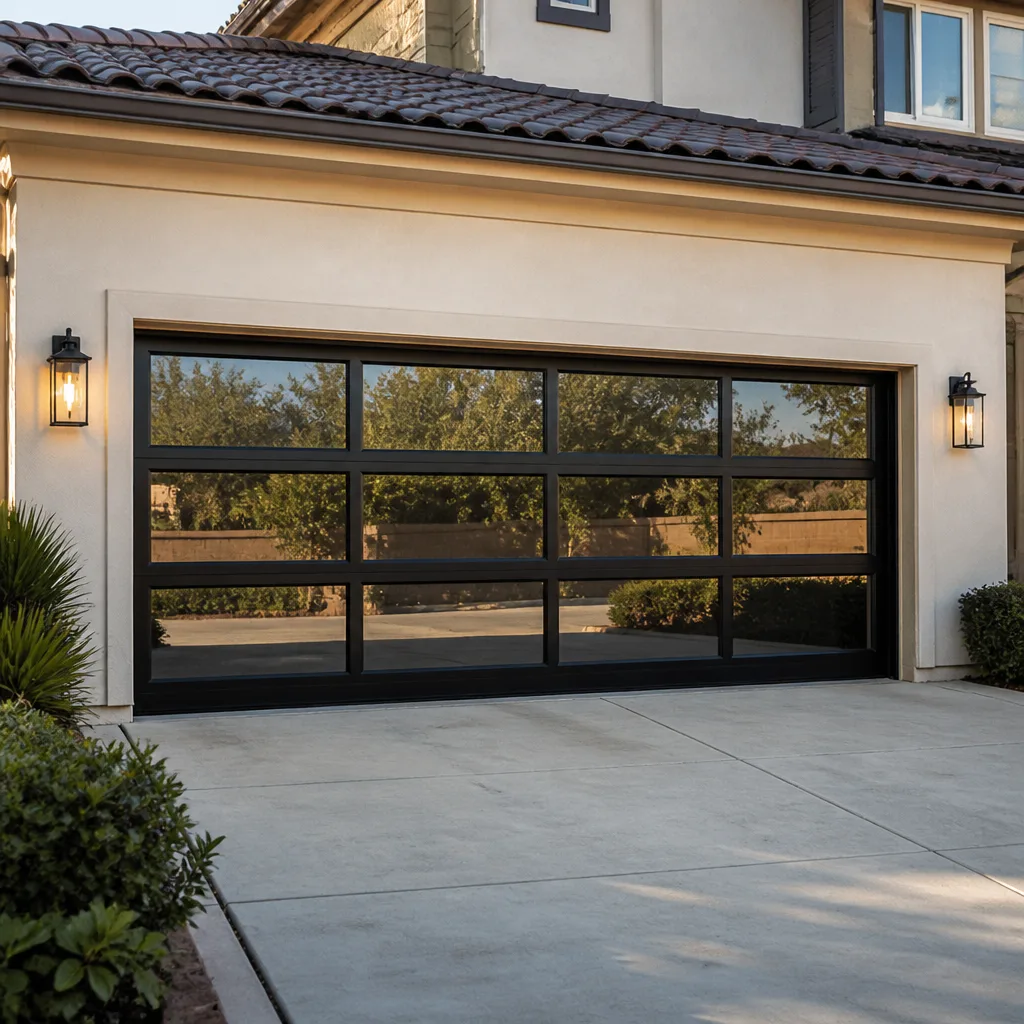 Full-view glass
 LiftMaster openers
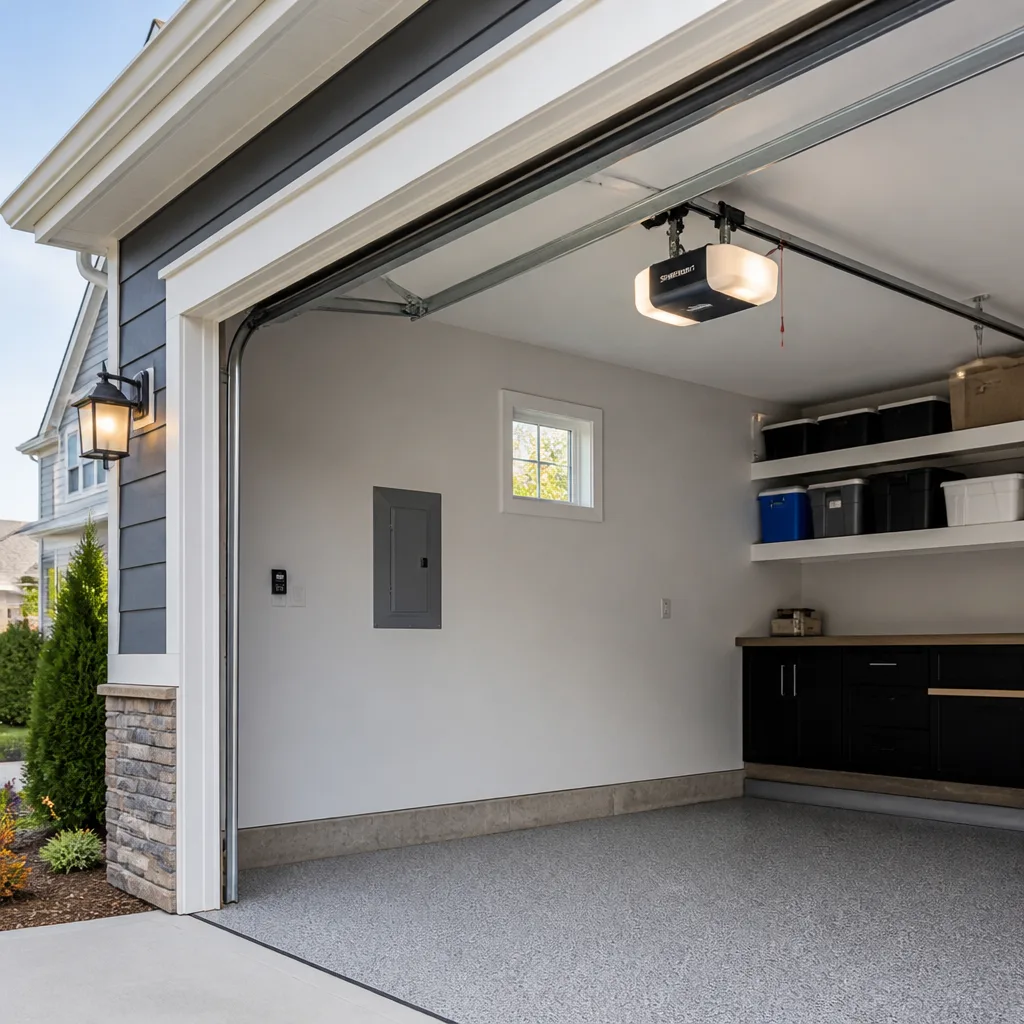 Chamberlain openers
Full 25-point door and opener safety check with every visit - springs, cables, rollers, tracks, and your LiftMaster or Chamberlain opener included
You get a price before we start. It does not change when the pro arrives.
Get your free estimateThe Complete Guide to Garage Doors in North Ward
Most homeowners think about their garage door twice: the day they buy the house and the day it stops working. That’s a mistake, because a standard door cycles up and down more than 1,500 times a year, more mechanical movement than almost any other system in your home, and yet few people can name a single part inside it. The panel you see is the least interesting piece. Behind it sits a stack of springs, cables, rollers, hinges and an opener drive that all wear at predictable rates. This guide breaks that system down for North Ward homeowners, from the pre-1980 housing stock that shapes so many local installs to the repair-versus-replace math that actually holds up. By the end you’ll know what fails first, what it should cost, and when to pick up the phone.
Quick Answer
A garage door is a balanced mechanical system, not a single product, and the parts wear in a fairly predictable order: springs first, then rollers and cables, then opener drive components, then tracks and panels. In North Ward, the older housing stock means low-headroom clearances, non-standard rough openings and legacy track systems are common, so an accurate diagnosis matters more than a fast guess. Repair usually makes sense for a broken component on a sound door; replacement math starts working when several major parts fail together or the door itself is failing.
Styles & brands we work with
- Raised-panel steel
- Carriage house
- Modern flush
- Full-view glass
- LiftMaster openers
- Chamberlain openers
Table of Contents
- How a Garage Door Actually Works
- What North Ward’s Older Housing Stock Means for Your Door
- The Component Hierarchy: What Fails First and What It Costs
- Repair or Replace? The Math That Actually Works
- What “Brand Specialist” Really Means
- Permit Triggers in North Ward Most Homeowners Miss
- A Simple Seasonal Check for North Ward Doors
- What Garage Door Work Costs in North Ward
How a Garage Door Actually Works
A garage door feels like one solid object, but it’s really a collection of systems working against gravity. Understanding the layers helps you talk to a technician without guessing, and it helps you spot a problem before it strands your car.
The mechanical stack, from the top down
- Torsion springs mount above the door on a steel shaft and store the energy that lifts it. A door that feels light to lift by hand is light because the springs are doing most of the work, not because the door is cheap.
- Extension springs run along the horizontal tracks on either side in older setups. They do the same job by a different method and stretch as the door closes.
- Cables connect the springs to the bottom corners of the door. They’re under heavy tension at all times and they’re the part that turns a spring failure into a safety problem.
- Rollers and hinges carry the panels along the track. These are the cheap, wearable parts, and they’re the ones people neglect the longest.
- Tracks guide the whole assembly. They bend, they lose alignment, and on older doors they’re the source of the grinding and scraping sounds people describe as “the door being loud.”
- The opener doesn’t lift the door on its own. It provides the push and pull while the springs do the heavy lifting, which is why a door with tired springs wears out its opener faster.
That last point catches a lot of people. When an opener starts straining or failing, the real problem is often upstairs in the springs, not in the motor. Replacing the opener without looking at the balance of the door just moves the failure down the line.
Why balance is the whole game
A properly balanced door takes only a light pull to move by hand and stays put at roughly halfway open. If it drops, races upward, or takes real effort to lift, the springs or cables have lost their tension. That balance is the single best indicator of overall system health, and it’s something any North Ward homeowner can check from the floor without touching a tool.
What North Ward’s Older Housing Stock Means for Your Door
Much of the housing in North Ward was built before 1980, and that shapes garage door work here in ways you won’t hit in a newer subdivision. The door and opener that fit a 1970s opening are rarely the ones that fit a new build, and a technician who doesn’t account for that ends up forcing parts into spaces they weren’t designed for.
Low-headroom clearance
Older garages often have a shallower ceiling above the door than modern construction allows. That matters because torsion spring systems need clearance above the door, and some low-clearance setups use a different layout entirely. When you call for spring work, knowing your headroom matters. A technician who arrives expecting standard clearance and finds a tight ceiling is already behind.
Non-standard rough openings
Pre-1980 homes frequently have door openings that don’t match today’s standard sizes. When you’re planning a new door, this comes up immediately: a door has to be measured to the actual opening, not ordered off a spec sheet. That’s why a proper measure before ordering is non-negotiable, and why a written estimate should always follow a site measurement rather than a phone guess.
Legacy track systems
Older track systems use different profiles, thinner gauge steel and mounting methods that have long since changed. Parts for some of these are still available; others aren’t. In our experience, a legacy track that’s straight and well-mounted can sometimes be kept, and sometimes it has to go. The honest answer depends on inspecting the actual hardware, not on a generic rule.
- Check your ceiling height above the door if you’re considering a new opener.
- Measure the opening in several places, not just the center.
- Ask whether your track profile is still serviceable before assuming replacement.
- Note whether your door has torsion or extension springs, since the repair approach differs.
The Component Hierarchy: What Fails First and What It Costs
If you want to budget for your garage door the way you budget for a roof or a furnace, you need to know which parts fail most often and roughly what they cost to put right. Here’s the order we see most frequently, with typical price ranges. These are estimates for the North Ward market, and the written quote you receive after a technician inspects your door sets the final price.
Ranked by failure frequency
- Torsion or extension springs. The most common failure by a wide margin, and the most safety-critical. One spring typically runs $180 to $340 in this market. A matched pair is usually replaced together, so a pair costs about twice that.
- Rollers and hinges. Wear out quietly and make the door loud, jumpy or misaligned. Typically $120 to $280 for a roller set with hinges.
- Cables. Fail with or after the springs, and they’re under constant tension. Typically $100 to $250 per side.
- Openers. Motor, logic board, gear set or safety sensor failures. Opener repair generally falls in the $150 to $450 range depending on the component and brand.
- Tracks. Bend from impact or drift out of alignment. Alignment work is modest; a bent track section replacement runs higher.
- Panels and bottom sections. The visible damage, but the least frequent mechanically. Panel replacement is priced per panel and depends on the door line.
Why the ranking matters
Most people call when the door won’t open, and the immediate assumption is “the opener is broken.” It’s usually not. Springs and cables outrank openers on failure frequency, and a dead opener is often the symptom of a door that stopped balancing correctly months earlier. A technician who starts at the opener and works backward will find the actual cause faster than one who replaces the motor and hopes.
Springs are a different category of job entirely. Torsion springs are high-tension components, and the energy stored in a wound spring can cause serious injury in a fraction of a second if it’s released incorrectly. Springs are not a DIY repair. We treat spring work as a named specialty because it demands the right tools, the correct winding technique and genuine familiarity with the hardware. That’s also why many general handymen won’t touch it. If you’re searching for Garage Door Repair North Ward, make sure spring work is something the company actually does rather than outsources.
Repair or Replace? The Math That Actually Works
This is the decision that frustrates homeowners most, because the honest answer depends on a combination of factors rather than a single price trigger. A repair is a band-aid when it fixes one worn part on a door that’s otherwise sound, and that’s fine: a spring replacement on a good door is money well spent. The math tips toward replacement when several major systems fail at once or when the door itself is structurally done.
Lean toward repair when:
- The door is structurally sound with no cracked or dented panels.
- The failure is isolated: a spring, a set of rollers, a cable.
- The track is straight and the hardware is still serviceable.
- The opener is modern and working, and the issue is in the door itself.
Lean toward replacement when:
- Multiple major components are failing within a short window.
- Panels are cracked, warped or separating from the frame.
- The track system is legacy hardware with parts that are no longer available.
- The door is heavy, poorly insulated, or was never right for the opening in the first place.
- You’re planning to keep the home long enough to benefit from a modern, better-insulated door.
There’s no clean dollar threshold that applies to every door, and anyone who quotes one over the phone without looking at the door is guessing. What we’d say instead: get a measured, written estimate that lays out the repair cost against the replacement cost for your specific door and opening. That estimate should be agreed before any work starts, so you’re never surprised by an invoice. For replacement projects, we’d point you toward garage door installation, where the process starts with a proper measure rather than a same-day promise.
What “Brand Specialist” Really Means
Every garage door and opener brand has its own logic: its own wiring conventions, its own error codes, its own parts diagrams and its own failure patterns. A brand specialist isn’t a company that lists logos on a website. It’s a company whose technicians have worked on that equipment enough times to diagnose by recognition rather than trial and error.
The difference in practice
A general handyman can often swap a photo-eye sensor or reset a limit switch. What they typically can’t do is read a Chamberlain or LiftMaster logic board fault, recognize the specific gear-and-sprocket wear pattern a Genie unit develops, or know which Clopay and Amarr door lines have a particular track profile. Those are the details that separate a ten-minute correct fix from an hour of parts-swapping.
We’re factory-familiar with eight of the most widely installed brands in North America: LiftMaster, Chamberlain, Genie, Clopay, Amarr, Wayne Dalton, Craftsman and Raynor. Our technicians have up to 13 years of experience, and when they open an opener, they’re looking at a familiar layout. If you need garage door opener repair, the first question worth asking is whether the company recognizes your brand on sight. If the answer is “we’ll figure it out,” keep calling.
Why this shows up at the worst moment
Brand knowledge matters least on a routine tune-up and most during an emergency. When a door is stuck open and your home is exposed, or stuck closed with your car inside and your schedule collapsing, you don’t want a technician learning your system on the spot. Emergency garage door service is a real offering here, not a marketing line, and brand familiarity is what makes a genuine emergency visit productive instead of a diagnostic appointment that ends with “we’ll come back with the part.”
Permit Triggers in North Ward Most Homeowners Miss
Most garage door repair work doesn’t require a permit, but replacement work sometimes does, and the rules depend on your municipality and the scope of the job. The reliable move is simple: call your local building department before a full door or opener replacement and ask whether your specific project needs a permit. It takes five minutes and it protects you at resale.
Where permits typically come into play
- Full door replacement. A structural change to the opening is more likely to trigger a permit than a swap of like for like.
- Enlarging or modifying the rough opening. This is framing work and is generally treated differently from a door swap.
- Adding an opener to a door that never had one. This often involves new electrical work, and electrical work usually has its own rules.
- New construction or a garage conversion. Clearly permitted territory.
We won’t tell you a specific code section or rule number, because those vary by municipality and change over time. What we will say is that permit questions come up more often than people expect on a full replacement, and it’s worth asking before you order the door rather than after it’s installed. If a contractor discourages you from asking your building department, treat that as a warning sign.
A Simple Seasonal Check for North Ward Doors
Fifteen minutes of inspection a few times a year catches the majority of problems before they strand you. None of these steps involve touching a spring or a cable, and you shouldn’t.
- Test the balance. Disconnect the opener using the release cord, lift the door halfway by hand, and let go. It should hold in place. If it falls or rises, call for service.
- Listen on the way up and down. Grinding, squealing and popping point to rollers, hinges or track alignment.
- Look at the rollers. Worn steel rollers flatten and nylon rollers crack. Either way, replacement is inexpensive.
- Check the tracks for straightness. Sight along each track from floor level. Dents and bends cause the door to bind.
- Test the safety reverse. Put a solid object in the door’s path and confirm it reverses on contact. This is the most important safety function on the whole system.
- Look at the springs, don’t touch them. A visible gap in a torsion spring means it has failed and the door should not be operated.
- Inspect the weather seal. A cracked bottom seal lets water and cold air in, especially on older North Ward garages.
If anything on that list looks wrong, stop operating the door and book a diagnostic. A door run with a broken spring will wear its opener and can drop unpredictably.
What Garage Door Work Costs in North Ward
These are typical estimated ranges for the North Ward market. The written estimate you receive after an inspection sets the final price, and that price is agreed before any work starts.
| Service | Typical estimated range |
|---|---|
| Torsion or extension spring, one spring | $180 – $340 |
| Matched spring pair | About twice the single-spring price |
| Cable replacement, per side | $100 – $250 |
| Roller and hinge set | $120 – $280 |
| Opener repair | $150 – $450 |
| Track alignment | Quoted after inspection |
| Panel replacement | Priced per panel, quoted after measure |
| New door installation | Quoted after a free measure |
Estimates are free, and we quote before we start. If the price changes once we see the door, it’s because the scope changed and we’ll explain exactly why before touching anything. If you suspect a spring has failed, our team handles garage door repair across all the brands we’ve listed, and we can tell you quickly whether it’s a repair or a bigger conversation.
Common Mistakes to Avoid
- Assuming the opener is the problem. A straining or dead opener usually traces back to a door that’s out of balance. Replacing the motor first often just buys you a second failure.
- Trying to fix a spring yourself. Torsion springs store enormous energy, and releasing it incorrectly can cause serious injury. Springs are not a DIY repair, and no amount of video-watching changes the physics.
- Ordering a new door without a measure. On North Ward’s pre-1980 openings, non-standard sizes are common. Ordering from a spec sheet is how you end up with a door that doesn’t fit.
- Skipping the permit question. Full replacements can trigger permit requirements depending on your municipality. Ask your building department before you order, not after.
- Ignoring a noisy door. Grinding and squealing are early warnings from rollers and tracks. They’re cheap to fix now and more expensive once they’ve worn the rest of the system.
- Hiring a generalist for specialist work. A handyman can handle a photo-eye reset. Spring, cable and opener electronics work calls for someone who does it regularly and knows your brand.
- Accepting a phone quote as final. A real estimate follows an inspection. A verbal number given before anyone has seen the door isn’t a price, it’s a guess.
See the difference
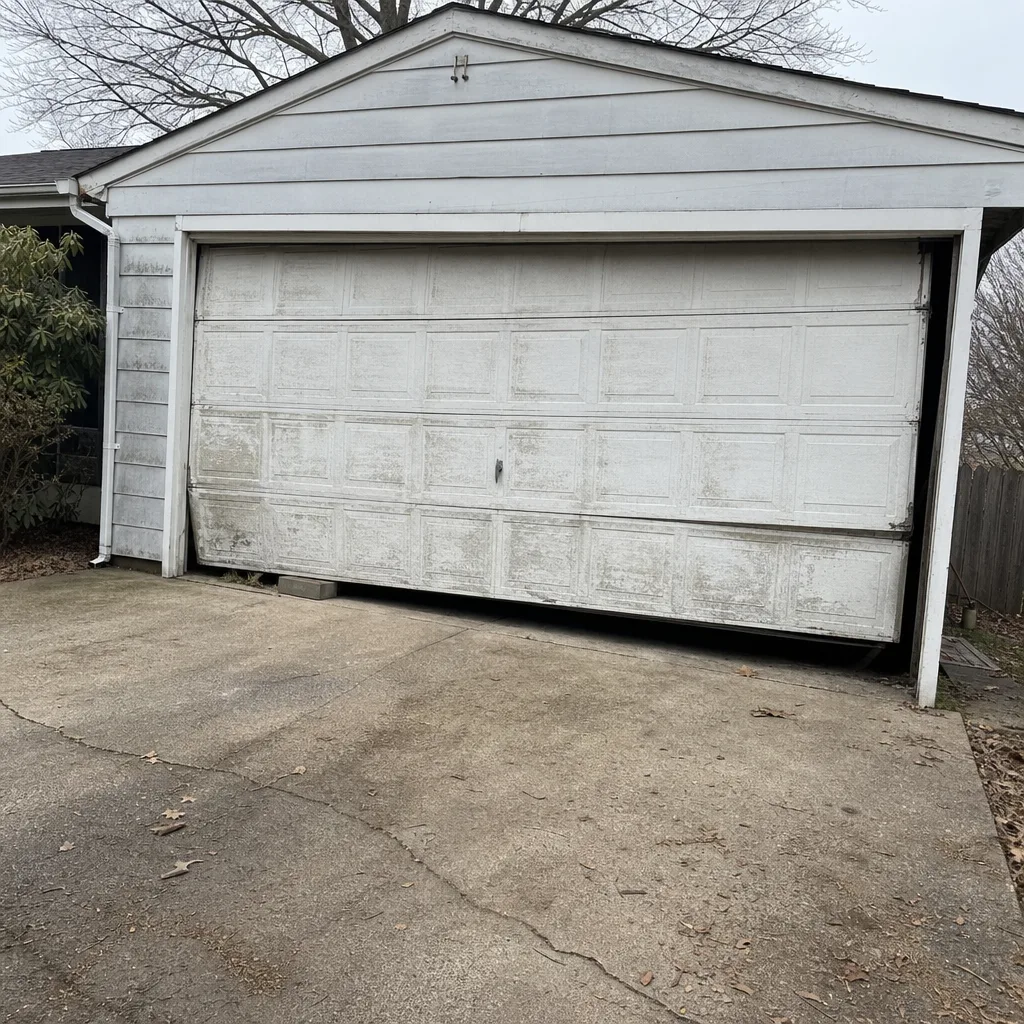 Before
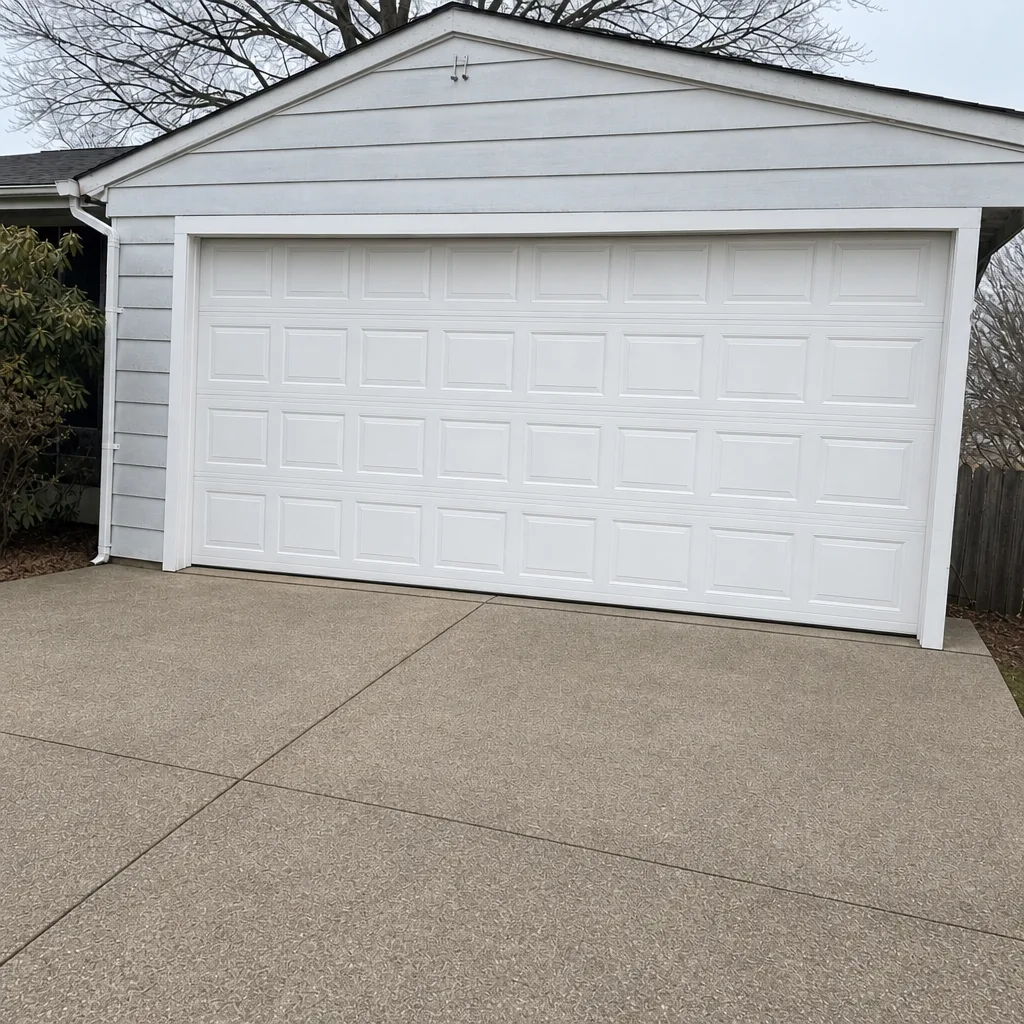 After
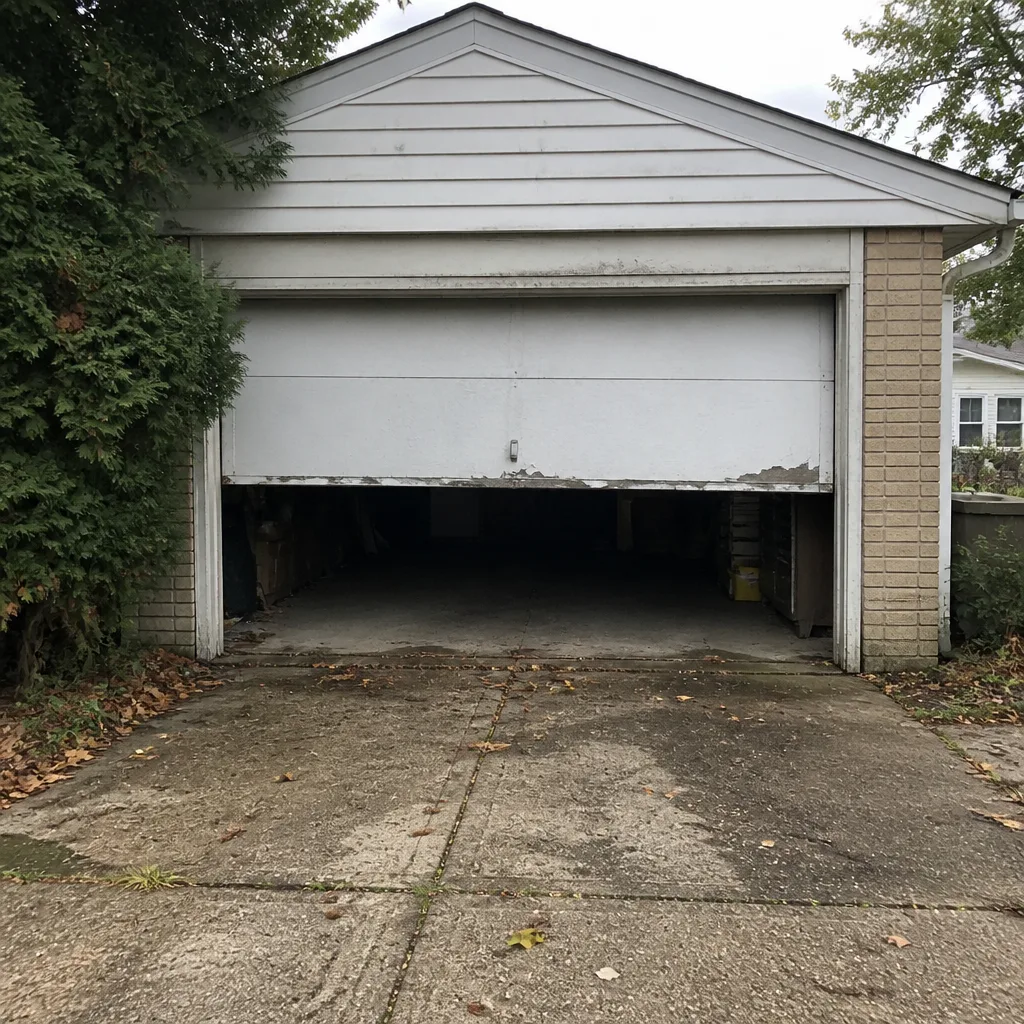 Before
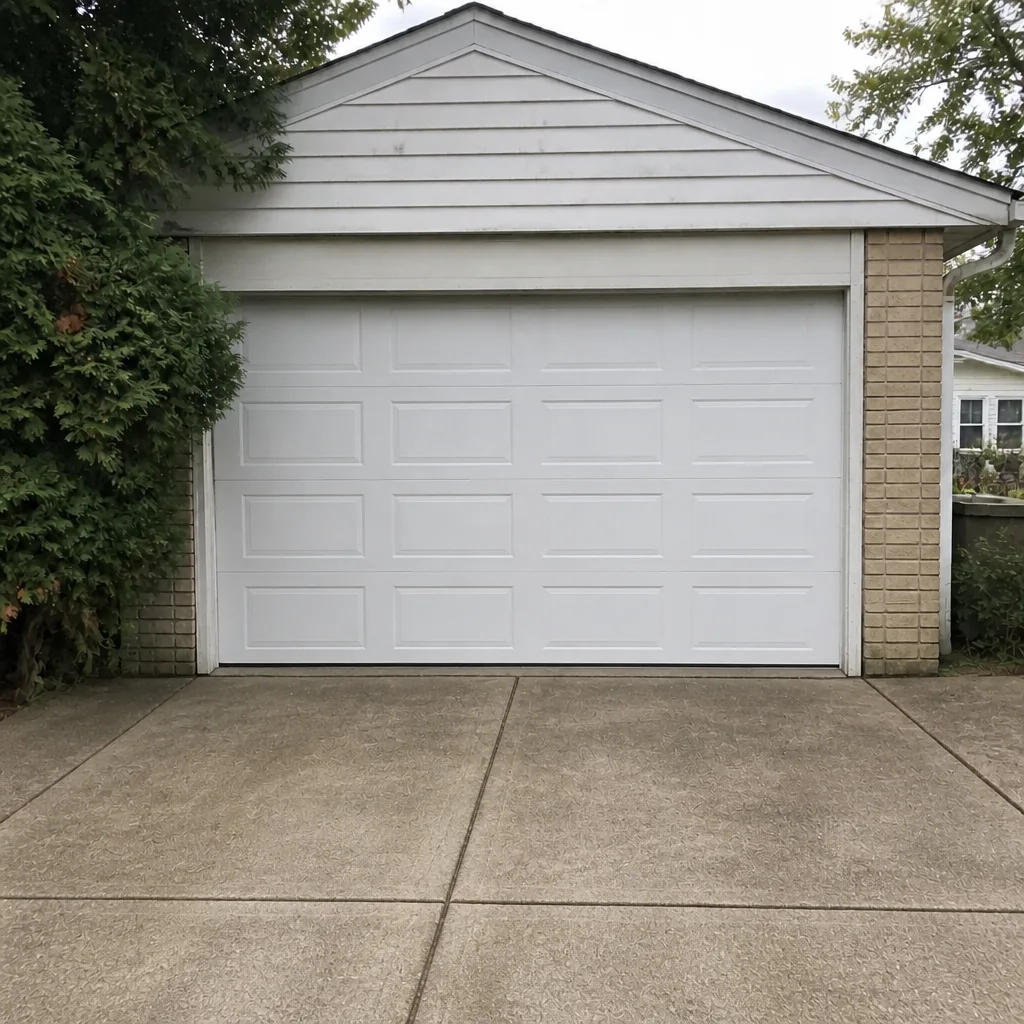 After
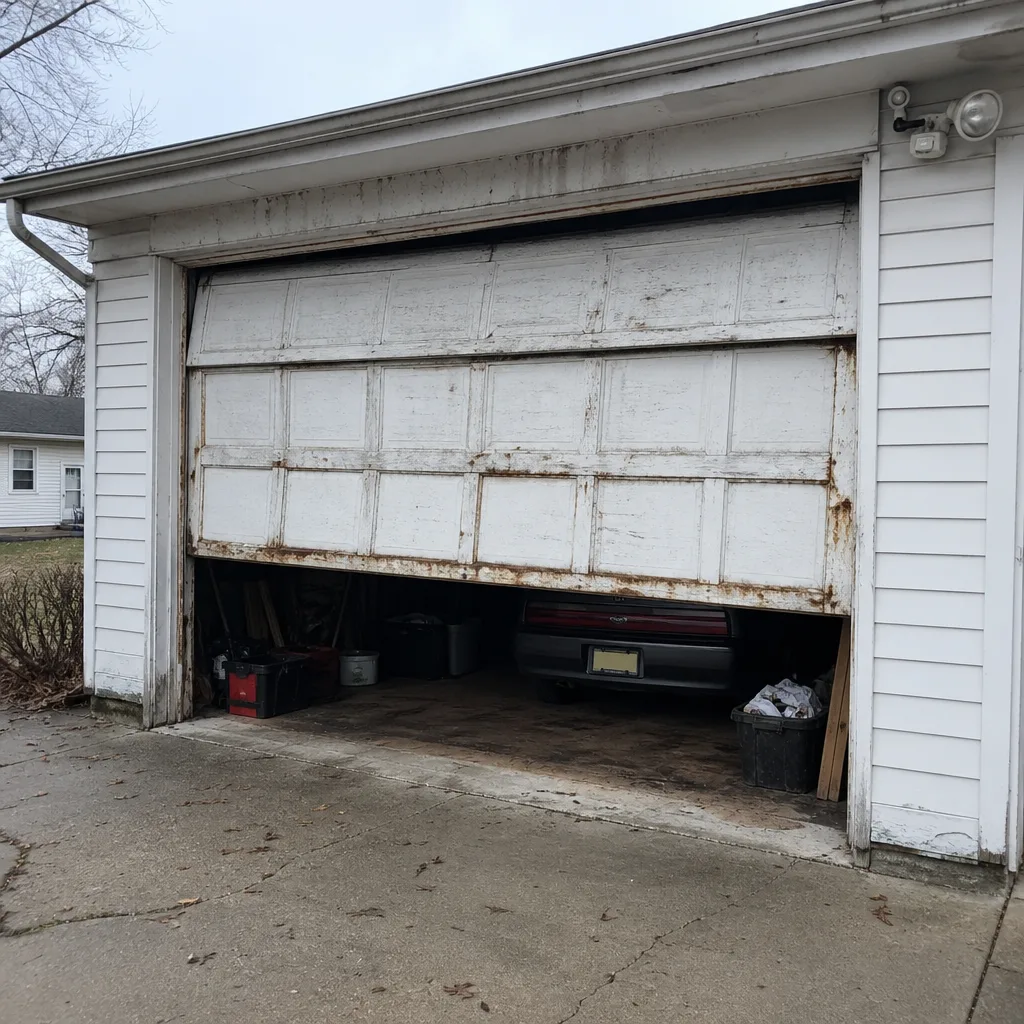 Before
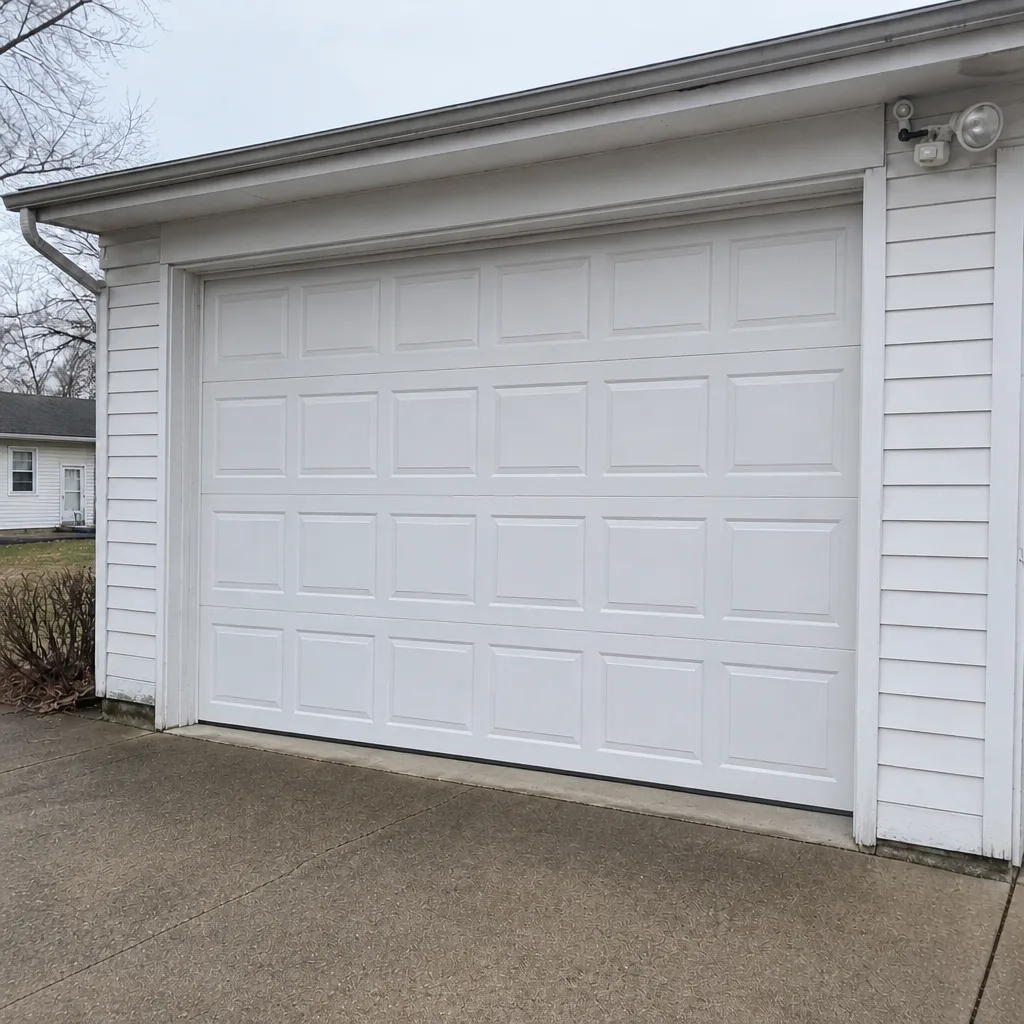 After
When to Call a Professional
Call a professional when the door won’t balance, when you can see a gap in a spring, when a cable looks frayed, when the door has come off its tracks, or when the opener runs but the door doesn’t move. Any of those points to a system under load that shouldn’t be operated. Also call if the door is stuck open and your home is exposed, or stuck closed with your car inside and your day falling apart. Emergency garage door service exists for exactly those moments, and we’d rather you call than force it. Garage Door Repair North Ward offers free estimates in North Ward. Call (844) 905-3092 and we’ll get a technician out to look at it.
Frequently Asked Questions
Expect roughly $180 to $340 for a single torsion or extension spring in the North Ward market. A matched pair is usually replaced together, so a pair costs about twice the single-spring price. The written estimate you receive after inspection sets the final price, and it’s agreed before any work begins. Call (844) 905-3092 for an exact quote – estimates are free.
Yes, emergency garage door service is available for doors that are stuck open, stuck closed, or off their tracks. A door stuck open leaves your home exposed and a door stuck closed traps your car, and both warrant a same-day call. Call (844) 905-3092 and we’ll get you on the schedule.
No, the price we quote after inspecting your door is the price you pay for that scope of work. If the inspection reveals something the phone conversation didn’t cover, we’ll explain the difference and get your agreement before starting anything. You’ll never get a surprise invoice. Call (844) 905-3092 to book an inspection.
The local pros we connect you with are licensed and insured as their state requires. Technicians also bring brand-specific familiarity across LiftMaster, Chamberlain, Genie, Clopay, Amarr, Wayne Dalton, Craftsman and Raynor, with up to 13 years of experience on the team. Call (844) 905-3092 to discuss your door.
Yes, in three specific ways: low-headroom clearance, non-standard rough openings and legacy track systems. Each one affects which parts fit and which repairs are worth doing. It’s worth mentioning your home’s age when you call so the technician arrives prepared. Call (844) 905-3092 and tell us the era of your garage.
It depends on your municipality and the scope of the work. Full replacements and any modification to the rough opening are more likely to require a permit than a like-for-like swap. The safest move is to call your local building department and ask directly before ordering. Call (844) 905-3092 if you’d like to talk through the replacement process first.
The Bottom Line
Your garage door is a mechanical system with a predictable wear order: springs first, then rollers and cables, then opener components, then tracks. In North Ward, pre-1980 housing adds low headroom, non-standard openings and legacy tracks to the picture, which makes an accurate diagnosis more valuable than a fast one. Repair usually wins on a sound door with a single failure; replacement math starts working when several major parts fail together or the door itself is done. Whatever the answer, get a measured, written estimate and confirm the price before work starts. One specialist can handle the whole system. Call (844) 905-3092 for a free estimate.
Written by the team at Garage Door Repair North Ward.