Last updated November 23, 2026
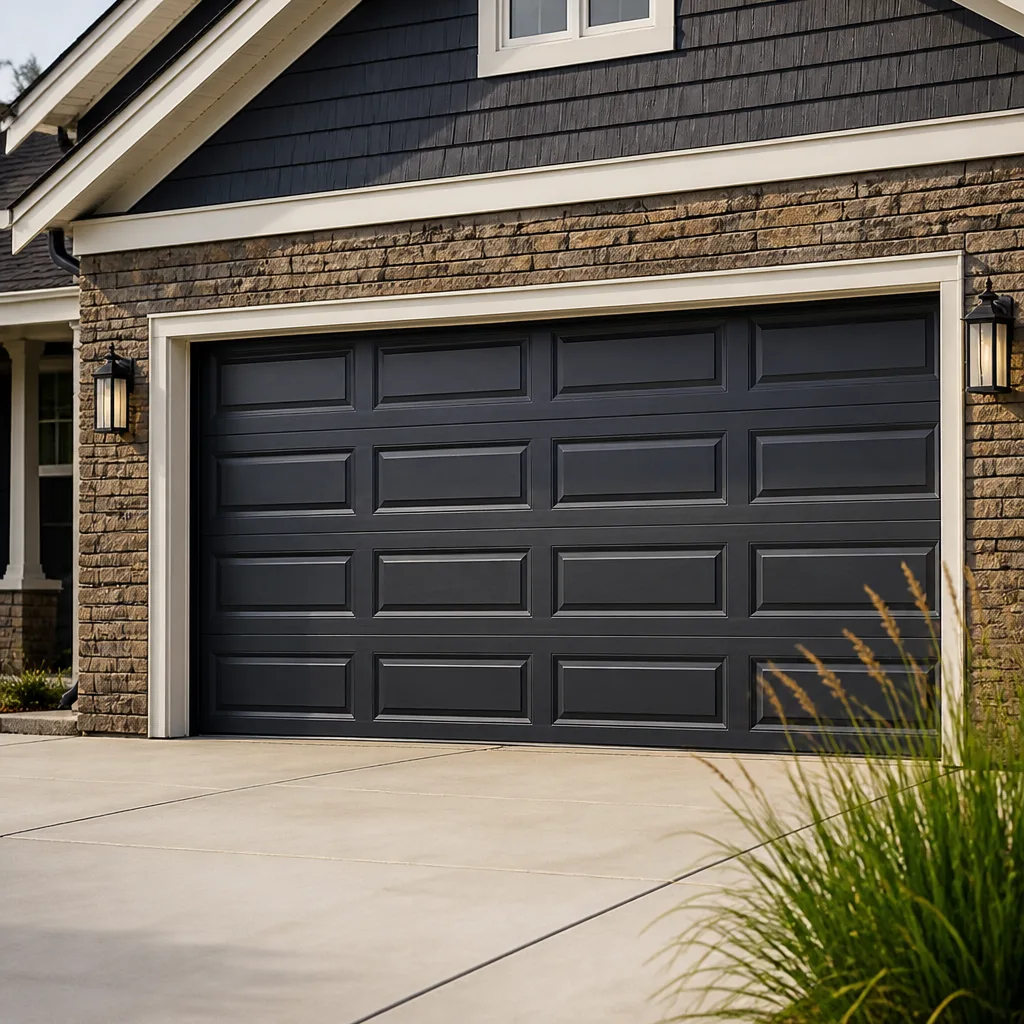 Raised-panel steel
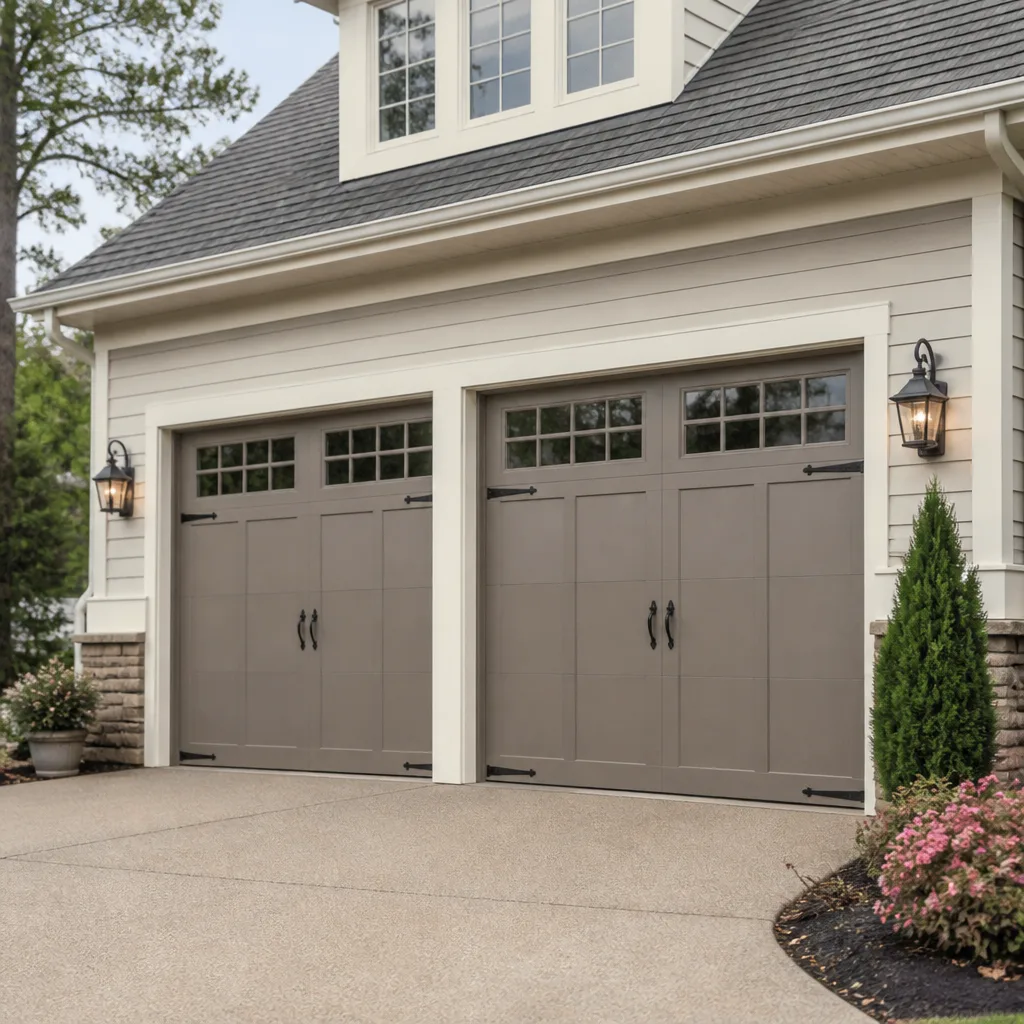
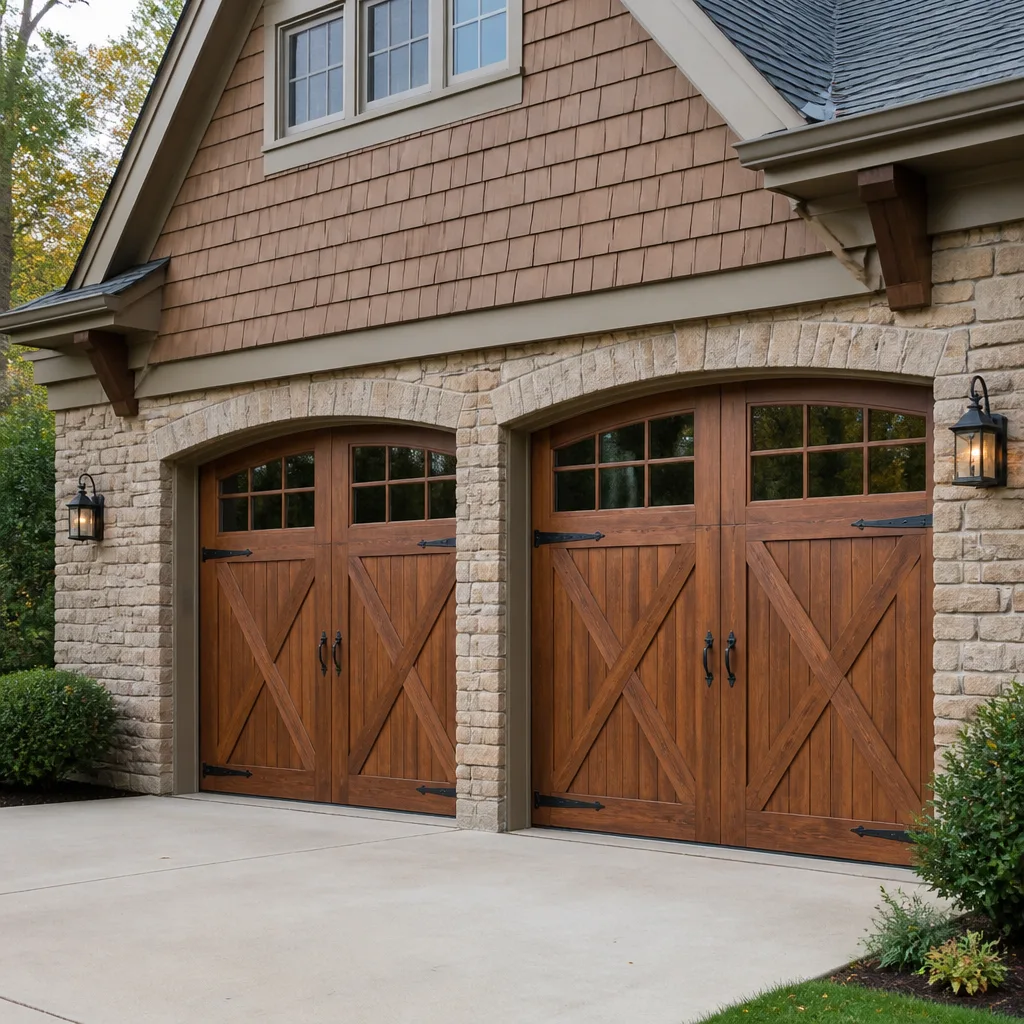 Carriage house
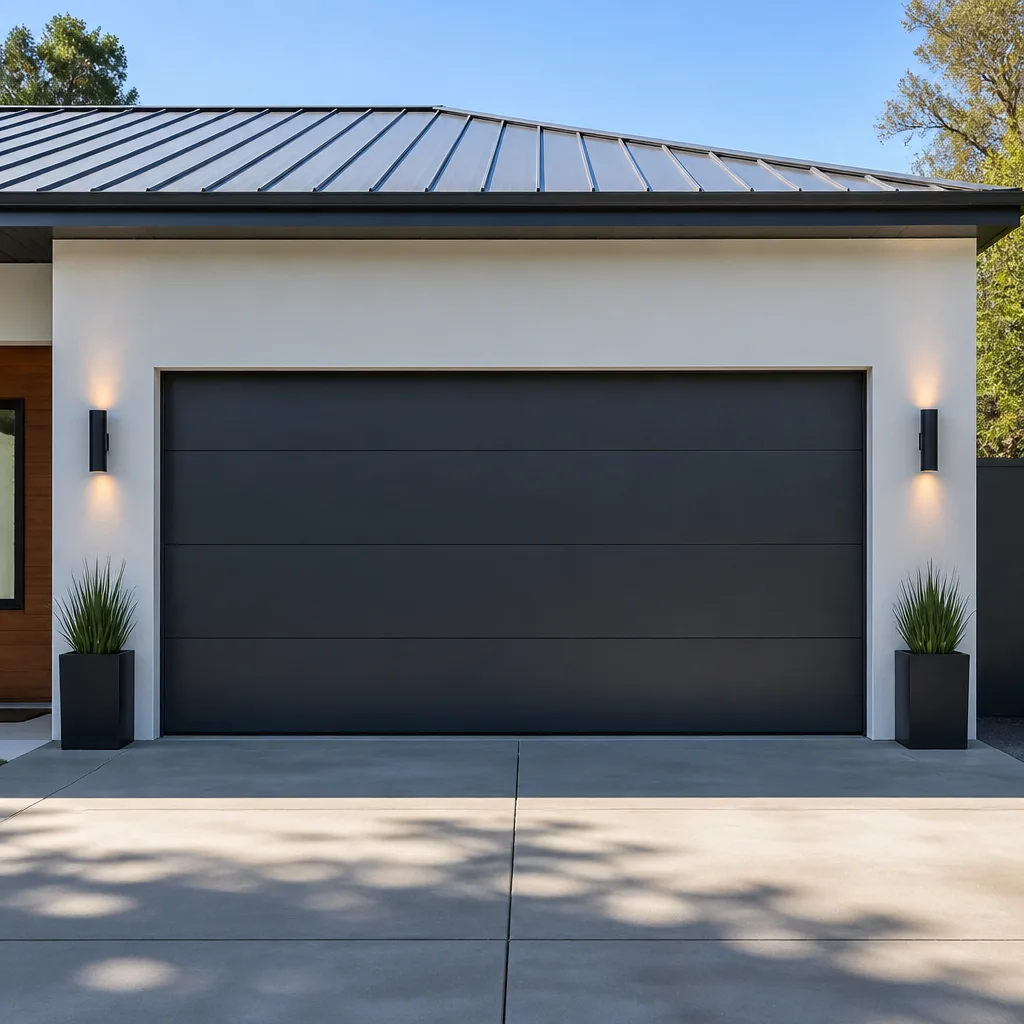 Modern flush
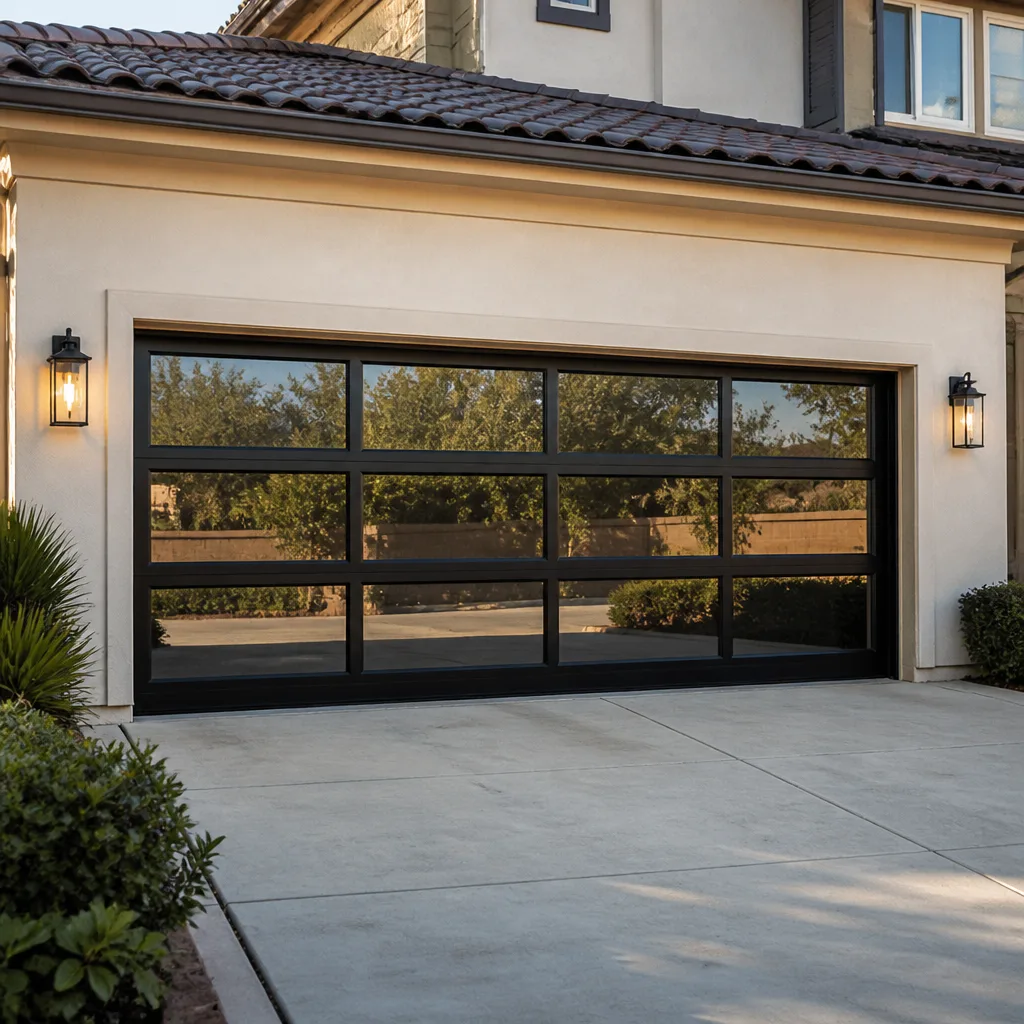 Full-view glass
 LiftMaster openers
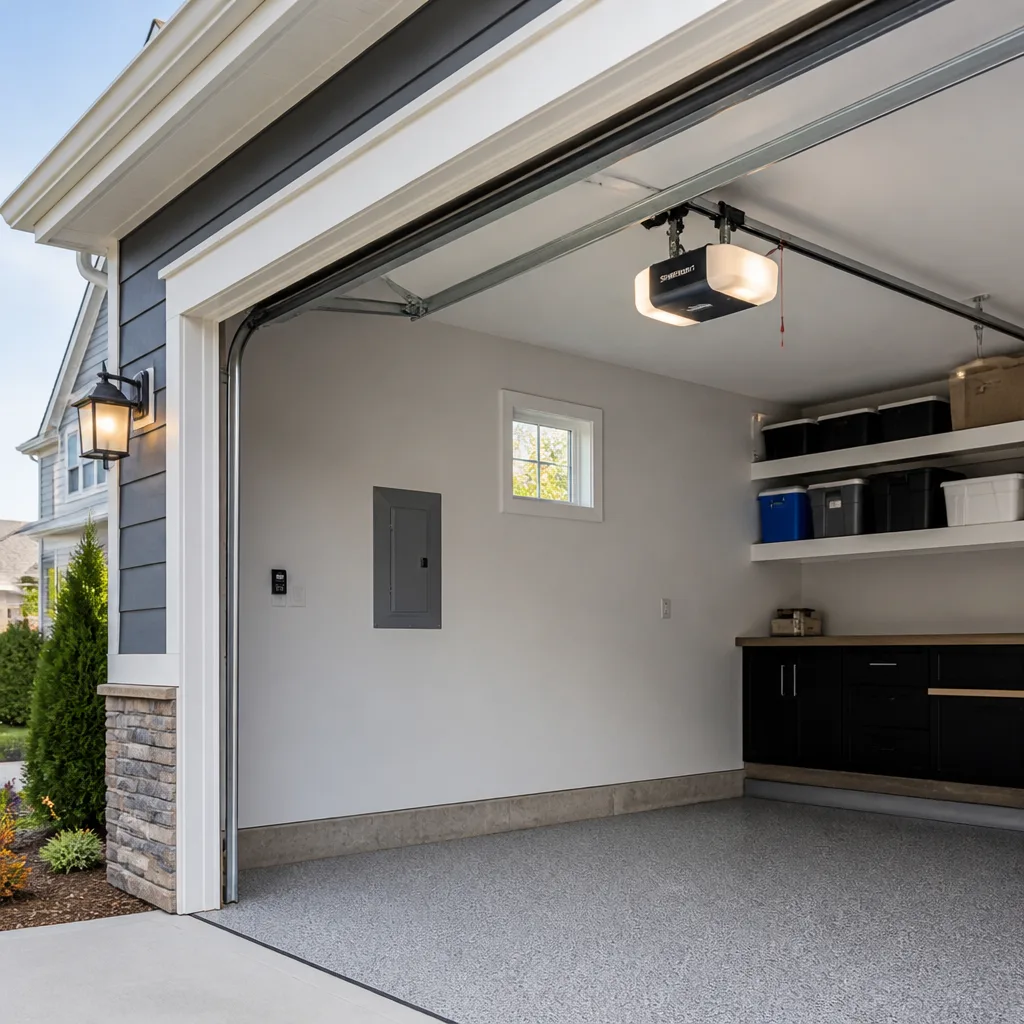 Chamberlain openers
Full 25-point door and opener safety check with every visit - springs, cables, rollers, tracks, and your LiftMaster or Chamberlain opener included
You get a price before we start. It does not change when the pro arrives.
Get your free estimateGarage Door Repair Troubleshooting in North Ward: Common Problems and How to Fix Them
A misaligned safety sensor and a broken torsion spring can produce the exact same symptom: a door that refuses to close. One you can fix in about thirty seconds with a rag and a screwdriver. The other stores enough energy to send a cable whipping across your garage with lethal force if you get it wrong. Most garage door repair advice online treats every problem as if it belongs in the first category, which is how homeowners end up either paying for a service call they didn’t need or getting hurt trying something they shouldn’t touch.
This guide sorts the common failures into six mechanical categories and draws a hard line between what’s safe and what isn’t. You’ll learn a symptom-first way to diagnose your door in North Ward, the three sensor checks to run before you call anyone, and what local weather does to your hardware over a year. We’re Garage Door Repair North Ward, and we’d rather you call us only when you actually need to.
Quick Answer
Most garage door problems in North Ward come down to one of six causes: a sensor fault, an obstruction, a track or roller problem, an opener or remote fault, a balance issue, or a spring or cable failure. The first four are usually safe to check yourself. Springs and cables are high-tension components that can injure or kill you, so stop and call a trained technician. If you can’t tell which category you’re in, describe the symptom on the phone and we can usually point you in the right direction before anyone is dispatched.
Styles & brands we work with
- Raised-panel steel
- Carriage house
- Modern flush
- Full-view glass
- LiftMaster openers
- Chamberlain openers
Table of Contents
- Start With the Symptom: A Diagnostic Tree
- The Three Sensor Checks Every Homeowner Can Do
- The “Stop Here” Line: Springs and Cables
- Opener and Remote Problems: Brand-Specific Logic
- What North Ward Weather Does to Your Door
- Noise, Slow Movement, and Partial Opening
- What to Have Ready When You Call
- What Repairs Typically Cost
Start With the Symptom: A Diagnostic Tree
Don’t start with the part. Start with the symptom. Where the door fails tells you more about the root cause than any single visual inspection, and it’s the fastest way to figure out whether you’re looking at a five-minute fix or a technician’s job. Here’s how the symptoms map to causes.
Door won’t open at all
If the opener runs but the door doesn’t move, the trolley may be disengaged from the carriage, or the motor may be turning without driving the chain or belt. If the opener is silent, check the wall switch, the breaker, and the lock-out feature on the wall console first. A dead remote with a working wall switch points at the remote or the receiver, not the door. LiftMaster and Chamberlain units will usually flash a diagnostic code on the motor head that tells a technician exactly where the logic stopped. Craftsman openers often display similar codes, though the wording varies by model year.
Door won’t close
Nine times out of ten this is the safety sensor system. The photo-eye at the bottom of the tracks has either lost alignment, is blocked by debris, or is being fooled by direct sunlight. Occasionally it’s the wiring at the sensor head, especially if the low-voltage wire runs through a spot that gets kicked or pinched. A door that closes when you hold the wall button but reverses when you let go is almost always a sensor issue, not a motor issue.
Door opens partway and stops
This usually points to a travel-limit setting that has drifted, a binding track or roller, or a door that’s gone out of balance. If the door feels heavy when you lift it by hand with the opener disengaged, the springs aren’t carrying the weight they’re supposed to. That’s a balance issue, and balance issues trace back to springs. See the stop-here section below.
Door reverses immediately after touching the floor
The opener’s force setting is either too sensitive, or something is physically obstructing the closing path. A stone, a piece of mulch, or a small toy under the door will trigger the safety reverse every time. Rule out obstruction before assuming a motor fault.
Door makes grinding, popping, or squealing noises
Grinding points at rollers or a bent track. Popping points at a torsion spring under load. Squealing points at dry rollers, a dry hinge, or a failing bearing plate. Each of these has a different fix and a different urgency level. A popping spring is not something to ignore.
Door moves slower than it used to
Opener speed doesn’t usually drift on its own. If the door is slower, the opener is working harder, which means added resistance from rollers, track alignment, or a door that’s out of balance. Slowness is a symptom of strain, not a symptom of an aging motor. Catch it early and you avoid burning out the opener’s gear assembly.
The Three Sensor Checks Every Homeowner Can Do
The safety sensor system causes more service calls than any other single component, and the vast majority of those calls resolve in under five minutes. Before you pick up the phone, run these three checks. Every one of them is safe and requires nothing more than your hands and eyes.
- Alignment. Look at the two sensor units at the bottom of each track. Each should have a small LED. If one is solid and the other is blinking or dark, the pair isn’t talking. Gently nudge the blinking unit until its LED goes solid. The bracket may have been bumped by a bike, a trash can, or a car bumper. That’s usually the whole fix.
- Obstruction. Wipe both lenses with a dry cloth and check the path between them for spiderwebs, leaves, or anything resting on the floor. A sensor with a clear LED isn’t necessarily seeing the other sensor if there’s a cobweb directly over the lens. Clean both, then test the door.
- Sun interference. Low-angle sun hitting the receiving sensor directly can overwhelm the photo-eye and make the door refuse to close, usually in the late afternoon. If the door only misbehaves at a certain time of day, that’s the tell. Shading the sensor with a small piece of cardboard proves it in seconds. A technician can fit a proper sun shield rather than leaving cardboard taped to your track.
If all three checks come back clean and the door still reverses, the sensor wiring or the opener’s logic board is the next suspect. Neither is a DIY job, but you’ve already narrowed the problem enough that a technician can arrive with the right part instead of guessing. If sensor reseating and cleaning resolve it, you’ve saved yourself a service call. If they don’t, garage door opener repair is where the fix usually lives.
The “Stop Here” Line: Springs and Cables
Torsion springs and the cables that run alongside them are the two components on your garage door that can hurt you. This is not a warning we soften for effect. A torsion spring on a standard residential door is under continuous tension, and when it fails, that energy releases instantly. The spring itself can strike whatever is in its path, and the cable can whip across the garage with enough force to take a hand off. No homeowner should be adjusting, winding, or removing a torsion spring. Full stop.
Extension springs carry the same warning. They stretch rather than twist, but the energy is no less dangerous, and when an extension spring breaks it travels. If your door has extension springs and one is visibly stretched, sagging, or missing a safety cable, that’s a call-us-now situation, not a this-weekend situation.
Cables are the second stop sign. A cable that has come off its drum, is fraying, or is slack is holding a fraction of its rated load. Reaching up to reseat a cable by hand is the single most common way homeowners get hurt working on a garage door. Cables and springs belong to a trained technician with the right winding bars and a proper understanding of the load path.
How do you know you’re looking at a spring problem without touching anything? A few signs stand on their own. You hear a loud pop from the garage. The door suddenly feels very heavy when you try to lift it by hand. You can see a visible gap in a torsion spring coil. The door opens a few inches and stops hard. Any of those, and it’s time to stop and call. We treat spring repair as a core specialty, not an occasional add-on, because it’s the part of the job that decides whether a repair is safe or not. For that work specifically, our team handles it as a named service.
Opener and Remote Problems: Brand-Specific Logic
Opener electronics are a different world from mechanical springs. The failure modes vary by brand and by generation, and a generic “try resetting it” answer wastes time. We’re factory-familiar with eight of the most widely installed garage door and opener brands in North America, which means our technicians diagnose by the logic the manufacturer actually built into the unit.
LiftMaster and Chamberlain are the two most common opener brands in residential garages, and their smart-drive systems have specific behaviors worth knowing. Both use rolling-code remotes, so a remote that suddenly stops working may just need to be re-paired rather than replaced. Both flash diagnostic codes on the motor head, and the code number means something different depending on the model family. Knowing that saves a wasted trip.
Genie and Craftsman openers have their own quirks. Older Craftsman units use a fixed-code receiver that gets confused if a neighbor’s remote happens to be on the same frequency, while newer units need a fresh pairing after a power interruption. Genie openers with a screw drive often develop a specific rattle that has nothing to do with the door itself and everything to do with the drive screw.
Raynor openers tend to pair with Raynor doors, and their force settings behave differently depending on the door weight they were tuned for. That matters if the door has been rebalanced since the opener was installed. A technician who knows the brand checks the door weight first, not the motor.
If your opener is the fault, it’s worth knowing what’s involved before you call. See our garage door repair overview for how we handle electronics versus mechanical repairs, and if you’re considering replacing a unit rather than repairing it, the garage door installation page covers what a new opener and door pairing involves.
What North Ward Weather Does to Your Door
North Ward’s summers run humid, and that humidity does specific, predictable damage to garage door hardware. Rollers that are already dry will rust at the bearing, and a rusted bearing doesn’t roll, it drags. That drag adds load to the opener and shows up as a door that suddenly moves slowly in late summer. The bottom seal takes the worst of it. A rubber seal that sits against a damp concrete floor for months starts to rot from the inside, and once it’s soft it stops sealing, which lets humidity and cold air in for the winter.
Winter reverses the problem. Cold contracts the steel tracks slightly, and a track that was perfectly aligned in August may bind in January. Lubricant thickens, and a door that ran smoothly at seventy degrees can feel sluggish on a cold morning. The bottom seal, if it’s already compromised, hardens and cracks, and then it’s not sealing at all.
That freeze-thaw cycle is what makes roller wear and seal rot the two most common preventable failures we see in North Ward. A quick visual check twice a year, once in spring and once in fall, catches most of it. Look at the rollers: do any of them look flat-sided or rough? Look at the bottom seal: is it pliable or brittle? If either looks off, you’re ahead of the problem. For more on how we handle these seasonal repairs locally, see Garage Door Repair North Ward.
Noise, Slow Movement, and Partial Opening
Three symptoms get grouped together here because they often share root causes and because homeowners frequently misdiagnose all three. A noisy door is not a door that needs replacing, it’s a door telling you which part is under stress. A slow door is not a motor on its way out, it’s a door fighting resistance. A door that opens partway and stops is not usually an opener problem at all.
Noise
Grinding is usually roller or track. Popping from the spring area is a loaded torsion spring, and that’s a stop-here. Squealing is dry metal-on-metal, typically at a hinge or bearing plate. A low rumble at the motor head is the gear assembly, and it’s an opener issue rather than a door issue.
Slow movement
Opener speed is fixed at installation. If the door is moving slower, the opener is working harder. The cause is almost always resistance: dry rollers, misaligned track, or a door that’s out of balance because the springs have lost some of their lift.
Partial opening
A door that opens a few inches and stops may be hitting a travel limit that drifted, or the opener’s force sensor may be tripping because the door is binding. On LiftMaster and Chamberlain openers, the diagnostic flash pattern will tell a technician which of those two it is. If the door lifts easily by hand, the limit is the problem. If it feels heavy, the springs are. Balance check first, limits second.
What to Have Ready When You Call
A call that starts with “it’s broken” takes longer to diagnose than a call that starts with “the door opens about a foot, then stops, and it makes a popping sound from the ceiling.” The difference isn’t just conversational. When the person on the phone can tell the technician what the door is doing before the visit is scheduled, the technician arrives with the right parts and the right tools.
Have these ready before you dial:
- The symptom, in order. What happens first, what happens next, and where it stops. Include any noises and where they come from.
- The opener brand and model. A sticker on the motor head or the back of the unit will usually show both. LiftMaster, Chamberlain, Genie, and Craftsman all use their own model naming, so the exact model matters.
- The door brand if you know it. Brands like Clopay, Amarr, and Wayne Dalton each have their own panel construction, and it matters for what we can repair versus replace.
- Door type. Sectional, single-panel, roll-up, or slide. The age band roughly helps too.
- Whether the door is safe to leave as is. A door stuck open is a security issue overnight. A door stuck closed with a car behind it is a scheduling emergency. Either changes the urgency of the call.
- What you’ve already tried. If you’ve run the sensor checks, say so. It saves a repeat.
That’s it. You don’t need to diagnose the issue yourself. You just need to describe it well enough that the visit is planned instead of improvised.
What Repairs Typically Cost
Repair pricing depends on the specific part and the labor involved, so any honest answer is a range, not a fixed number. What we can tell you is what most common repairs fall into. The price we quote in writing before the work begins is the price that gets billed, and it never changes once the work starts unless you approve a change.
| Repair | Typical range (one component unless noted) |
|---|---|
| Safety sensor realignment or replacement | Lower-cost repair, usually the first thing to rule out |
| Roller replacement | Moderate, priced per set |
| Bottom seal replacement | Moderate, priced by door width |
| Opener repair or logic board replacement | Mid-range, varies by brand and model |
| Torsion spring replacement (one spring) | Moderate to mid-range; a matched pair is priced at roughly twice the single-spring figure |
| Extension spring replacement | Often lower than torsion, because the mechanism is simpler |
| Cable replacement | Moderate, priced per side |
| New door installation | Quoted only after an on-site measure |
The most common mistake homeowners make on pricing is assuming a spring replacement is one price for a pair. It isn’t. A torsion spring is priced per spring, and if both springs are the same age and material, we usually recommend replacing them as a matched pair so you’re not back in the same spot in a few months. If you’d like the exact numbers for your door, call (844) 905-3092 for a free estimate, and we’ll give you a written figure before anything is touched.
Common Mistakes to Avoid
- Assuming a stuck door is an opener problem. The opener is usually the last thing to fail and the first thing to blame. In our experience, most “dead opener” calls turn out to be sensor faults or a door that’s out of balance, and neither is an opener issue at all.
- Ignoring a popping noise until the spring breaks. A popping torsion spring is telling you it’s about to fail. Waiting means the door comes down hard, and that turns a repair into a repair plus a panel replacement.
- Lubricating a track with the wrong product. Track and rollers need a proper garage door lubricant, not general-purpose oil or grease. Grease just collects dust in North Ward’s humid summers and makes the problem worse.
- Reaching up to reseat a cable by hand. A cable off its drum can snap back with the full load of the door behind it. This is the single most common source of serious garage door injury, and it’s entirely avoidable.
- Adjusting the opener’s force setting to “make it close.” Turning up the force to overcome a binding door doesn’t fix the binding. It just makes the opener push harder, which accelerates gear wear or unbalances a spring that was already marginal.
- Replacing a single spring on a paired system. The new spring and the old spring age at different rates. Replacing both at the same time costs more now and less over the next two years.
- Calling a general handyman for a spring. Springs are a safety-critical component, and most generalists either won’t touch them or will subcontract them out. A specialist should be doing this work from start to finish, on one trip.
See the difference
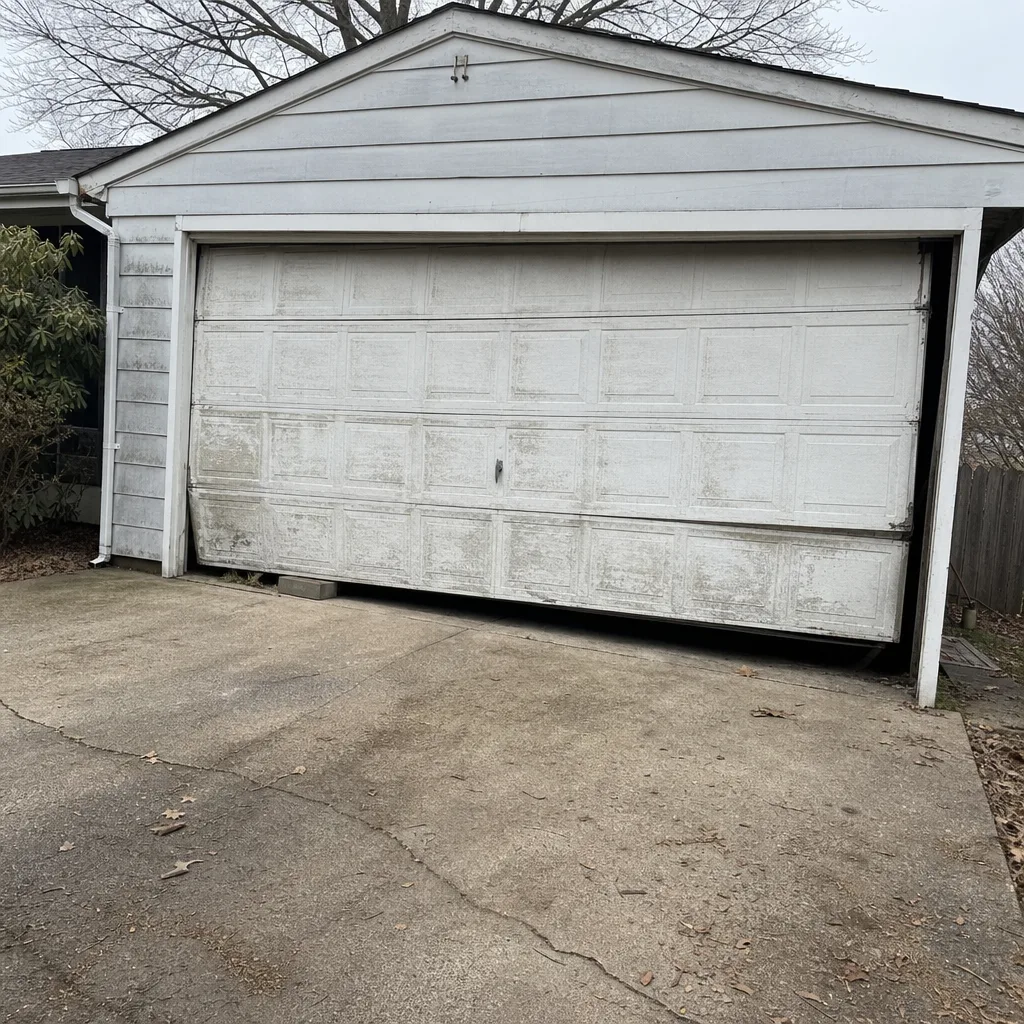 Before
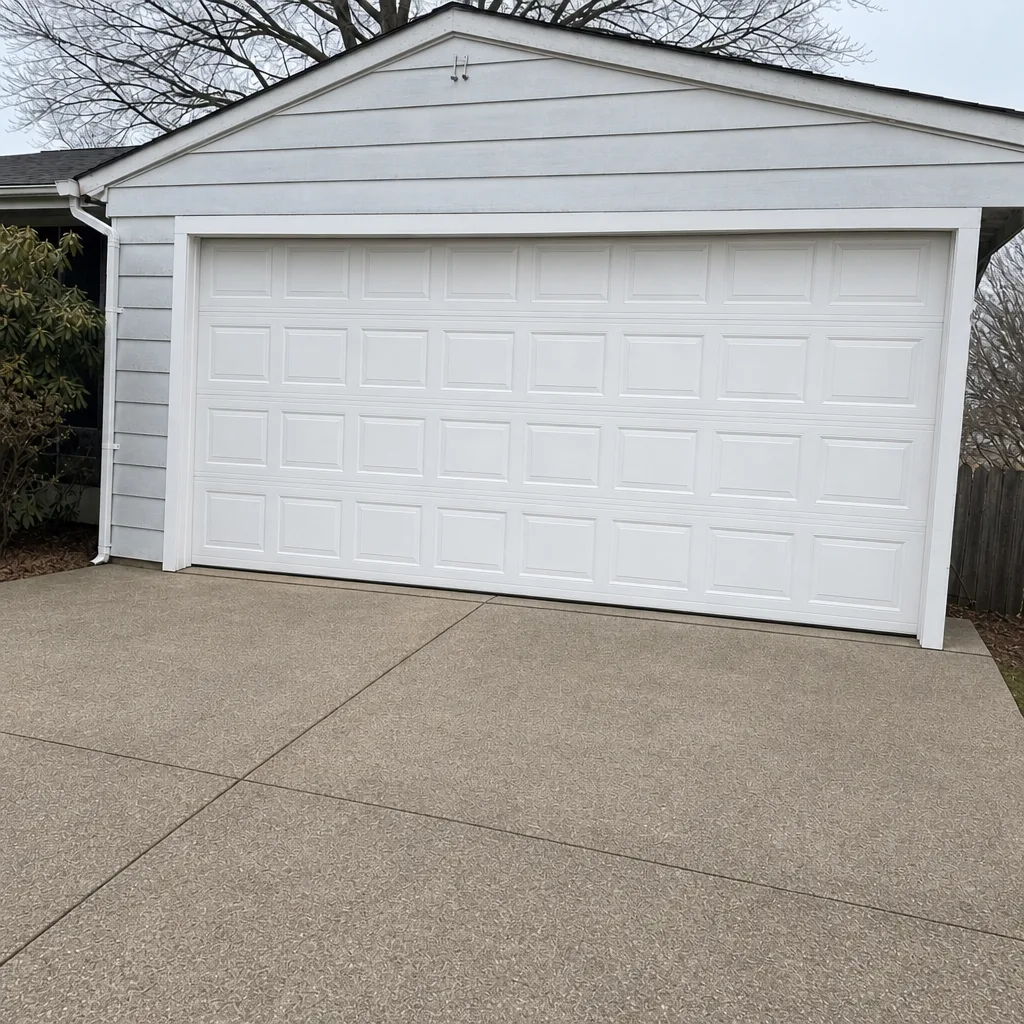 After
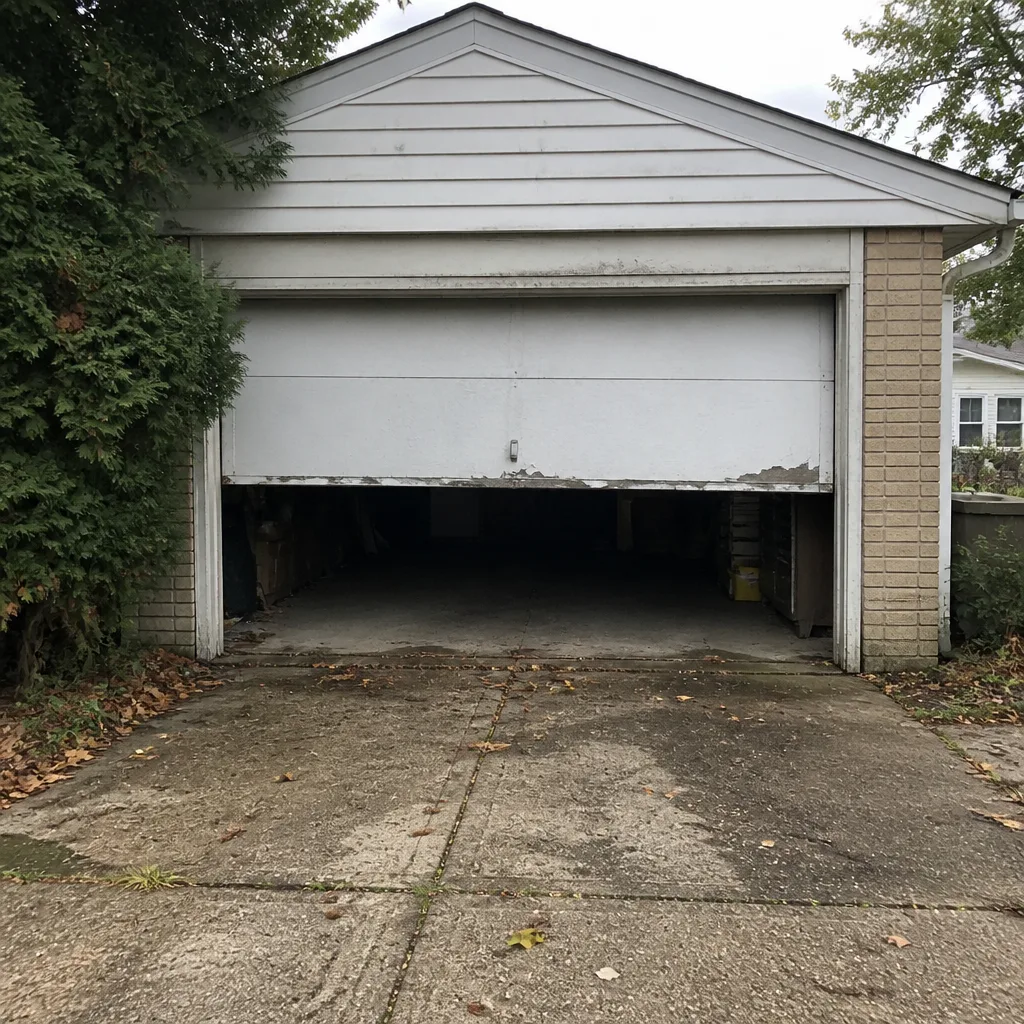 Before
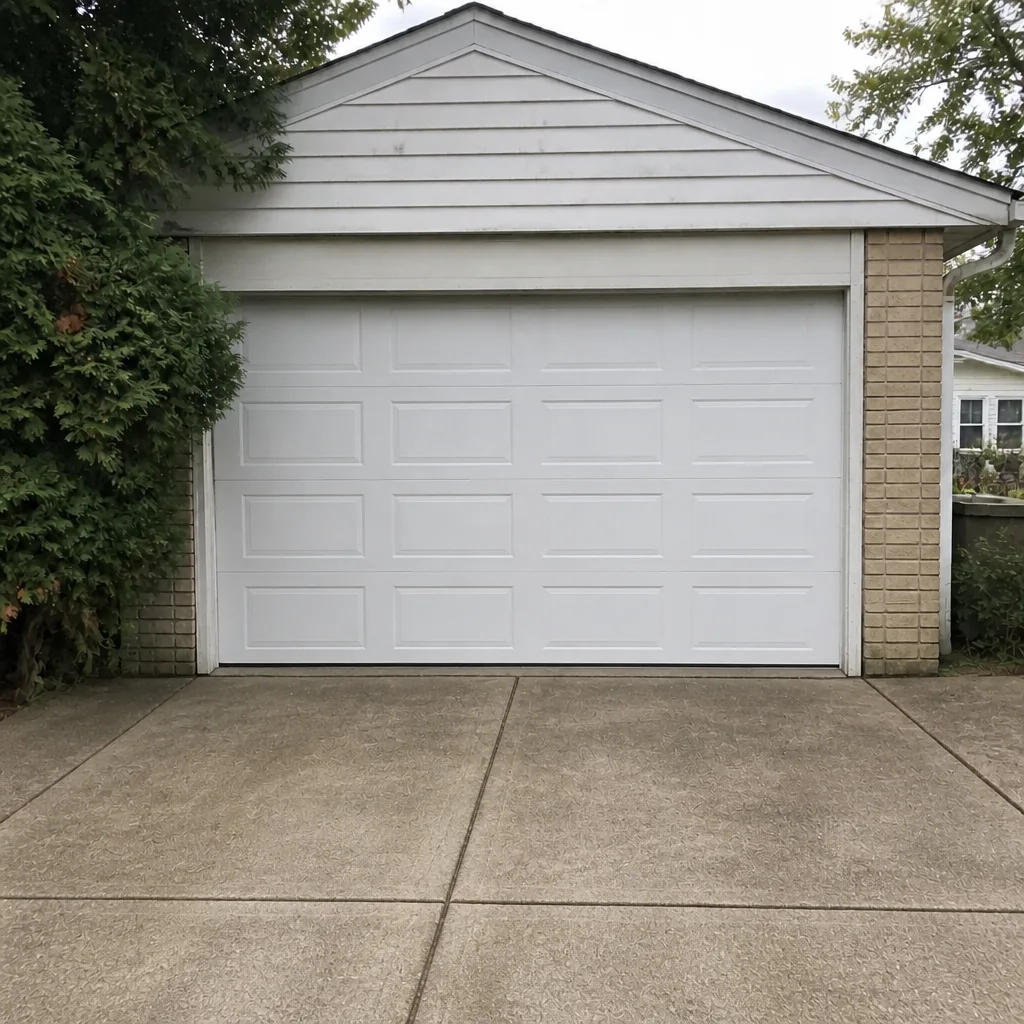 After
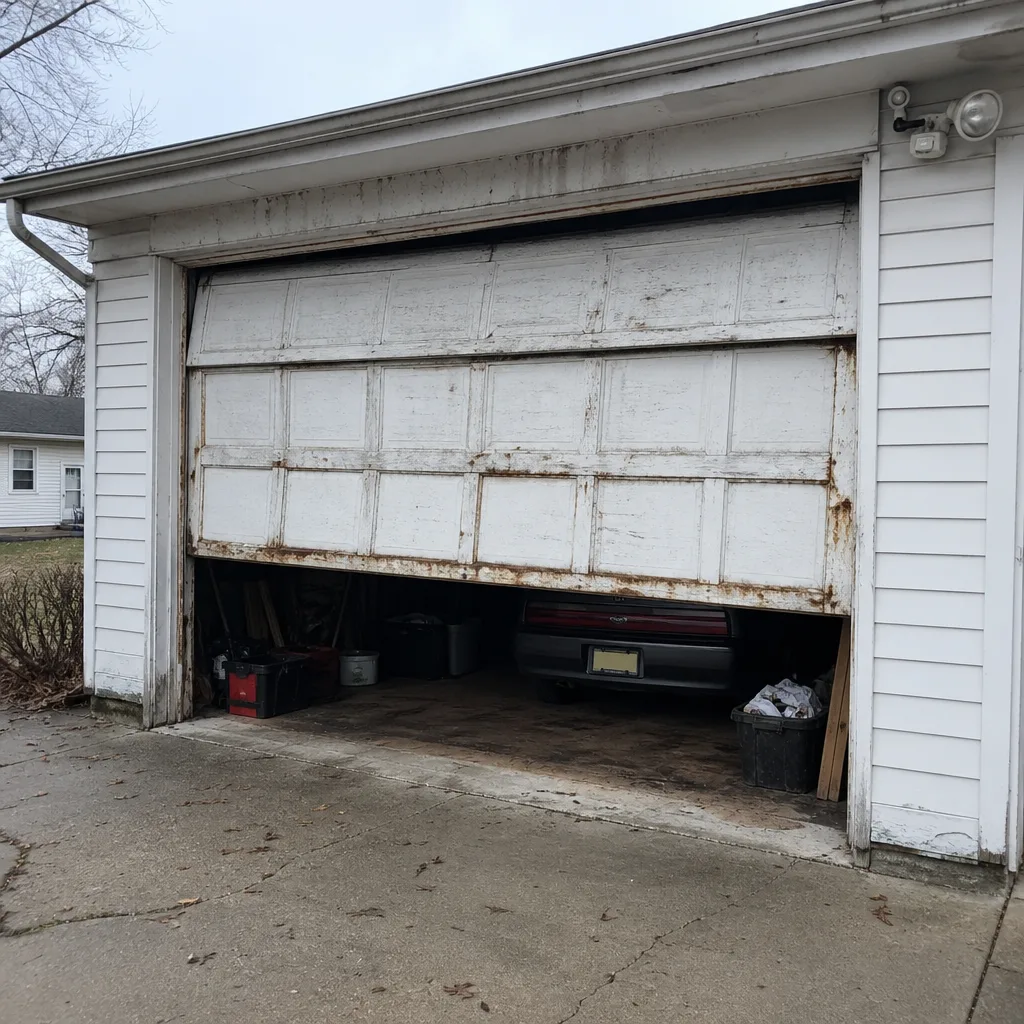 Before
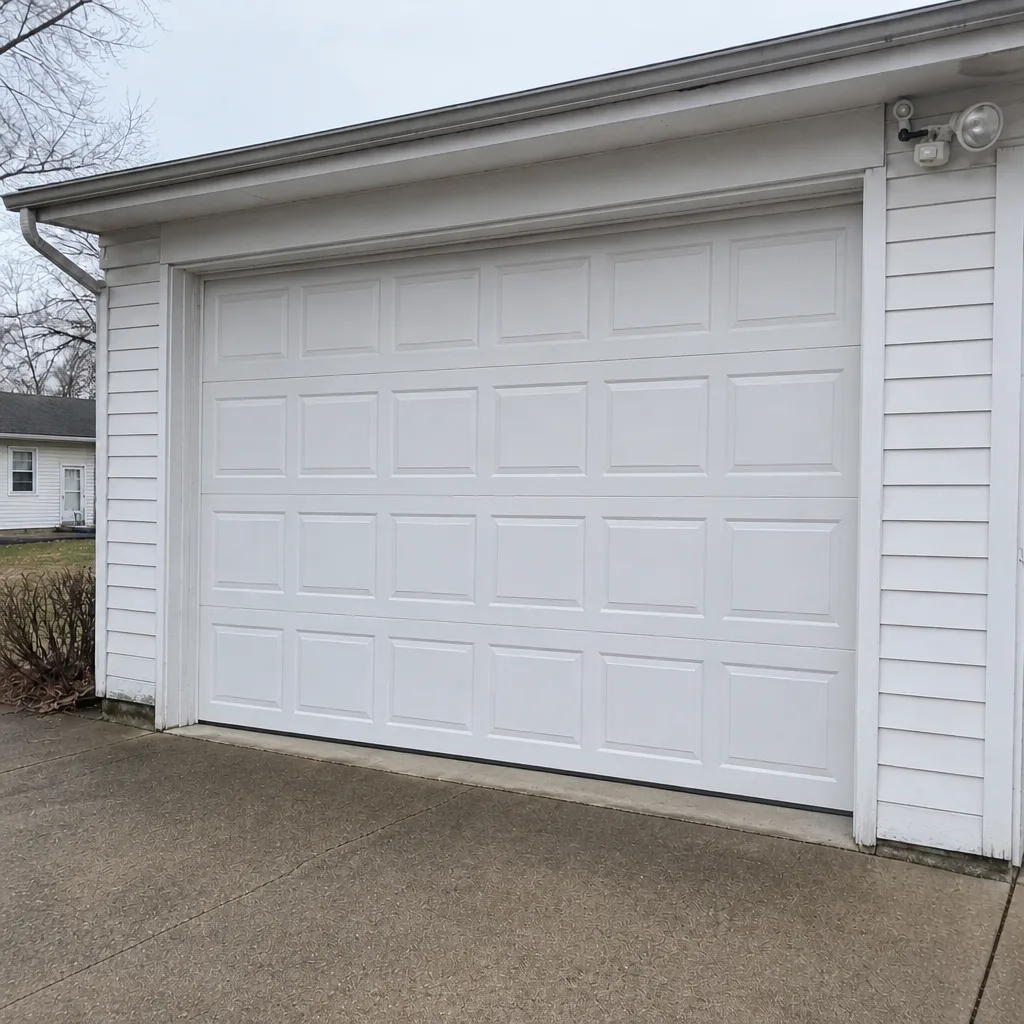 After
When to Call a Professional
Call a professional if any of the following apply: you can see a gap in a torsion spring, a cable is off its drum or frayed, the door feels heavy when you lift it by hand, the door opens partway and stops, the door fell out of its tracks, or the opener runs but the door doesn’t move. Any of those is beyond a safe DIY check. Also call if the door is stuck open and you can’t secure it overnight, or stuck closed with a car behind it. Emergency garage door service exists precisely for those situations, and in North Ward, Garage Door Repair North Ward offers free estimates – call (844) 905-3092. Our technicians have up to 13 years of experience, and they’ll tell you honestly whether a repair is worth doing or a replacement makes more sense. We’d rather turn a repair down than sell you one you don’t need.
Frequently Asked Questions
If the door refuses to close but opens normally, it’s almost always the sensor. If the door feels heavy when you lift it by hand or produces a loud popping sound, it’s almost certainly the spring. The sensor is safe to check yourself; the spring is not. When in doubt, call (844) 905-3092 and describe what you’re seeing – we can usually tell you which category it’s in before anyone comes out.
No. A torsion spring stores enough energy to cause serious injury or death if it releases while you’re working on it, and the winding process requires specific tools and a correct understanding of the load path. Springs aren’t a DIY repair, full stop. Call a trained technician. Estimates are free.
Sun interference on the photo-eye sensor. Low-angle sun hitting the receiving sensor directly overwhelms it and makes the opener think the path is blocked. Shade the sensor with your hand to prove it. If the door closes, that’s the cause, and a technician can fit a fixed sun shield. Call (844) 905-3092 to book it.
It depends on the part and the labor. Sensor realignments and bottom seal replacements are on the lower end; springs and cables are mid-range; opener logic board replacements vary by brand. A matched pair of torsion springs costs about twice the single-spring figure. Every price we give is quoted in writing and agreed before any work starts, so you’re never surprised by the invoice. Call (844) 905-3092 for an exact figure on your door – estimates are free.
Yes. A door stuck open leaves your garage and often your house exposed overnight. That’s a security issue, and it’s what our emergency garage door service is for. A door stuck closed with a car inside is a schedule emergency too. Call (844) 905-3092 and we’ll book you in as fast as we can, including early mornings or Sundays when needed.
No. The written estimate is the price. If we get on site and find something that wasn’t visible on the call (a bent track behind the panel, for example), we walk you through what changed, quote the new figure, and get your approval before any additional work starts. We don’t do surprise invoices. Call (844) 905-3092 for a free estimate.
The Bottom Line
Most garage door problems in North Ward fall into one of six categories, and the fastest path to a fix is knowing which one you’re in. Sensors, obstructions, rollers, tracks, openers, and balance issues are all diagnosable by symptom, and most can be checked safely. Springs and cables are the stop line. A popping torsion spring, a slack cable, or a door that feels heavy when you lift it by hand means put the tools down and call. The rest you can narrow down yourself, which saves you money and makes the service call precise. One specialist, every garage door problem – and the right fix, not the easy upsell, is what we aim for on every visit.
If you’re in North Ward and you’re not sure which category you’re in, call (844) 905-3092 for a free estimate. We’ll help you figure out whether it’s a five-minute fix or a service call, and we’ll be honest about which one it is. For more on how we work, or to plan a full replacement rather than a repair, our team covers the whole scope in one place.
Written by the team at Garage Door Repair North Ward.