Last updated November 23, 2026
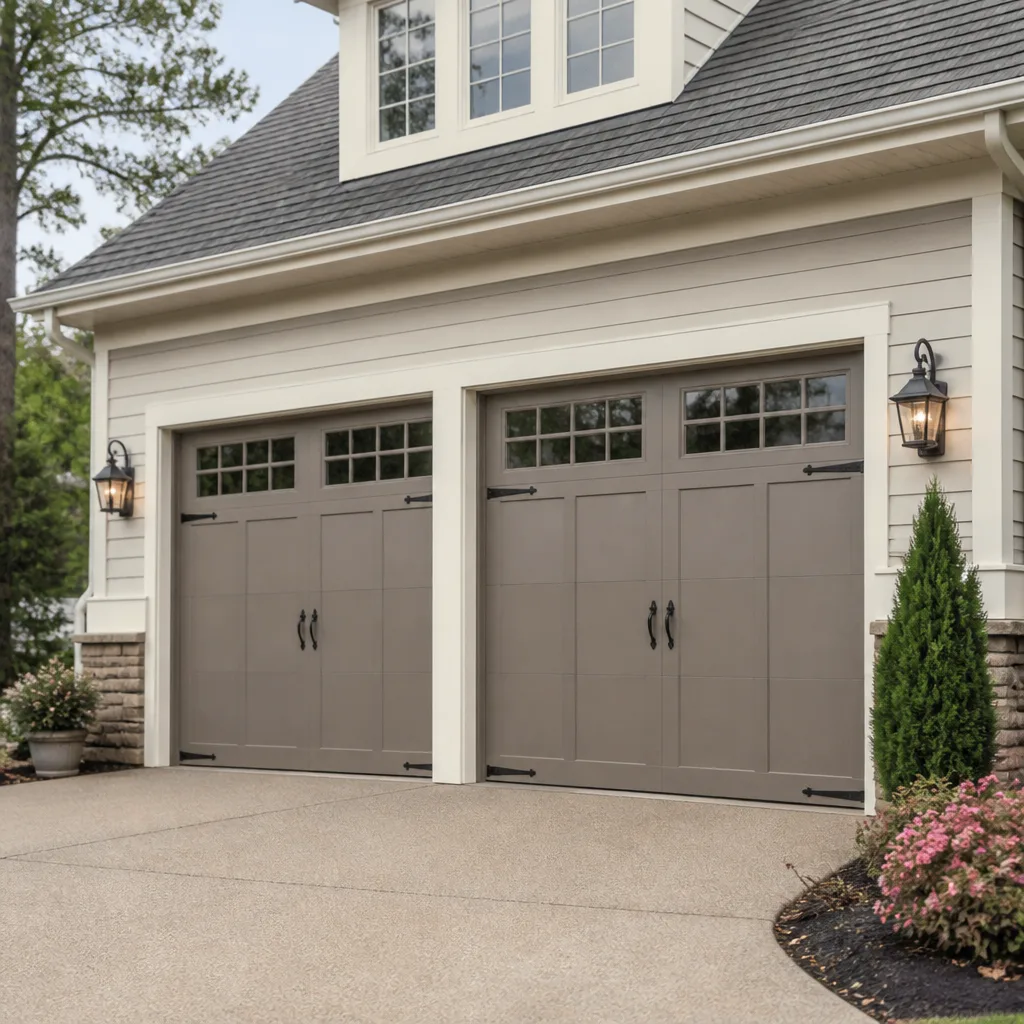
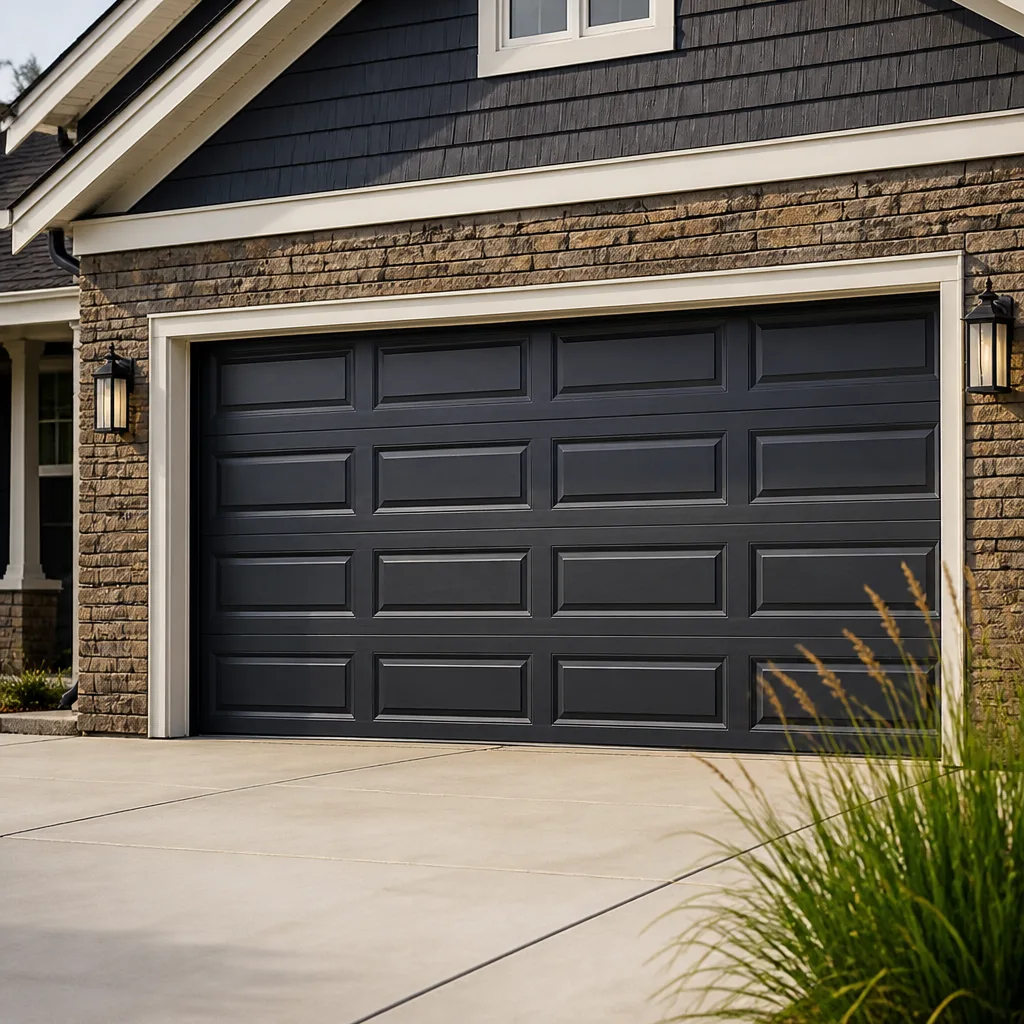 Raised-panel steel
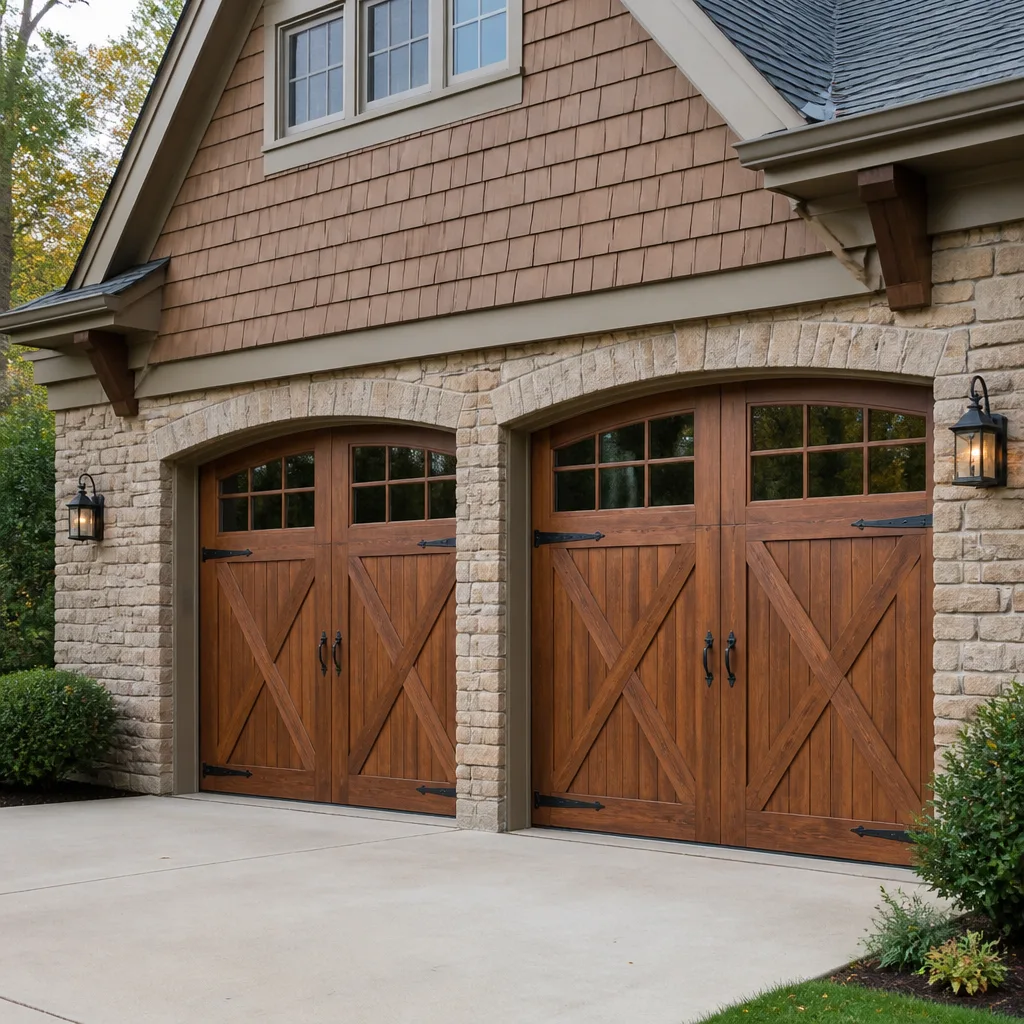 Carriage house
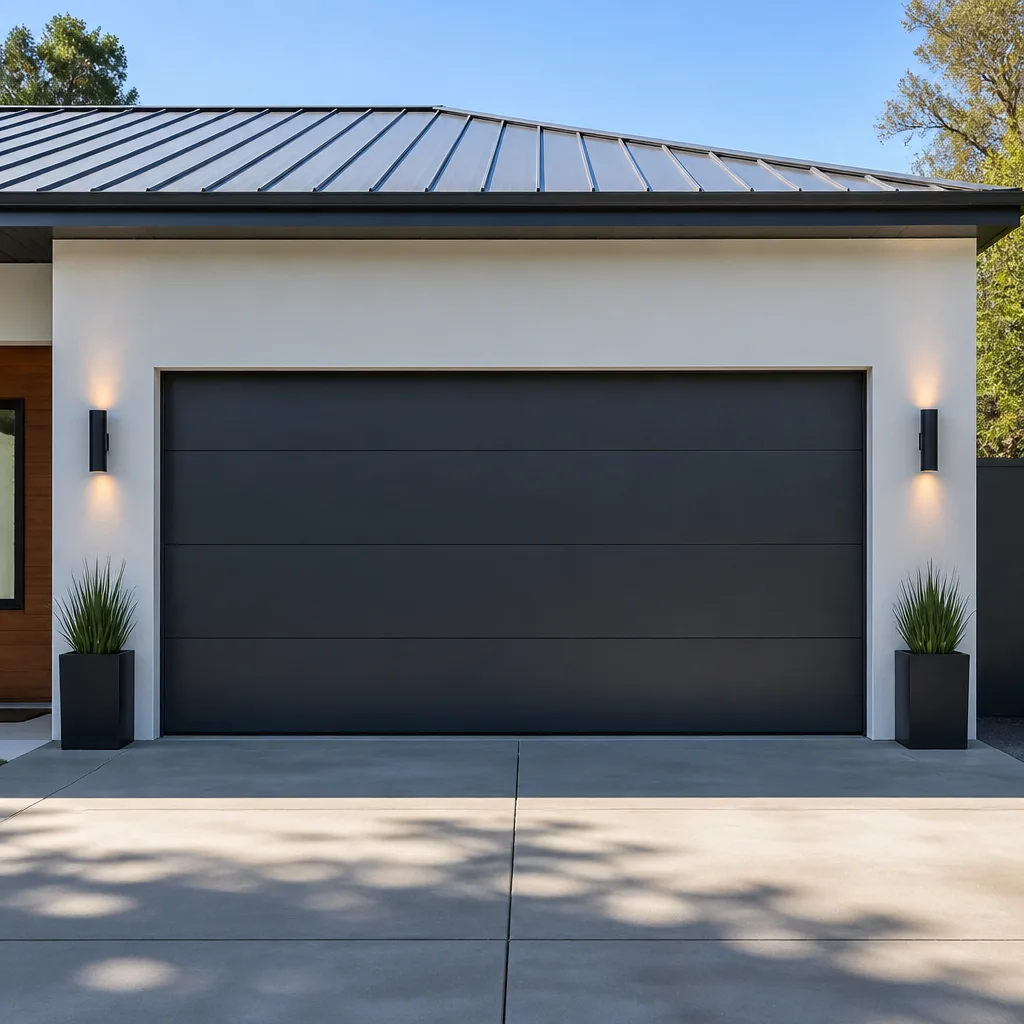 Modern flush
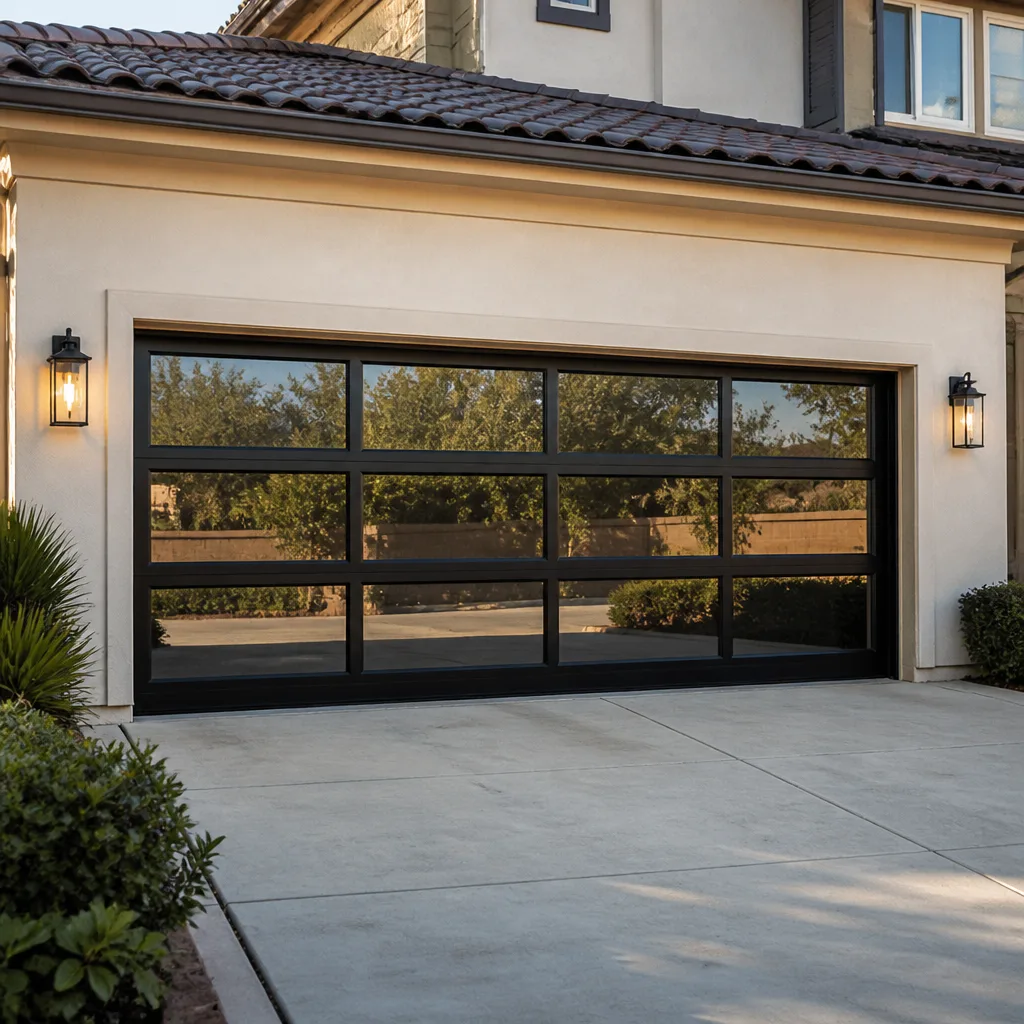 Full-view glass
 LiftMaster openers
 Chamberlain openers
Full 25-point door and opener safety check with every visit - springs, cables, rollers, tracks, and your LiftMaster or Chamberlain opener included
You get a price before we start. It does not change when the pro arrives.
Get your free estimateGarage Door Permits, Codes & Inspections in North Ward, NJ: What You Need to Know
Most homeowners assume a garage door swap is a no-permit job. In New Jersey, any new door installation or structural header modification triggers a building permit in most municipalities, and North Ward is no exception. That assumption is the one that costs people the most later. A garage door isn’t a decorative panel bolted to a box; it’s a several-hundred-pound moving assembly tied into the load path of your house, and the state cares about how it’s anchored. This guide walks through which jobs need a permit, which count as a like-for-like repair exemption, how the inspection actually runs in North Ward, and what unpermitted work can do to your insurance and your title when you sell.
Quick Answer
In North Ward, a full garage door replacement or any change to the structural header, framing, or track anchoring almost always requires a building permit pulled under the New Jersey Uniform Construction Code. A like-for-like repair, such as swapping a spring, opener, roller, or panel on the same door in the same opening, is typically treated as an ordinary repair and does not require one. When in doubt, ask your city’s building department what they want for your specific address before any work starts.
Styles & brands we work with
- Raised-panel steel
- Carriage house
- Modern flush
- Full-view glass
- LiftMaster openers
- Chamberlain openers
Table of Contents
- What Actually Requires a Permit in North Ward
- What Counts as a Like-for-Like Repair Exemption
- The NJ Uniform Construction Code and Wind Load Ratings
- How the Permit Process Works in North Ward
- What the Inspection Actually Covers
- Insurance and Title Consequences of Unpermitted Work
- Questions to Ask Your Contractor
- Common Mistakes to Avoid
What Actually Requires a Permit in North Ward
A permit is required in North Ward for a garage door replacement where the new door differs from the one it replaces in size, weight, material, or operating type, or where any structural component around the opening is altered. The permit isn’t about the door panel itself; it’s about confirming the header, jambs, and anchoring can carry the new load and meet current code.
The jobs that routinely trigger a permit:
- Replacing a single door with a wider one, or two single doors with a double.
- Changing from a sectional door to a roll-up, tilt-up, or carriage style.
- Cutting, sistering, or replacing the header above the opening.
- Moving or adding track, jamb brackets, or anchor points beyond a like-for-like swap.
- Adding a new opening where none existed, or bricking one closed.
- Any job where the new door’s wind rating must be documented to meet the current code cycle.
In our experience, the confusion comes from mixed signals at the counter. One homeowner hears “you don’t need a permit for a door,” the next hears “you need one for everything.” Both can be true at different addresses and different scopes. The right move is to call the city’s building department with the address and a plain description of the work, then get the answer in writing if it’s ambiguous. That’s what we do before we schedule anything structural, and it’s why a North Ward job that needs a permit stays on schedule rather than stalling on the day of the inspection.
What Counts as a Like-for-Like Repair Exemption
A like-for-like repair is when the same door stays in the same opening and only wear parts are replaced. This is the exemption most homeowners actually fall under, and it’s the one that keeps a spring or opener call a simple service visit.
Here’s what typically falls under the repair exemption:
- Torsion or extension spring replacement. These are wear items, not structure, and this is a job we’d never let a homeowner attempt. Springs and cables are under extreme tension and can cause serious injury when they fail, so call a trained professional.
- Opener replacement, including LiftMaster and Chamberlain units, where the rail and header bracket stay put.
- Roller, hinge, cable, and bearing plate replacement.
- Panel replacement on a sectional door, provided the door’s weight and balance are unchanged.
- Weather seal, bottom seal, and threshold work.
- Safety sensor alignment, force setting, and opener travel adjustments.
A word of caution: if the panel replacement changes the door’s weight enough that the spring has to be resized, some inspectors treat that differently from a straight swap. In North Ward, we note that on the ticket before the truck rolls. If the job turns out to be more than a wear-part repair, we tell you before we order anything, and we let you decide whether to pull a permit for the larger scope. That’s the honest read, and it’s what you should expect from any specialist.
The NJ Uniform Construction Code and Wind Load Ratings
New Jersey’s garage door installations are governed by the state’s Uniform Construction Code, generally known as the UCC, and its subcodes. The building subcode is where the structural rules live; the electrical subcode covers the new branch circuit and outlet that most openers need. The precise section numbers are updated each code cycle, so the specific sections that apply to your address should be confirmed with your local construction official rather than taken from a web page.
What doesn’t change from cycle to cycle is the shape of the requirement:
- Wind load. Every new door in New Jersey must be rated for the design wind speed for the site. The rating is printed on the door’s label and on the manufacturer’s specification sheet, and it has to match or exceed the code requirement for your location.
- Structural attachment. The track, jamb brackets, and header angle must be anchored to framing and rated hardware, not to masonry veneer or drywall anchors.
- Headroom and clearance. The opening needs enough headroom and side room for the door’s travel, and the springs and hardware must be in the clear.
- Safety devices. New installations must include a functioning photoelectric safety sensor and a reversing mechanism, and the opener must be UL-listed for the door it drives.
- Electrical. A dedicated outlet for the opener is wired under the electrical subcode, and in most North Ward homes that means a separate electrical permit alongside the building one.
We’re factory-familiar with Clopay, Amarr, Wayne Dalton, and Raynor doors, and each one prints its wind rating in a different spot on the spec sheet. When your contractor submits for a permit, that spec sheet is the document the inspector wants to see. Knowing which brand uses which number saves the back-and-forth that stalls a job.
How the Permit Process Works in North Ward
In North Ward, the contractor pulls the permit, not the homeowner. This is the single most misunderstood part of the process, and it’s the one that matters most when a job turns out badly.
- Scope and quote. You agree on the door, hardware, and any structural work, in writing.
- Application filed. The contractor files the building application with the city, attaching the door’s spec sheet, wind rating, and a site plan or sketch of the opening. If electrical work is part of the job, an electrical subcode application is filed alongside.
- Plan review. The construction official reviews the application. Straight replacements clear quickly. Anything with a modified header may need an architect’s or engineer’s letter, and that adds time.
- Permit issued. The permit fee is paid and the permit card goes up on the job, usually in a window or on the door itself so the inspector can see it on arrival.
- Installation. The door goes in, wiring goes in, and the opener is programmed and tested.
- Inspection. The inspector calls for a rough and final inspection, walks the install, and either signs off or issues a punch list. Corrections are re-inspected.
- Certificate of approval. The signed-off permit becomes part of your property record. That’s the paperwork that proves the work was done to code.
The timeline depends on the city’s inspection load and on how quickly the door is delivered. A clean replacement with no structural change can move through in a few weeks; a header modification adds engineering time. In North Ward, we schedule the measurement and order the door together, so the permit review and the lead time run in parallel rather than stacking up.
What the Inspection Actually Covers
The inspection in North Ward covers the door’s installation, safety devices, and structural attachment, not how good the paint looks. If you’ve ever wondered why a contractor wants the permit card visible on install day, this is the reason.
What the inspector typically checks:
- Wind rating match. The door’s label and manufacturer’s spec sheet match the required design wind speed for the site.
- Anchor points. Track, header, and jamb hardware are anchored to solid framing with the correct fasteners.
- Rebalance. The door lifts smoothly by hand, stays put at mid-travel, and closes with the correct force.
- Safety reversal. The photoelectric sensor stops the door on interruption, and the contact reversal responds to an obstruction.
- Electrical. The opener circuit, wiring, and outlet are done to the electrical subcode.
- Labeling. The door and opener labels are legible and accessible.
In our experience, most corrections in North Ward are minor: a sensor mounted too high, a jamb bracket anchored into masonry rather than framing, a label peeled off during shipping. None of those are dangerous on their own, but they’re exactly the things a homeowner would never notice. That’s the point. The inspection exists because the failure modes on a garage door are dangerous ones, and a trained eye catches them before the door is put back into daily use.
Insurance and Title Consequences of Unpermitted Work
Here’s the part that doesn’t get said often enough. Skipping a permit on garage door work in North Ward can put your homeowner’s policy and your future sale on the line, and neither shows up until you need them.
On the insurance side, the problem is a claim, not the policy itself. If your carrier’s adjuster finds a door installed without a permit and without a documented wind rating, the question they ask is whether the installation met code. On a claim arising from that door or from storm damage near it, an unpermitted install can become a reason to narrow or deny coverage. Not every carrier treats it the same, and we’re not insurance adjusters, so we don’t tell you what your policy does or doesn’t pay for. What we can say firmly is this: an unpermitted install gives your adjuster a question they’d rather not have. A signed-off permit and a documented wind rating answer it before anyone asks.
On the resale side, the mechanics are more predictable. During a sale, a buyer’s attorney orders a permit search, and an open permit on the property can stall the closing until it’s resolved. If the city finds an unpermitted installation, it can require that it be brought to code or removed, sometimes with a fee. Your buyer’s lender may also want proof the work was permitted depending on the loan program. None of that is a crisis if the paperwork exists. All of it becomes a negotiation if it doesn’t.
If you’re buying a North Ward home with a garage door that looks new, ask the seller for the permit and the certificate of approval. If neither exists, it’s worth a conversation before the closing table. That one conversation is a lot cheaper than negotiating after the inspection report lands.
Questions to Ask Your Contractor
Some contractors skip the permit to save time or money, and some just don’t know they need one. Either way, the questions below separate a professional job from a workaround. In our experience, a straight answer takes thirty seconds. A dodge takes longer.
- “Will you pull the permit in your name?” The honest answer is yes. A contractor who asks you to pull it as the homeowner is transferring the liability onto you.
- “Who is your licensing contact with the city?” In New Jersey a licensed contractor’s license number goes on the application. A contractor who can’t produce it can’t pull the permit.
- “Can you show me the wind rating on the door you’re quoting?” The spec sheet should be attached to the quote, not promised later.
- “Is electrical a separate permit on this job?” Most opener installs need one. A contractor who dismisses that is skipping a step.
- “What’s the fee, and is it in the quote?” Permit fees vary by scope. Ask how they’re itemized so nothing shows up later as a surprise.
- “What happens on inspection day?” The contractor should be there to walk the inspector through the install, not send a laborer to unlock the door.
- “Can I see the signed-off permit before you’re done?” The final certificate of approval is part of the job, and it’s your record.
A professional will answer all seven without a fuss. If any of them is met with “that’s not how it works around here,” that’s the contractor telling you which of their habits you’re about to inherit. Our Garage Door Repair North Ward team pulls permits as a matter of course, and if the job only needs a repair exemption, we’ll tell you that too. The right answer is the one that matches the work, not the one that’s easier to schedule.
Common Mistakes to Avoid
- Assuming “it’s just a door” means “no permit.” A like-for-like repair is exempt; a replacement with a different size, weight, or mounting usually isn’t. North Ward homeowners hit this every season because the two jobs look identical from the curb.
- Pulling the permit as the homeowner. When you pull the permit, the final sign-off becomes your problem, and the contractor has no skin in the inspection. The permit belongs in the contractor’s name.
- Letting a contractor tell you the wind rating is “the same for every door.” It isn’t. The required rating depends on the door, the location, and the code cycle, and the spec sheet has to match.
- Replacing a single door with a double without engineering. Widening the opening means the header changes, and that’s the one structural item on a garage door that can’t be guessed at. It needs a plan and a permit.
- Skipping the electrical subcode on an opener install. A new opener needs its circuit done to code, and inspectors look for it. This is the item that gets missed most often in North Ward.
- Throwing away the certificate of approval. That document is what proves the work was permitted at resale. Keep it with your closing documents, and keep the door’s spec sheet alongside it.
- Waiting until you’re selling to fix the paperwork. Resolving an unpermitted install after a buyer’s attorney finds it is slower, costlier, and a worse negotiation than pulling the permit the first time.
See the difference
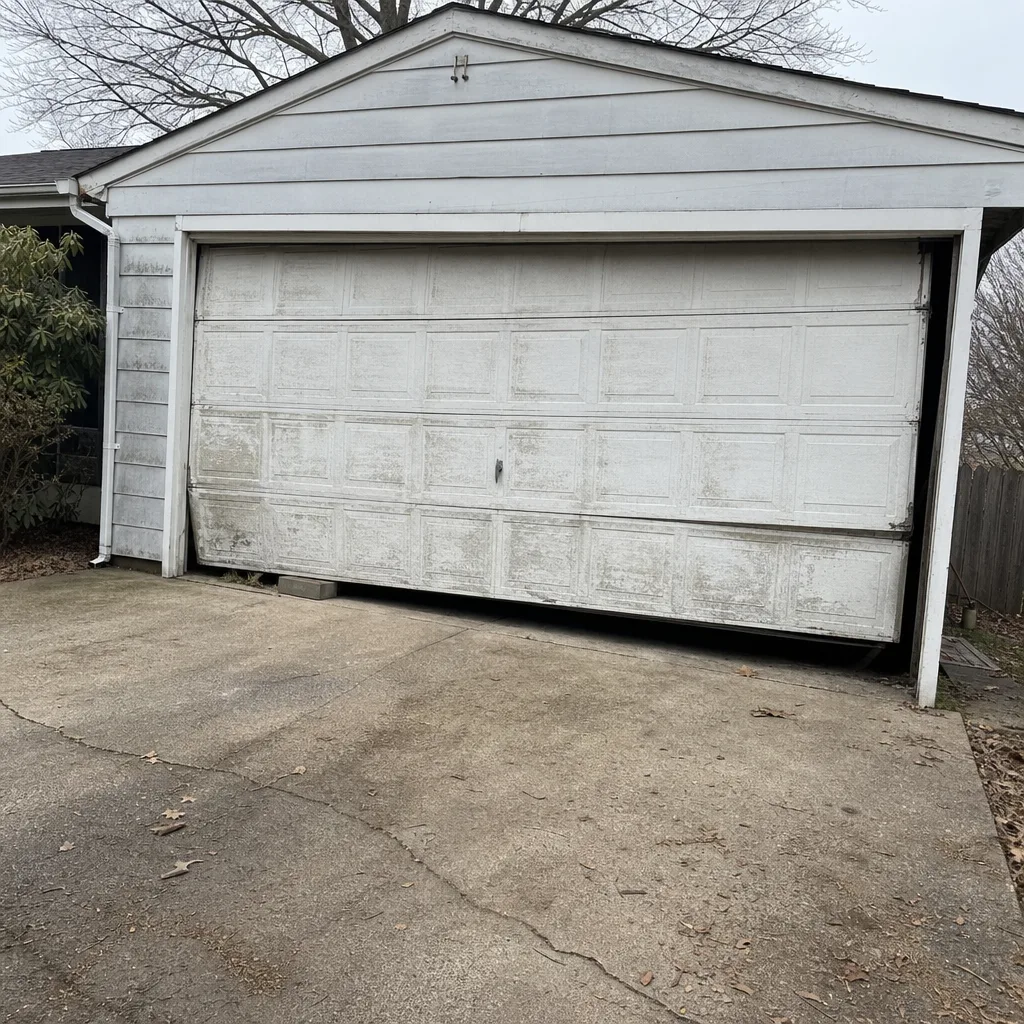 Before
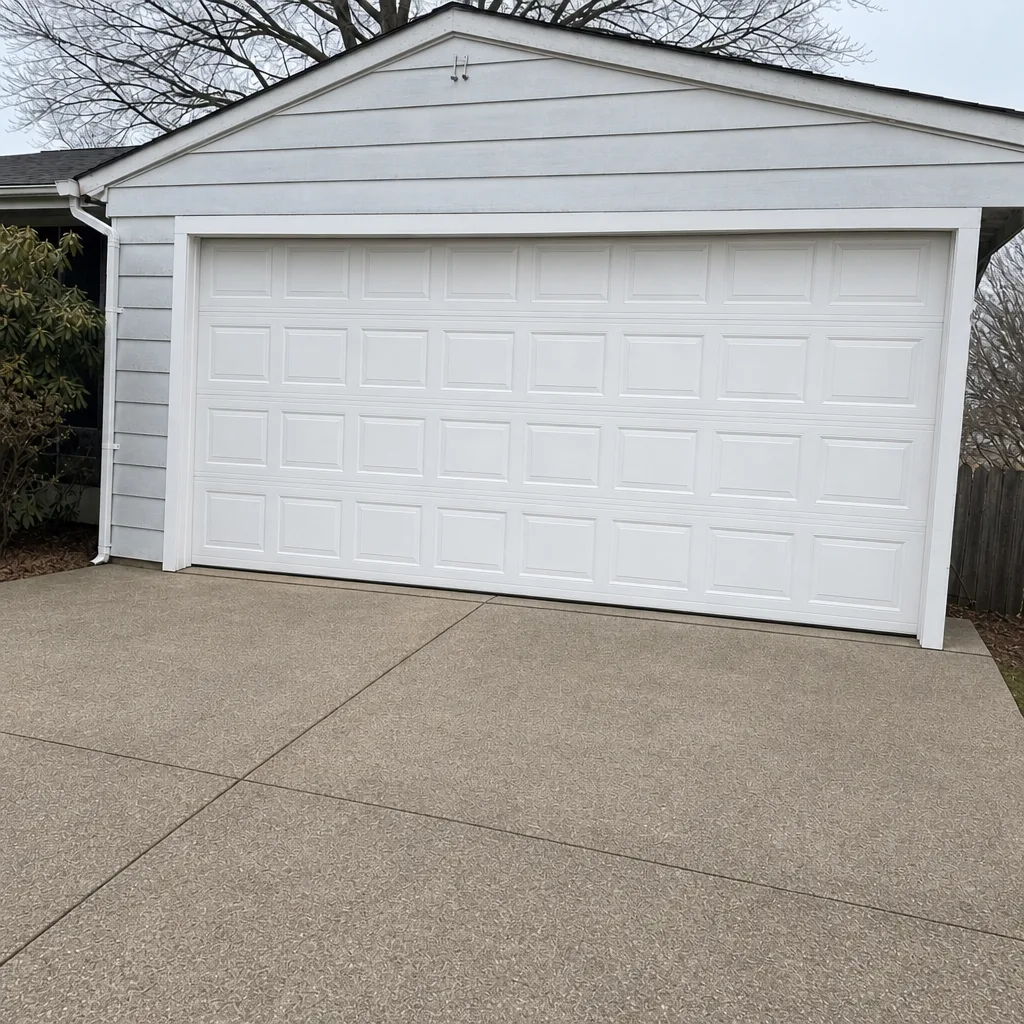 After
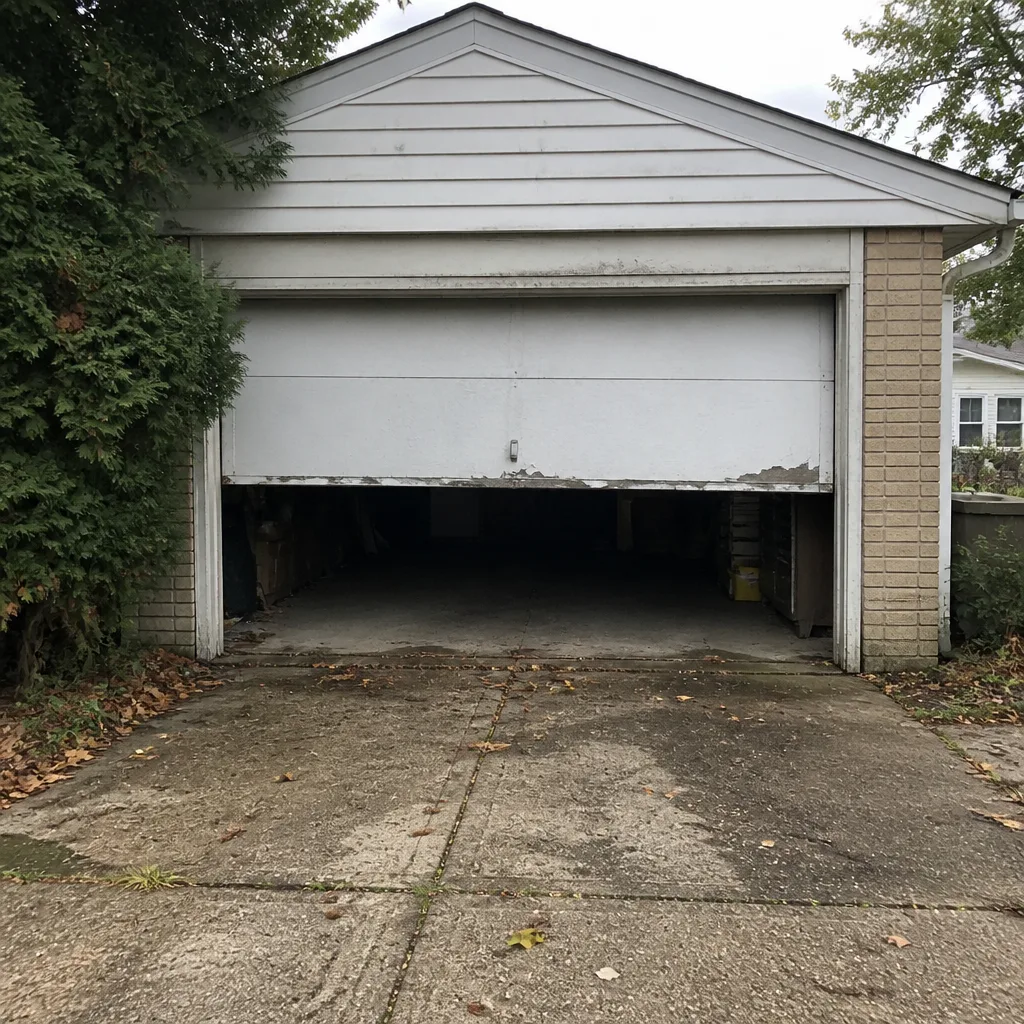 Before
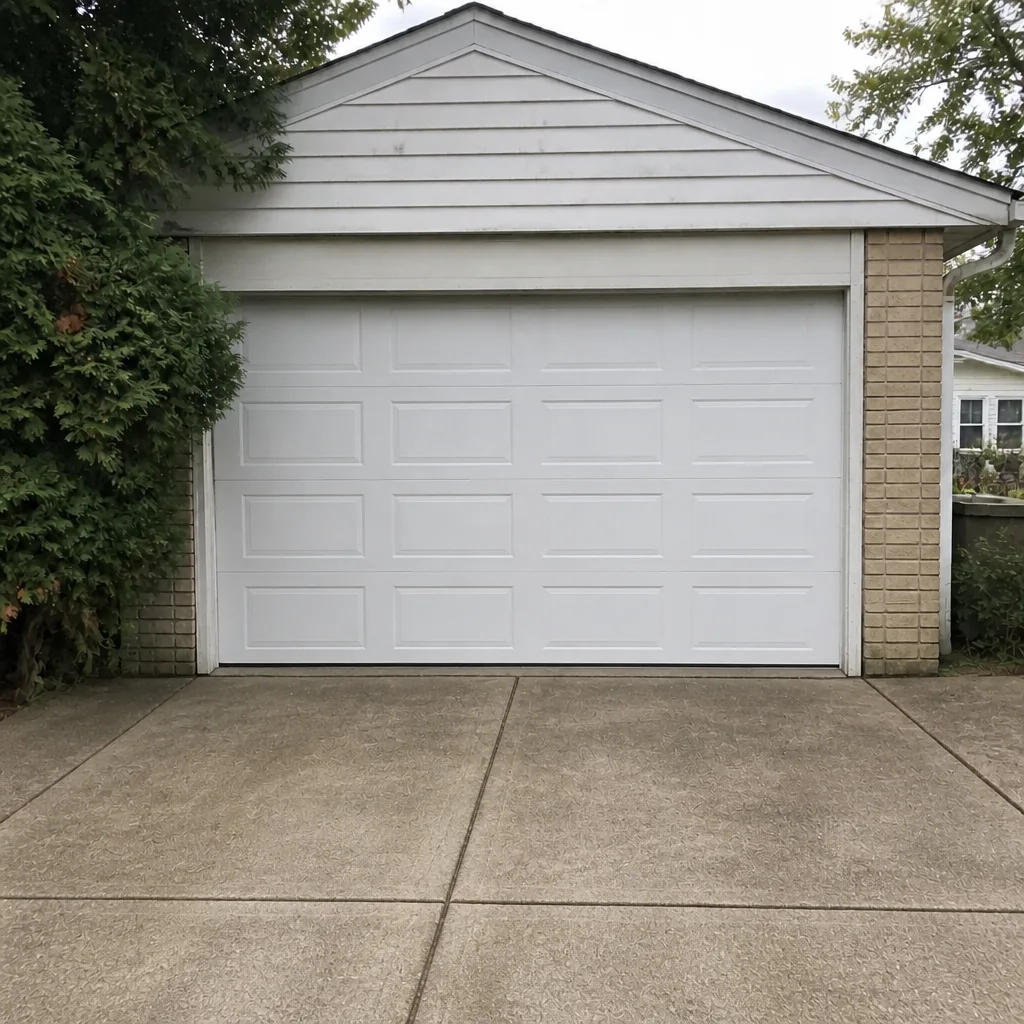 After
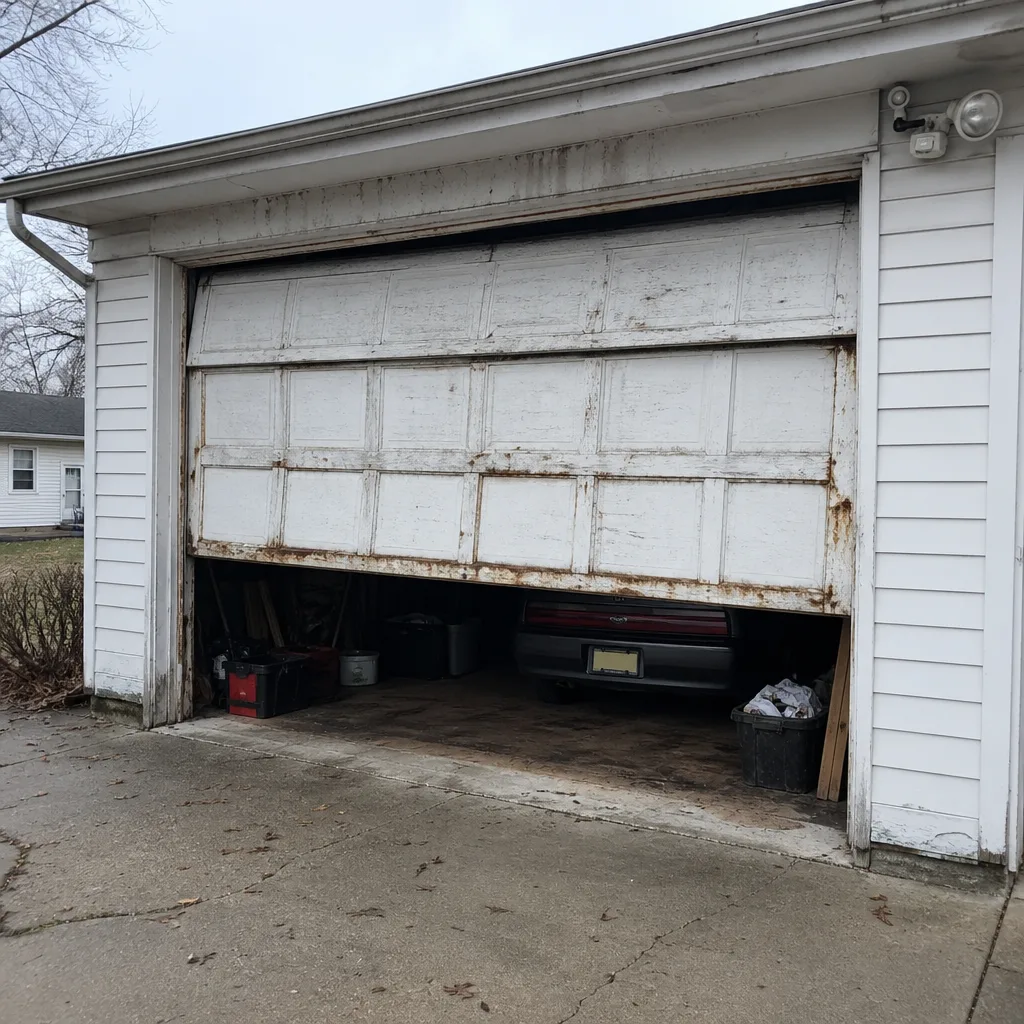 Before
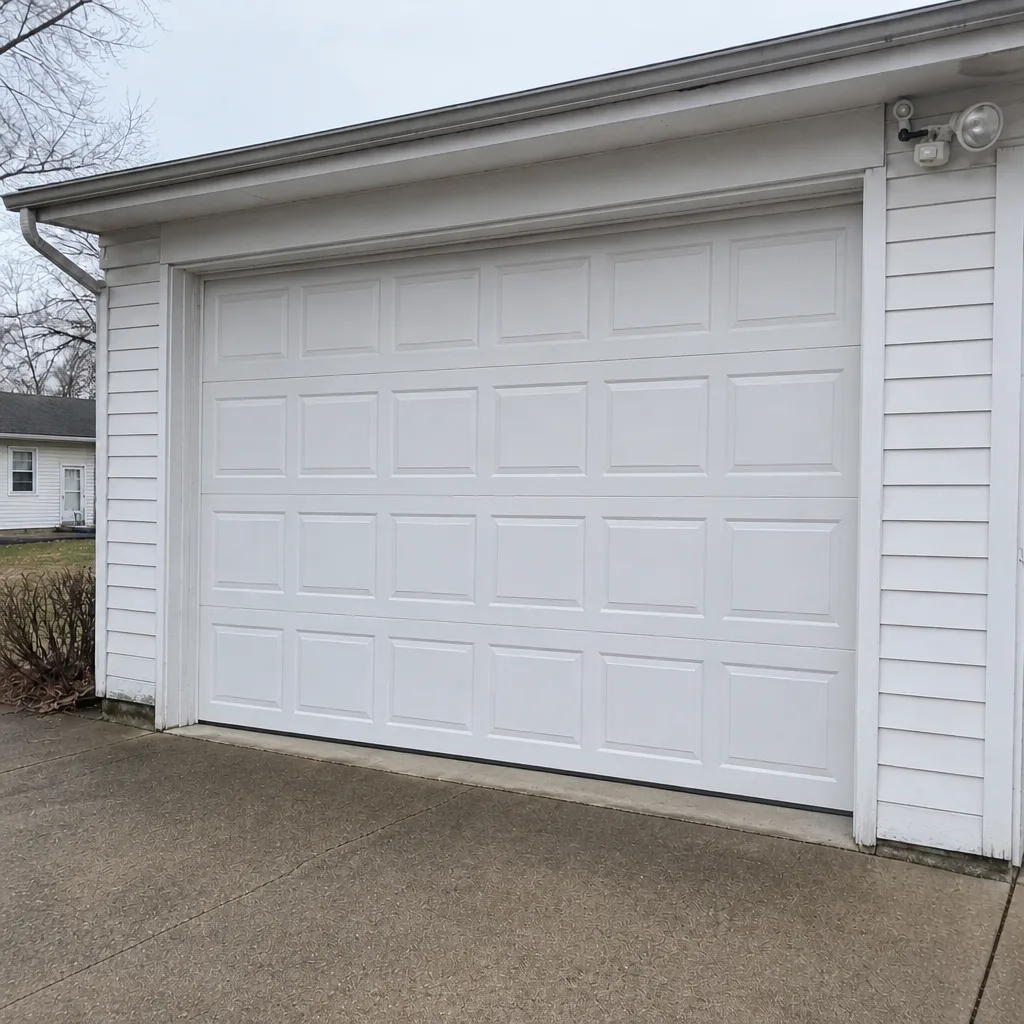 After
When to Call a Professional
Call a professional immediately if your door is off its tracks, if a spring has visibly broken, if the door is hanging unevenly, or if the opener runs but the door doesn’t move. Springs and cables are under extreme tension and can cause serious injury; a snapped spring should never be handled without trained eyes and the right tools. A door that stays open overnight is a security concern, and we treat it as emergency work. A door stuck closed is a schedule emergency, and we treat it the same way. We handle opener electronics across LiftMaster, Chamberlain, Genie, and Craftsman, as well as spring work and full door replacement. If the job turns out to need a permit, we tell you before we order so nothing backs up. For routine planning, measurement, or a second opinion on an existing install, call us and we’ll walk through it with you.
Garage Door Repair North Ward offers free estimates in North Ward and can pull the permit in our name, so you’re not left holding the paperwork. Call (844) 905-3092 to schedule a written estimate. The price is quoted and agreed before any work starts, and the written estimate is the final number. We’re also the place to call for routine service, from garage door repair to garage door opener repair and garage door installation, all handled by the same team.
Frequently Asked Questions
You do if the new door differs from the old one in size, weight, material, or operating type, or if any structural framing around the opening is altered. A strict like-for-like repair, where the same door stays in place and only the spring, opener, roller, or panel is replaced, is typically exempt. Ask the city’s building department to confirm for your address, since the answer depends on the exact scope.
The contractor pulls the permit. In New Jersey the licensed contractor files the application in their name and carries the responsibility for the inspection and the sign-off. If a contractor asks you to pull it as the homeowner, that’s a signal they’re avoiding the process rather than handling it.
A clean replacement with no structural change usually clears in a few weeks. A job that adds or modifies the header can add engineering time on top of that. The door’s delivery lead time runs at the same time as the review, so a well-scheduled job doesn’t stack the two. Call us for an exact timeline on your specific door.
The inspector checks the wind rating on the door’s label and spec sheet, the anchoring of the track and jamb brackets, the door’s balance and force, the safety sensor and reversal, and the electrical wiring to the subcode. Small corrections are common; they’re not a failure, they’re the process doing its job. Call (844) 905-3092 if you want to know what the inspection will cover on your particular install.
It can affect a claim, not the policy itself. If an adjuster finds an unpermitted install with no documented wind rating, the installation’s code compliance becomes a question in the claim. We’re not insurance adjusters, so we can’t tell you what your carrier will do. We can tell you the permit and the certificate of approval remove the question entirely, which is the point.
Spring, opener, roller, and sensor replacements fall under the repair exemption in most cases. Springs and cables are under extreme tension and need a trained professional, so please don’t check them yourself. Our technicians have up to 13 years of experience, are certified to work on 8 of the major door and opener brands, and can tell you at the estimate whether the job is a repair or a permit-level install. Call (844) 905-3092 for a free estimate.
The Bottom Line
In North Ward, a garage door replacement or any structural change around the opening needs a permit under the New Jersey Uniform Construction Code, while a like-for-like repair usually doesn’t. The permit goes in the contractor’s name, the inspection confirms the wind rating, anchoring, balance, safety reversal, and electrical, and the signed-off certificate of approval becomes part of your property record. Skipping that process puts a question in front of your insurance adjuster and a snag in your future closing. The fix is simple: ask up front, put the permit in the quote, and keep the paperwork. A permit is a few weeks of diligence that protects you long after the invoice is paid. Our team pulls permits as a matter of course, and we’re happy to walk you through yours.
Have a door that needs work now, or one that needs a plan? Call (844) 905-3092 for a free estimate.
Written by the team at Garage Door Repair North Ward.